Lika-Senj: Plitvice Lakes, Velebit and Novalja
Travel guide · editorialLika-Senj County is the largest in Croatia by area and also the most sparsely populated. A trip to Lika-Senj takes you to the Plitvice Lakes, the country's best-known national park, up into the wild Velebit mountains and to the Adriatic coast near Senj and Novalja. Only a few kilometers separate the coast from the highlands, yet the climate can feel worlds apart.
Landscape Between Sea and Highlands
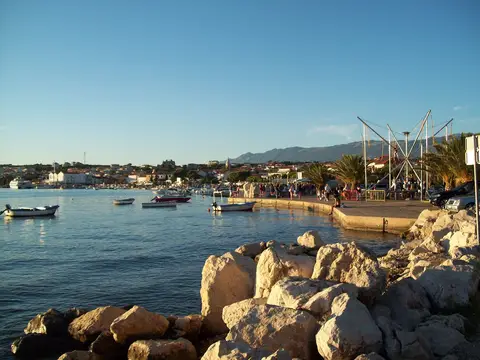
The Velebit range separates the narrow coastal strip from the Lika plateau, a karst landscape of meadows, forests and cold winters. The Kapela mountains lie to the north, with Gospić and Otočac in the interior. The county also includes the northern part of the island of Pag with Novalja. In Senj, the bora, a cold downslope wind, often blows down from the mountains with gale force, which is why the coast below the Velebit looks barren.
Sights in Lika-Senj
The Plitvice Lakes consist of 16 terraced lakes connected by waterfalls and travertine barriers. Wooden boardwalks lead across the turquoise water, and electric boats cross Kozjak, the largest lake. The park has been a UNESCO World Heritage Site since 1979; in summer, you should book tickets in advance. In Northern Velebit National Park, the Premužić Trail, an old high-altitude path with views of the islands, winds through the mountains. Senj has Nehaj Fortress, from which the Uskoks, irregular fighters of the 16th century, battled the Ottomans and the Venetians. In Smiljan near Gospić stands the birthplace of Nikola Tesla, with a memorial center. Near Novalja, Zrće Beach hosts big music festivals and club nights in summer.
Food, Getting There and Best Time to Visit
Lika cuisine is hearty: potatoes from the highlands, lamb, cheeses such as Škripavac, and trout from the Gacka, an exceptionally clear spring-fed river near Otočac. On Pag, you can try sheep's cheese and lamb. The A1 motorway runs through the region, and buses go from Zagreb and Zadar to the Plitvice Lakes. The best times to visit are May and June, when the waterfalls are full, and autumn, with its colorful beech forests; in winter there is often snow.