
Discover Ireland: The Emerald Isle on the Atlantic
Travel guide · editorialA vacation in Ireland is about weather that changes every half hour, stone walls across green pastures, and pubs where someone pulls out a fiddle in the evening. The Republic covers about five-sixths of the island and is smaller than Bavaria, yet the west coast alone easily fills two weeks. Between Dublin and the cliffs on the Atlantic lie landscapes you won't soon forget.
Landscapes of the Emerald Isle
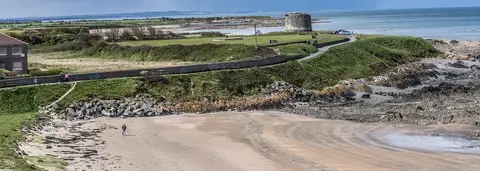
Ireland's west is rugged and windswept. The Cliffs of Moher in County Clare plunge as much as 214 meters (702 feet) into the Atlantic, and right next door lies the Burren, a limestone desert whose crevices bloom with gentians and orchids in spring. The Wild Atlantic Way, a signposted coastal route of roughly 2,500 kilometers (1,550 miles), runs from the Inishowen Peninsula in the north to Kinsale in the south. Along the way you'll find Connemara with its bogs, lakes, and the Twelve Bens, the Aran Islands with their prehistoric stone forts, and Donegal with the cliffs of Slieve League.
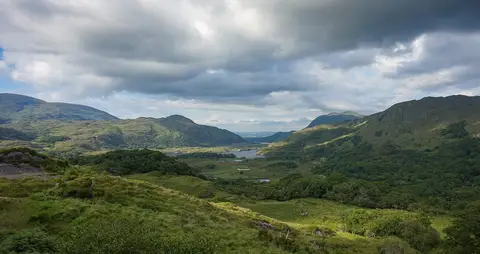
In the southwest, the Kerry and Dingle peninsulas reach into the sea like fingers. The Ring of Kerry is the country's best-known scenic drive, and Killarney National Park, with its lakes, oak woods, and red deer, lies at its start. Off the coast rises Skellig Michael, a rocky island with early medieval monastic cells that can be reached by boat in summer. The interior is flatter, with the River Shannon, peat bogs, and the Wicklow Mountains south of Dublin, where the monastic settlement of Glendalough sits in a glacial valley.
Dublin, Galway, Cork, and the Cities
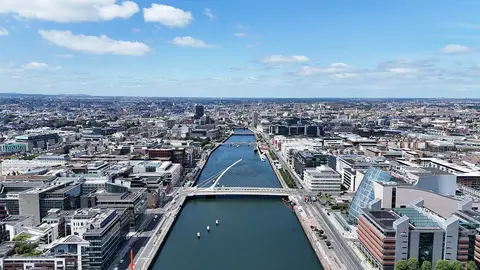
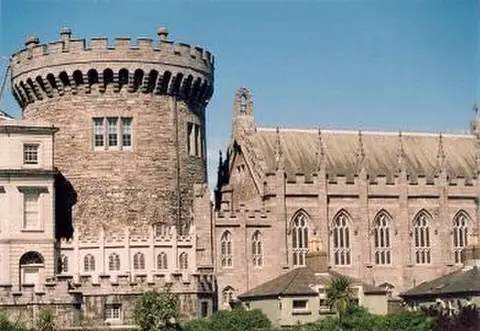
Dublin is by far the largest city and the starting point of almost every trip to Ireland. Among the best-known sights in Ireland here are Trinity College with the Book of Kells, the Georgian squares with their colorful front doors, St. Patrick's Cathedral, and the Guinness Storehouse, where you can enjoy the view over the city with a pint. The Temple Bar district is touristy; you're more likely to find genuine pubs on the side streets. The DART suburban railway gets you to coastal towns such as Howth or Dún Laoghaire with its pier in half an hour.
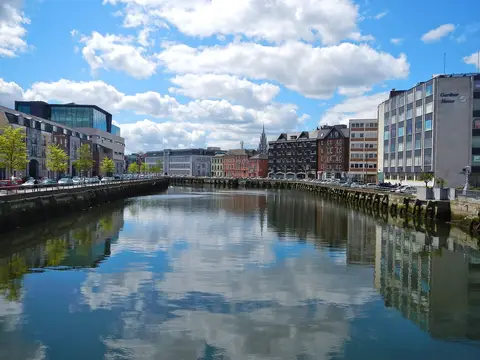
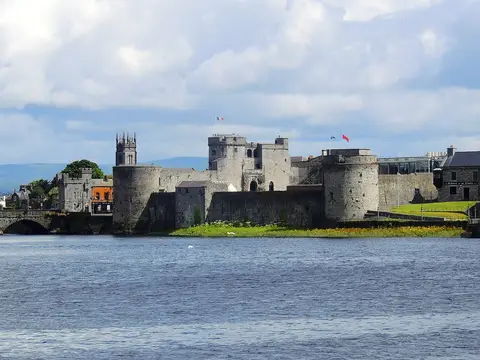
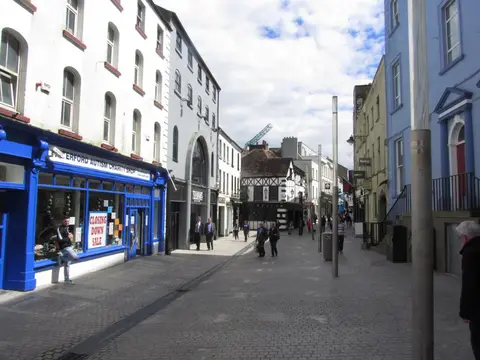
Cork in the south sees itself as the unofficial capital, with the covered English Market and the nearby harbor town of Cobh, the Titanic's last port of call. Galway on the west coast is a colorful university town where street musicians fill Shop Street and a major arts festival takes place in July. Limerick on the Shannon has a medieval castle dating from the time of King John, and Waterford is the country's oldest city, founded by Vikings and known for crystal glass. Kilkenny, with its castle and brewing tradition, and the touristy town of Killarney round out the list of Ireland travel destinations.
Culture and History
Passage tombs such as Newgrange in the Boyne Valley are more than 5,000 years old; at the winter solstice, the rising sun shines through a light box into the burial chamber. Later, monks brought monasteries and high crosses to the country, Vikings founded cities, and Normans built castles. Centuries of British rule, the Great Famine of the 1840s, and the emigration of millions to America shape the collective memory. The south has been independent since 1922, while Northern Ireland remains part of the United Kingdom.
Music and storytelling are everywhere. In many pubs, evening sessions bring musicians together to play fiddle, tin whistle, and bodhrán. Gaelic sports such as hurling and Gaelic football fill large stadiums, and in the Gaeltacht, especially in Connemara, Donegal, and Kerry, Irish is spoken in everyday life. St. Patrick's Day on March 17 is celebrated nationwide with parades, and Dublin keeps the memory of James Joyce alive with Bloomsday in June.
Food and Drink in Ireland
Irish cuisine has changed dramatically in recent decades. Classics remain Irish stew with lamb, potatoes, and onions, soda bread, and the Full Irish Breakfast with black and white pudding. On the coast you'll find Galway oysters, mussels, and smoked salmon, and the country's grass-fed butter and beef are world-famous. A pint of Guinness or a Smithwick's goes well with a whiskey from one of the many new distilleries. Irish coffee is said to have been invented in the 1940s at the Foynes flying-boat terminal on the Shannon estuary.
Getting Around Ireland
From Germany you can fly direct to Dublin, and in some cases to Cork, Shannon, and Knock. If you'd like to bring your own car, take a ferry from France to Rosslare or Dublin. Within the country, trains connect Dublin with Cork, Galway, Limerick, and Waterford, and intercity buses reach smaller towns as well. For the west and the peninsulas, though, a rental car is almost indispensable. Traffic drives on the left, country roads are narrow and winding, and there may be a flock of sheep around any bend.
Best Time to Visit Ireland
The best time to visit Ireland is between May and September. The days are long then, in June it doesn't get dark until around 10 p.m., and temperatures range from 59 to 68°F (15 to 20°C). May and June are often the driest months, while July and August are the warmest and busiest. Rain is part of every season, as are rainbows and sudden breaks of sunshine. The Gulf Stream keeps winters mild at around 46°F (8°C), and snow is rare. If you're after peace and quiet, travel in April or October, when the tourist spots empty out.