County Cork: Rebel City and Wild South Coast
Travel guide · editorialThe people of Cork like to call their county "the real capital," and they're only half joking. A vacation in County Cork takes you from the lively harbor district of Cork city to foodie towns like Kinsale and on to the rugged peninsulas of West Cork. No other Irish county is larger.
From Cork City to the Atlantic Coast
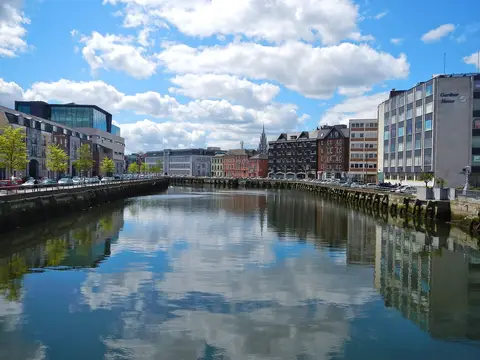
Cork city sits on an island between two arms of the River Lee, linked by numerous bridges. To the east, Cork Harbour opens up, one of the largest natural harbors in the world. Heading west, the landscape grows ever wilder: bays, fishing villages, stone walls and finally the peninsulas of Mizen Head, Sheep's Head and Beara, which reach into the Atlantic like fingers. In the north, hills and pastureland border Limerick and Kerry.
Sights in County Cork
In the city, the covered English Market has been the heart of local food since the 18th century. Nearby you'll find St Fin Barre's Cathedral and the Shandon Bells, which visitors can ring themselves. A few miles to the north, Blarney Castle awaits with its famous stone, which you kiss upside down. Cobh was the last port before America for millions of emigrants and the Titanic's final stop; the Heritage Centre and the colorful row of houses beneath the cathedral recall that history. In Midleton, whiskey is distilled at the Jameson Distillery, and on Spike Island a former fortress tells the story of convicts and soldiers.
Kinsale, West Cork and the Food
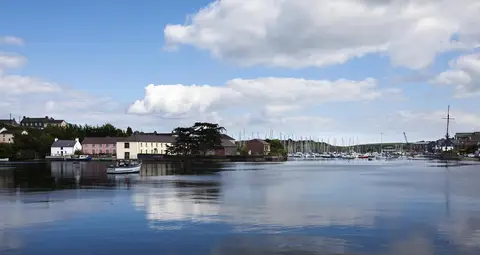
Kinsale is considered Ireland's gourmet capital: narrow lanes, a harbor, seafood restaurants and the star-shaped Charles Fort from the 17th century. Farther west come Clonakilty, Skibbereen and Baltimore, where ferries depart for Sherkin Island and Cape Clear. At Mizen Head, Ireland's southwesternmost point, a bridge crosses a gorge to the signal station. The Wild Atlantic Way begins in the south at Kinsale.
Cork is also proud of its own culinary specialties: Murphy's and Beamish stouts, Clonakilty black pudding, drisheen as a traditional blood sausage, and cheeses such as Gubbeen or Milleens from West Cork. At farmers' markets in Skibbereen and Midleton, locals buy smoked salmon and vegetables straight from the producer. In October, the jazz festival draws musicians to the city's pubs. Ballymaloe House near Shanagarry, linked to a well-known cooking school, has had a major influence on modern Irish country cooking; many young chefs have trained there. In Kinsale and Baltimore, lobster, crab claws and mussels are on nearly every menu, and at the English Market you can have spiced beef for lunch, a Cork specialty eaten mainly at Christmas.
Islands and Peninsulas in the West
If you have more time, head to the Beara Peninsula, which is quieter than the neighboring Ring of Kerry. In Glengarriff, boats cross to Garinish Island, where subtropical gardens thrive thanks to the Gulf Stream and seals lie on the rocks. At the western tip, one of Ireland's few cable cars connects the mainland with Dursey Island. The Healy Pass winds in switchbacks over the mountains to Kerry, and in Allihies abandoned copper mines recall a time when miners from Cornwall worked here.
Getting There and Best Time to Visit
Cork Airport is served from several European cities, and trains run hourly to Dublin. For West Cork you'll need a car or a lot of patience with buses. The best time to visit is between May and September; in spring, gorse and fuchsias bloom along the roadsides, while autumn is quieter and the coast turns dramatic.