County Meath: In the Valley of the Kings on the Boyne
Travel guide · editorialAt the winter solstice, the rising sun shines through a narrow opening into the passage tomb at Newgrange, which is older than Stonehenge and the pyramids. A trip to County Meath leads you into the "Royal County," where the High Kings of Ireland resided and the River Boyne made history.
Land of Kings
Meath is gently rolling, with fertile soil, stud farms, and pastures. For centuries, the Hill of Tara was the coronation site of the High Kings; today you'll see only earthen banks and the Lia Fáil stone, but the view across the countryside explains its importance. Navan, the county seat and largest town, lies at the confluence of the Boyne and the Blackwater. Ashbourne in the south is a growing commuter town near Dublin.
Sights in County Meath
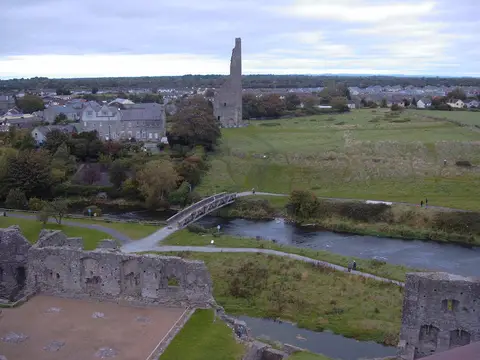
Brú na Bóinne, a UNESCO World Heritage Site, includes the passage tombs of Newgrange, Knowth, and Dowth, dating from around 3200 B.C.; visits start at the visitor center near Donore. Trim Castle is the largest Norman castle in Ireland and served as a filming location for "Braveheart." At the site of the Battle of the Boyne in 1690, a visitor center near Oldbridge explains the clash between William of Orange and James II. Other destinations include the monastic site of Kells, home of the famous Book of Kells, and the Loughcrew cairns, which you can climb on your own.
Getting There and Best Time to Visit
Meath is so close to Dublin that Newgrange makes an easy day trip; buses run to Navan, Trim, and Kells, but a car is handy for the burial sites. The best time to visit is between April and October. A place in the burial chamber at the winter solstice is awarded by lottery each year. Meath is also known for horse racing: Fairyhouse Racecourse hosts the Irish Grand National at Easter, and once a year Laytown holds horse races right on the beach. The short stretch of coast around Bettystown and Laytown offers long sandy beaches. In Slane, a castle towers over the Boyne, on whose meadows major rock concerts are held, and on the Hill of Slane, Saint Patrick is said to have lit the first Easter fire.