Discover Vienna: Coffeehouses, the Hofburg, and Heurigen
Travel guide · editorialA Melange at a marble-topped café table, an evening at the State Opera, and a glass of Grüner Veltliner at a Heuriger on the edge of town: Vienna knows how to enjoy life. A city break in Vienna combines imperial splendor with Art Nouveau, modern art, and a quality of life that regularly tops international rankings.
From Imperial Seat to Global City
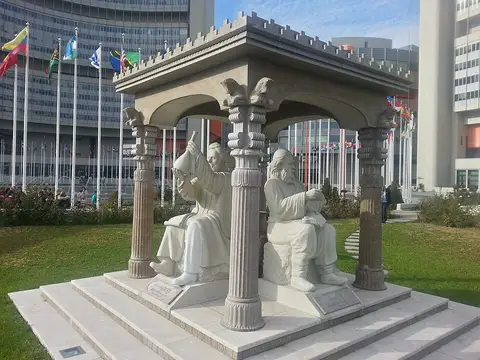
The Romans already kept the legionary camp of Vindobona here. From the late 13th century on, the Habsburgs resided in Vienna and made the city the center of a vast empire. Twice, in 1529 and 1683, Ottoman armies besieged the city in vain. Around 1900, Vienna was one of Europe's largest metropolises and a laboratory of modernism: Gustav Klimt, Otto Wagner, Sigmund Freud, Gustav Mahler, and Arthur Schnitzler shaped the era. After the end of the monarchy in 1918, "Red Vienna" emerged with its large municipal housing complexes such as the Karl-Marx-Hof. Today Vienna is home to numerous international organizations, including the UN and OPEC.
Sights in Vienna
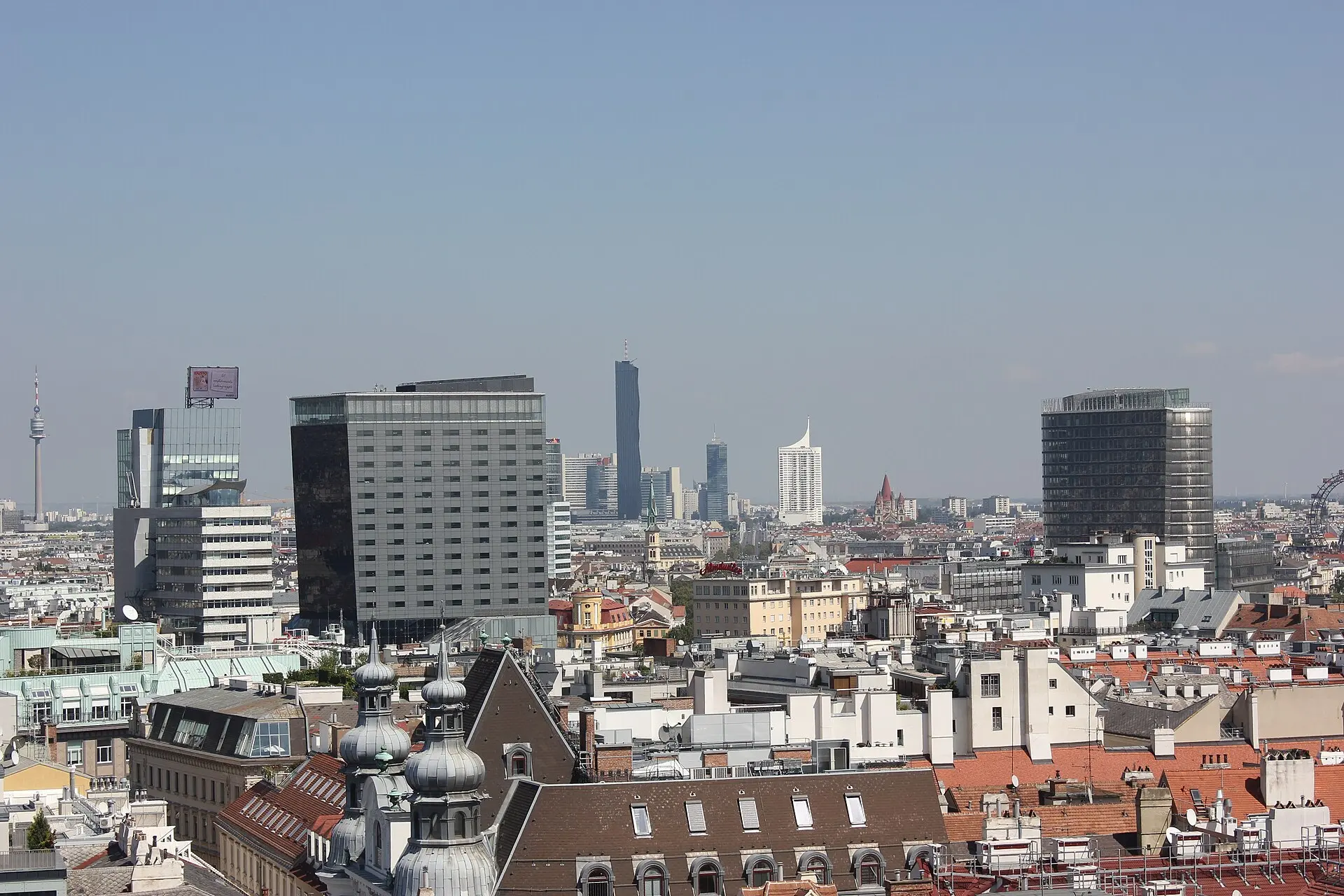
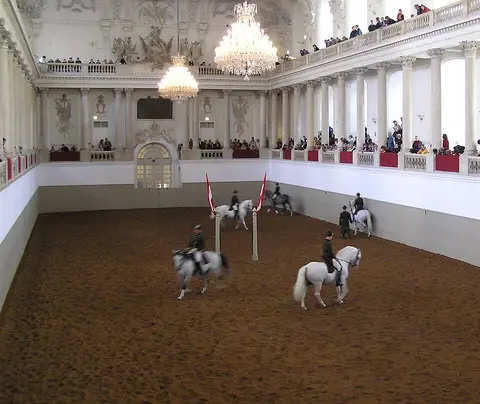
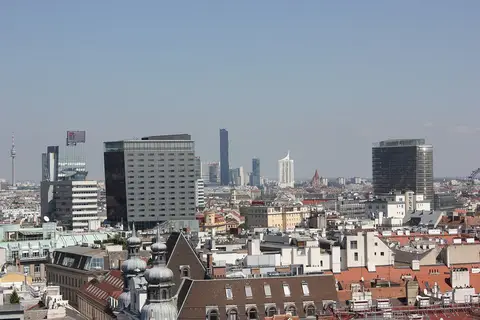
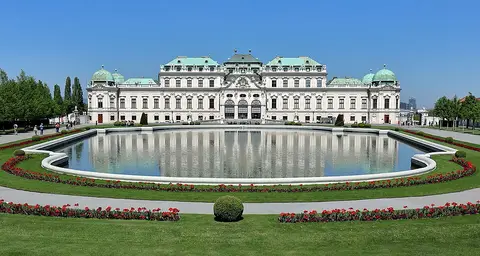
In the heart of the Inner City, the Gothic St. Stephen's Cathedral rises with its colorful tiled roof; from the south tower you can look out over the rooftops. The Hofburg was the Habsburgs' residence for over six centuries; today it houses the Imperial Apartments, the Sisi Museum, the Imperial Treasury, the Spanish Riding School, and the National Library with its Baroque State Hall. The Ringstrasse circles the old town, lined with the State Opera, Parliament, City Hall, and the Burgtheater. To the southwest lies Schönbrunn Palace, the summer residence with over a thousand rooms, palace gardens, the Gloriette, and the world's oldest zoo. The Belvedere, a Baroque palace, displays Klimt's "The Kiss." The Giant Ferris Wheel has been turning in the Prater since 1897, and at the Hundertwasserhaus in the Landstrasse district, trees grow out of the windows.
Museums and Music
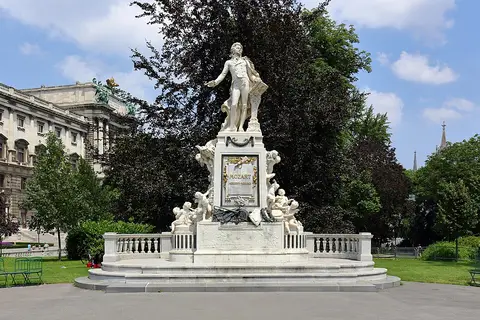
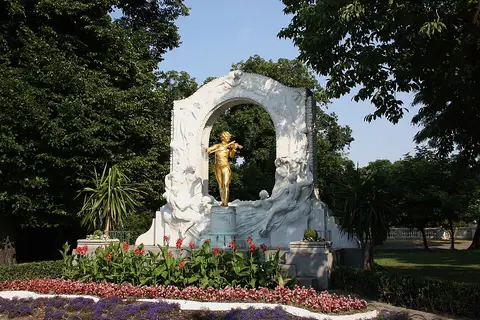
The Kunsthistorisches Museum (Museum of Art History) holds one of the world's most important painting collections, with works by Bruegel, Rubens, and Vermeer; across the square, the Natural History Museum shows dinosaurs and the Venus of Willendorf. The MuseumsQuartier in the Neubau district is home to the Leopold Museum, with works by Egon Schiele, and the mumok for modern art. The Albertina brings together graphic art from Dürer to Picasso. Music is everywhere: the State Opera offers standing-room tickets for just a few euros, and the Vienna Philharmonic plays at the Musikverein, its New Year's Concert broadcast around the world. Mozart, Beethoven, Haydn, Schubert, and Strauss all lived and worked here; the Vienna Boys' Choir sings on Sundays in the Hofburg Chapel.
Neighborhoods: Leopoldstadt, Neubau, and Alsergrund
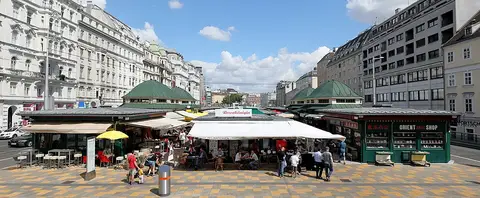
Across the Danube Canal lies Leopoldstadt, with the Karmelitermarkt, the Augarten, and the Prater, once the center of Jewish Vienna. Neubau and Mariahilf, around Mariahilfer Strasse, are the neighborhoods of boutiques, design shops, and cafés; the Naschmarkt along the Wien River is Vienna's best-known market. Sigmund Freud lived in Alsergrund, and his practice on Berggasse is now a museum. Favoriten, with the Viktor-Adler-Markt, shows multicultural Vienna, and in Donaustadt, Seestadt Aspern has grown into one of Europe's largest urban development areas.
Eating in Vienna: Schnitzel, Pastries, and the Heuriger
Viennese cuisine is the only one named after a city. Classics include Wiener Schnitzel made from veal, Tafelspitz (boiled beef) with apple horseradish, goulash, and Backhendl (fried chicken). In the coffeehouses, whose culture is listed as UNESCO Intangible Cultural Heritage, you'll be served Melange, Einspänner, and pastries such as Sachertorte, apple strudel, and Kaiserschmarrn. At a sausage stand, you can get a Käsekrainer late in the evening. Vienna is also a wine city: in Grinzing, Nussdorf, and Stammersdorf, Heurigen pour young wine from their own vineyards, accompanied by a buffet of Liptauer spread and roast pork.
Getting Around and Best Time to Visit
Vienna-Schwechat Airport is about 11 miles (18 km) southeast of the city; the City Airport Train reaches Wien-Mitte in 16 minutes, and the S-Bahn is cheaper. A dense network of subway, tram, and buses serves the whole city, and passes are worth it. On the tram around the Ring, you can comfortably take in the grand buildings from a seat. The best time to visit is spring and early fall; in Advent, Christmas markets draw visitors in front of City Hall and at Spittelberg, and in January and February the ball season peaks with the Opera Ball. In summer, the Danube Island invites you to swim, and the Donauinselfest takes place in June.