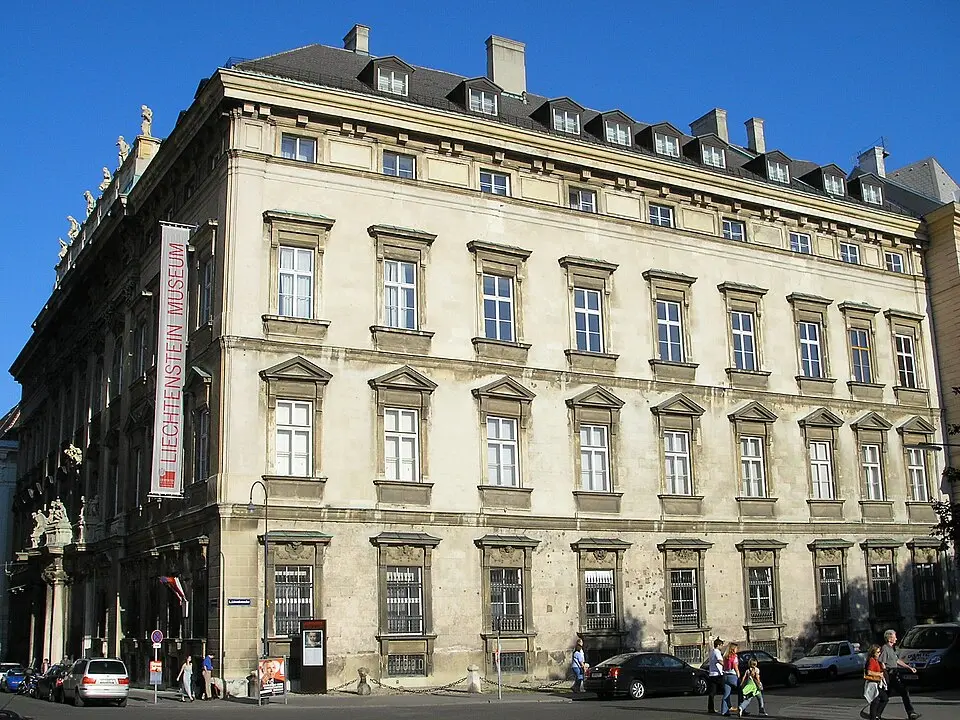
About Stadtpalais Liechtenstein
The Liechtenstein City Palace in Vienna's Innere Stadt (Inner City) is considered the city's first significant High Baroque building and is still owned by the Princely House of Liechtenstein. Construction began in 1691 under the direction of Domenico Martinelli and was taken over in 1694 by Prince Johann Adam I, who designated it an entailed family estate. It was completed in 1705, and its monumental Baroque portal on Bankgasse was the first of its kind built in Vienna. The sculptural decoration is the work of Giovanni Giuliani, while the stucco was created by Santino Bussi. In the 19th century, Prince Alois II had Peter Hubert Desvignes extensively expand the building in the Second Rococo style. This interior, which includes elegant bentwood floors by Michael Thonet, floral silk wall coverings, and heavy Parisian chandeliers, shaped the character of the house, which, because of its long construction period, was popularly nicknamed the "artists' retirement home."
After suffering heavy damage in World War II and receiving only makeshift repairs in the 1950s, the palace underwent an extensive, complete renovation between 2009 and 2013. The restoration, which cost around €100 million, lastingly restored the historic building fabric and the technical installations. A three-story underground art storage facility was built beneath the courtyard. On April 9, 2013, Prince Hans Adam II formally reopened the building. Unlike a regular museum with daily visitor traffic, the palace is now opened to the public only selectively. Since May 2013, guided tours have taken place on every second Friday; the house is also rented out for events and is open during the Long Night of Museums.
In the restored rooms, you can admire above all Biedermeier artworks from the Princely Collections, displayed across 1,200 square meters. The architecture offers an impressive look at the history of the family, who moved their residence to the Principality in 1938 to avoid contact with the Nazi regime. The art collection was also taken there during the war for safekeeping, which ensured its preservation. Today, the palace combines its function as the princely house's stately residence with the chance to experience the building's magnificent furnishings and historical significance in the heart of Vienna.
At a glance
- Category
- Sight › Palaces
- Rating
- no reviews yet · write a review
- Address
- Bankgasse 9
1010 Vienna, Austria - District
- Innere Stadt
- Phone
- +43131957670
- Website
- www.palaisliechtenstein.com
- —
- Coordinates
- 48.20997° N · 16.36272° E
- Data quality
- confidence 0.96
- Identifier
- ID 951b7c32-922…
Location & surroundings
Toggle layersFAQ about Stadtpalais Liechtenstein
quick answersWhat is the Liechtenstein City Palace in Vienna?
The Liechtenstein City Palace is a Baroque palace at Bankgasse 9 in Vienna's Inner City and is considered the city's first major High Baroque building. It is still owned by the Princely House of Liechtenstein and serves as its official residence. Its monumental Baroque portal on Bankgasse was the first of its kind built in Vienna.
Can you visit the Liechtenstein City Palace in Vienna?
Yes, the Liechtenstein City Palace in Vienna is accessible, but only on a limited basis and not as a regular museum open to the public every day. Since May 2013, guided tours have taken place every second Friday, and the palace is also open during the Long Night of Museums and rented out for events. In the restored rooms, you can see mainly Biedermeier artworks from the Princely Collections spread across 1,200 square meters.
Who built the Liechtenstein City Palace and how is it furnished?
Construction of the Liechtenstein City Palace in Vienna began in 1691 under the direction of Domenico Martinelli. In 1694, Prince Johann Adam I took over the building, and it was completed in 1705. The sculptures are by Giovanni Giuliani, the stucco work by Santino Bussi. In the 19th century, Prince Alois II had the palace expanded by Peter Hubert Desvignes in the Second Rococo style, with bentwood floors by Michael Thonet, floral silk wall coverings, and Parisian chandeliers.
When was the Liechtenstein City Palace renovated?
The Liechtenstein City Palace in Vienna underwent a comprehensive renovation between 2009 and 2013, after it was badly damaged in World War II and only makeshift repairs were made in the 1950s. The restoration cost around €100 million, and a three-story underground art depot was built beneath the courtyard. On April 9, 2013, Prince Hans-Adam II officially reopened the palace.
What can you see around the Liechtenstein City Palace in Vienna?
Around the Liechtenstein City Palace in Vienna's Inner City, several sights are within walking distance, such as the Empress Elisabeth Monument about 91 meters away and the Stone Pillar Portal in the Volksgarten about 141 meters away. Also nearby are Palais Batthyány (about 144 meters), Palais Lieben-Auspitz (about 191 meters), and the Theseus Temple (about 195 meters). travelguide195 also lists around 124 restaurants within 500 meters, as well as the tour "Palaces, Alleys and the Imperial Crypt: A Walk Through the Inner City," which includes the palace.
Ratings & comments
none yetNear Stadtpalais Liechtenstein
closest 5 per category · 2 kmSights
Restaurants
Museums
Hotels
More:Palaces in Vienna (48)Sights in Innere Stadt (216)All sights in Vienna (661)
300 places within 2 km loaded.
You need a free account to leave reviews and photos – that keeps comments genuine and lets you edit them later.