Discover Latvia: Riga, the Baltic Coast and Forests
Travel guide · editorialIf you're planning a vacation in Latvia, you'll almost certainly land in Riga first – and you'll quickly realize that the country beyond it is much quieter, greener and more spacious than you might expect. Around half the land is forest, the coastline stretches for more than 500 kilometers (310 miles) along the Baltic Sea and the Gulf of Riga, and between the towns there is often nothing but pine trees, bogs and small farmsteads.
Riga: Art Nouveau, Market Halls and the Old Town
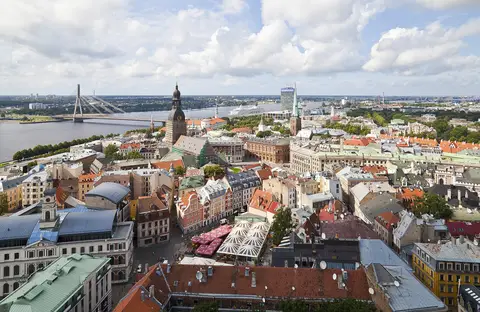
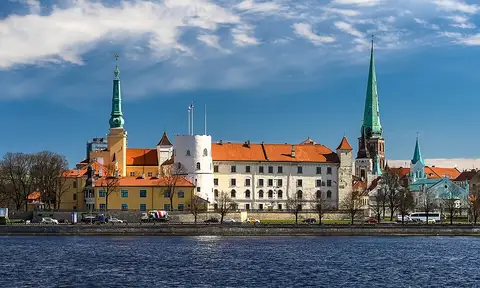
With just over 600,000 residents, Riga is the largest city in the Baltics, and a third of all Latvians live here. The Old Town, a UNESCO World Heritage Site since 1997, is compact: the House of the Blackheads with its red-brick façade, the cathedral, St. Peter's Church, whose tower you can ride an elevator up, and the Three Brothers, three medieval townhouses leaning against one another that date from the 15th to 17th centuries. If you only wander the lanes, though, you'll miss the city's real trademark. Northeast of the Old Town, especially on Alberta iela and Elizabetes iela, hundreds of Art Nouveau buildings feature masks, peacocks and women's faces on their façades; several were designed by Mikhail Eisenstein, father of the film director. No other place in Europe has such a concentration of Art Nouveau architecture. The Central Market is another must: it occupies five former zeppelin hangars from World War I, where today you'll find smoked fish, sauerkraut scooped from barrels, honey and mountains of mushrooms.
Jūrmala, Liepāja and the Baltic Coast
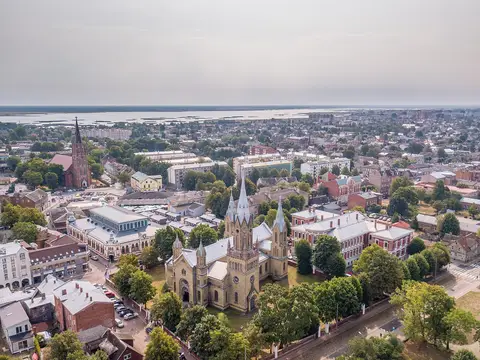
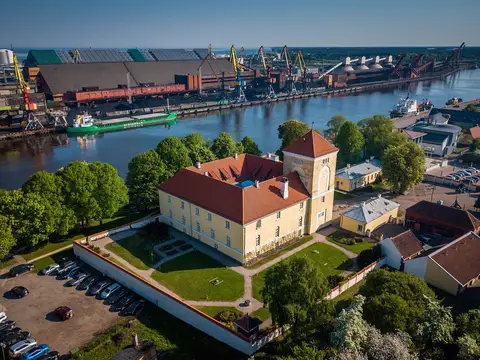
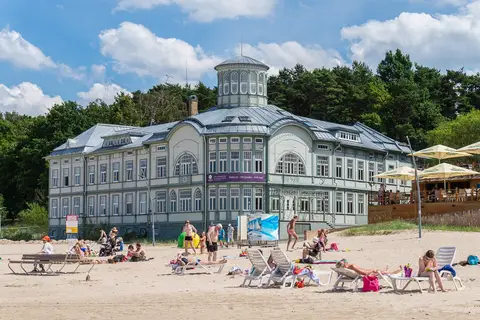
Just half an hour by train from Riga, Jūrmala is a narrow strip of sandy beach, dunes and pine forest stretching more than 30 kilometers (19 miles). Summer vacationers were already coming here in the days of the tsars; the painted wooden villas in Majori and Dubulti are a reminder of that era. If you prefer something more unspoiled, head to the coast of Courland. Liepāja, the country's third-largest city, likes to call itself the City of Music, and its concert hall, "Lielais Dzintars," is a building that looks like a piece of amber. In the Karosta district, a former Soviet naval base, you can tour the old military prison. Farther north lies Ventspils, a well-kept port city with a Blue Flag beach, and at the very tip of Courland is Cape Kolka, where the Baltic Sea and the Gulf of Riga meet. In Slītere National Park just beyond live the Livonians, a small Finno-Ugric people whose language hardly anyone speaks anymore.
Sights in Latvia Beyond the Capital
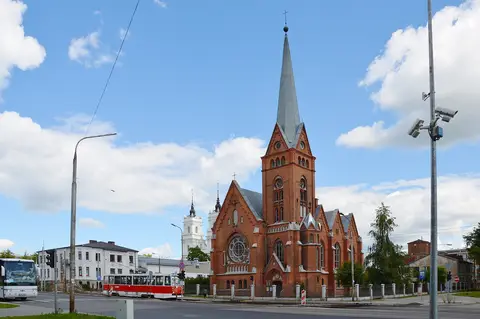
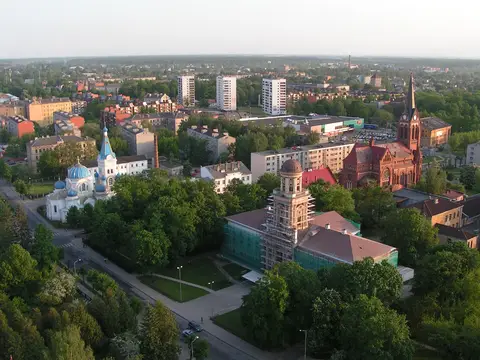
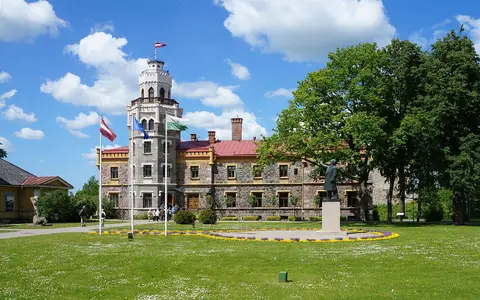
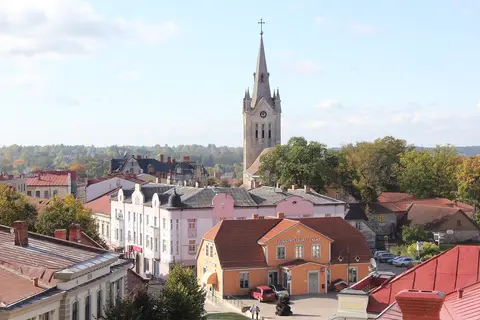
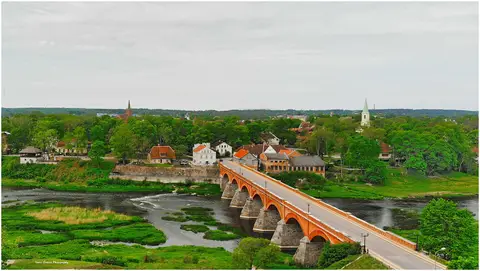
Among the most popular destinations in Latvia's interior is the Gauja Valley, the country's oldest national park. Around Sigulda the river has carved deep sandstone gorges, the forest turns red and yellow in autumn, and Turaida Castle towers over the valley. A few kilometers farther on is Cēsis, with a medieval castle where you can explore the ruins by lantern light. Kuldīga in western Latvia was added to the World Heritage list in 2023: its Old Town of wooden houses stands beside the Ventas Rumba, Europe's widest waterfall, which is barely two meters (6.5 feet) high. In spring, fish literally leap over the edge here. South of Bauska lies Rundāle Palace, a Baroque palace by Bartolomeo Rastrelli, who also designed the Winter Palace in St. Petersburg. In Latgale, in the east of the country, the scenery changes: lots of lakes, Catholic churches, Russian-speaking villages. Daugavpils, the second-largest city, has an almost completely preserved 19th-century fortress and an art center dedicated to the painter Mark Rothko, who was born here.
History and Traditions
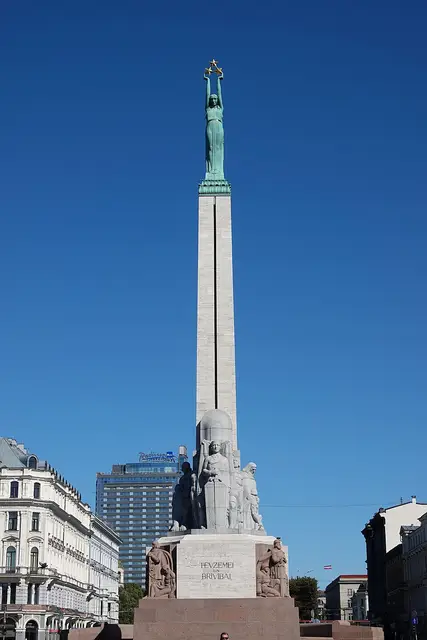
For centuries Latvia was under German, Polish, Swedish and Russian rule; it became independent in 1918 and was annexed by the Soviet Union in 1940. Independence returned in 1991, following the "Singing Revolution," in which hundreds of thousands demonstrated with folk songs. Singing remains central to this day: every five years Riga hosts the Song Festival, where tens of thousands of choir singers perform. The most important festival of the year, however, is Jāņi, the midsummer celebration on June 23 and 24. People weave wreaths from oak leaves and wildflowers, jump over bonfires, eat caraway cheese and stay up until sunrise. If you're traveling at that time, be aware that Riga empties out as the whole country heads for the countryside.
Food and Drink
Latvian cuisine is hearty and down-to-earth. Gray peas with bacon are almost considered the national dish, served with dark rye bread that often tastes slightly sweet. In summer there's cold beet soup with kefir and dill, and in autumn chanterelles in cream sauce. On the coast, fish is smoked, especially flounder, herring and lamprey, the latter a specialty of Carnikava. With coffee, you'll find Sklandrausis, small tarts filled with carrot and potato. The best-known spirit is Riga Black Balsam, an herbal liqueur that you drink neat, in coffee or with blackcurrant juice. Latvian beer from small breweries has improved markedly in recent years.
Getting Around Latvia
Riga Airport (RIX) is the hub of airBaltic and has direct connections from many German cities. By car, it's about 1,100 kilometers (680 miles) from Berlin via Poland and Lithuania. Long-distance buses link Riga with Vilnius, Tallinn and Warsaw; within the country, regional trains run to Jūrmala, Sigulda, Cēsis and Daugavpils. The high-speed Rail Baltica line is still under construction. For Courland and smaller towns, a rental car is the most convenient option; the roads are quiet, though away from the main routes they are occasionally gravel. Latvia is part of the Schengen Area, the currency is the euro, and you can pay by card almost everywhere.
Best Time to Visit Latvia
The best time to visit Latvia is between May and September. In June the days are almost 18 hours long, in July and August temperatures usually reach 68 to 77 degrees Fahrenheit (20 to 25 °C), and on good days the Baltic Sea warms to around 68 °F (20 °C). September is mild and quiet, and mushroom season begins. Winter is long and dark, with temperatures often below freezing; even so, Riga is worth a visit during Advent for its Christmas market on Cathedral Square, and the city claims to have put up the first decorated Christmas tree in 1510.