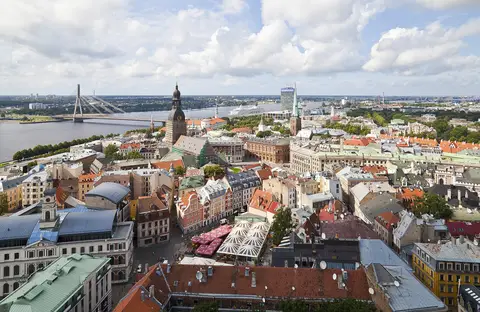
Riga: Art Nouveau, Old Town and Baltic Flair
Travel guide · editorialRiga is the largest city in the Baltics and a former Hanseatic port, where medieval lanes, wooden houses and probably the densest concentration of Art Nouveau architecture in Europe stand side by side. If you're planning a vacation in Riga, you'll find a compact capital on the Daugava River, just half an hour from the Baltic beaches.
Old Town and History
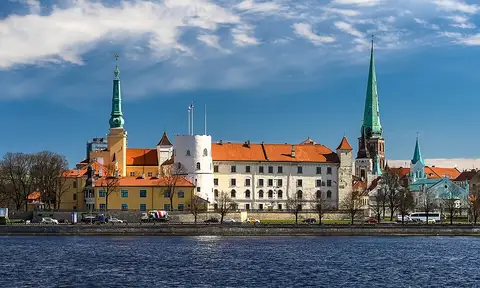
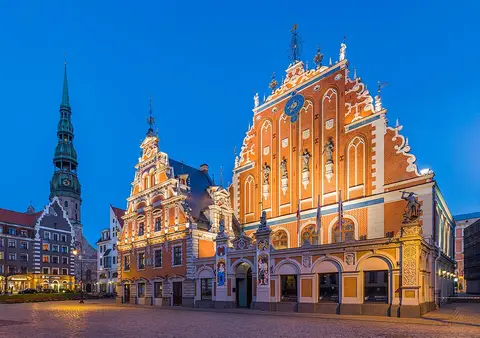
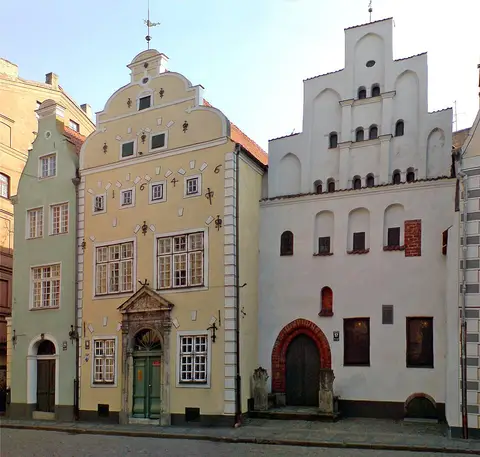
Bishop Albert founded Riga in 1201, and the city soon became an important member of the Hanseatic League. Poland-Lithuania, Sweden and the Russian Empire ruled it in turn; the 20th century brought independence, Soviet and German occupation, and renewed freedom in 1991. The Old Town, Vecrīga, is a UNESCO World Heritage Site: the cathedral is the largest medieval church in the Baltics, and the tower of St. Peter's Church offers the best view over the rooftops. The House of the Blackheads on Town Hall Square was faithfully rebuilt after its destruction in World War II. The Three Brothers, the Swedish Gate and the Great and Small Guilds show how merchants lived here. The Powder Tower recalls the former city wall, and Riga Castle on the banks of the Daugava now serves as the president's official residence.
Sights in Riga
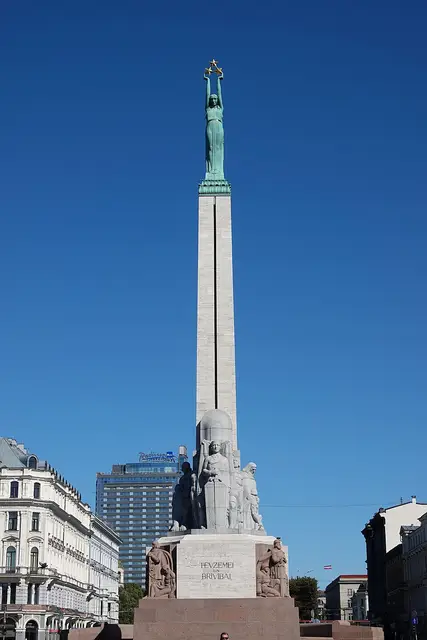
The Art Nouveau district begins north of the Freedom Monument. Alberta iela and Elizabetes iela are lined with lavishly decorated facades, many designed by Mikhail Eisenstein, father of the film director. The Art Nouveau Museum shows a furnished apartment from around 1900. The Museum of the Occupation of Latvia and the former KGB building, the "Corner House," tell of darker chapters. On the Daugava waterfront, the National Library rises as a modern "Castle of Light," and in the Ķīpsala district old wooden houses have been lovingly restored. The Latvian National Museum of Art at Esplanade Park shows painting from the 18th century to the present, and the park along the city canal invites you to stroll across its bridges and along its banks. The Academy of Sciences, a Stalin-era skyscraper, has an observation deck overlooking the Moscow District with its wooden houses.
Food, Market and Nightlife
The Central Market occupies five former Zeppelin hangars and is one of the largest markets in Europe: here you'll find smoked fish, sauerkraut, rye bread, honey and mushrooms. Typical dishes include gray peas with bacon, beet soup and pīrāgi, pastries filled with bacon. The herbal liqueur Riga Black Balsam is drunk neat, in coffee or with black currant juice. Around the Old Town and in the Miera iela district you'll find craft beer bars, cafés and a young restaurant scene that reinterprets Nordic ingredients.
Getting There and Best Time to Visit
Riga Airport (RIX) is the hub of airBaltic and is served by direct flights from many German cities; ferries connect Riga with Stockholm, and buses link it with Tallinn and Vilnius. The Old Town is easy to explore on foot, and trams and suburban trains take visitors to Jūrmala in about 30 minutes. The best time to visit is between May and September; at the Midsummer festival Jāņi on June 23 and 24, the whole country celebrates with wreaths, beer and caraway cheese. In December, Cathedral Square turns into an atmospheric Christmas market – Riga claims to have set up the first decorated Christmas tree in 1510. Worthwhile excursions lead to Rundāle Palace, a Baroque castle near Bauska, and to Gauja National Park around Sigulda, both reachable in a little over an hour.