About The Freedom Monument
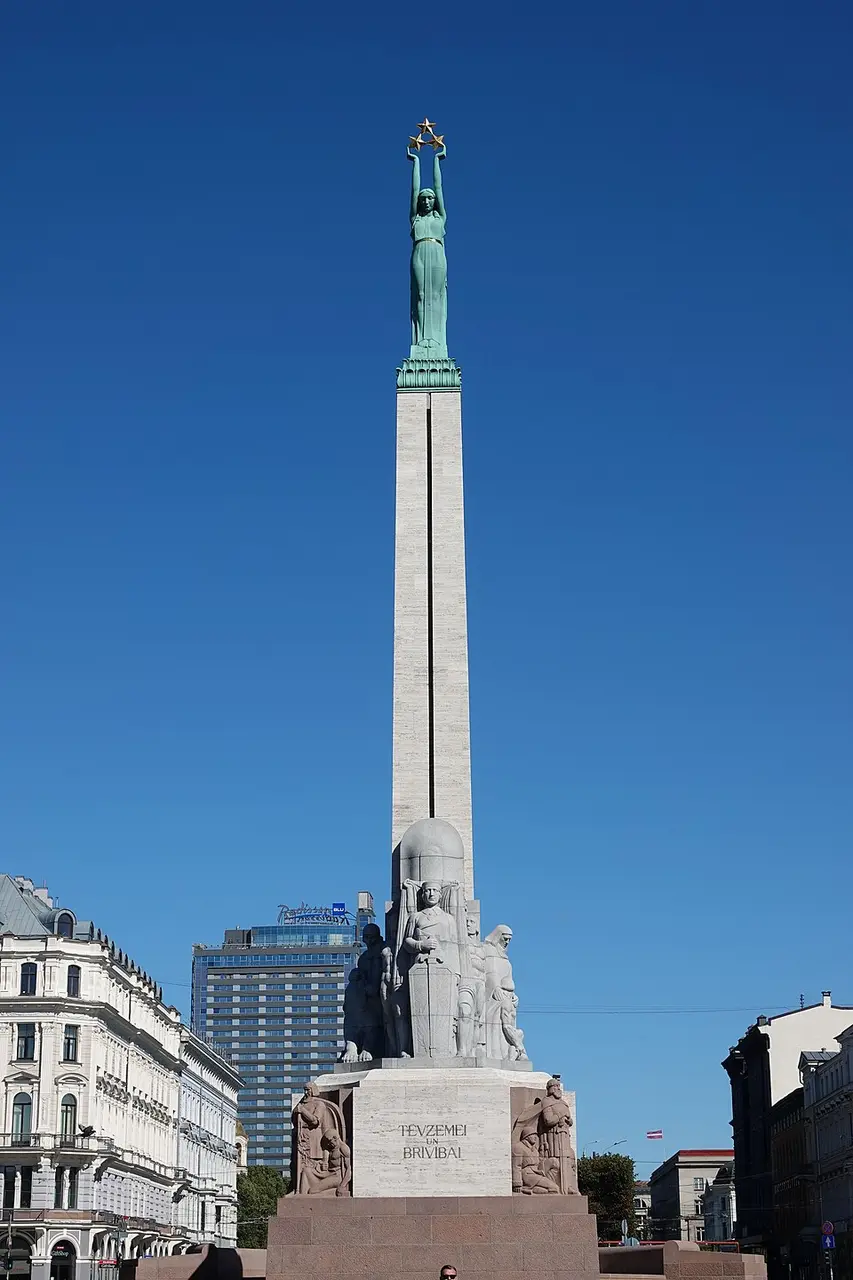
The Freedom Monument in the heart of Riga is the central symbol of Latvia's national sovereignty. It was built between 1931 and 1935 on the site of a former monument to the tsar, to honor the soldiers who fell in the War of Independence. Construction was based on a design by the sculptor Kārlis Zāle and was funded by donations from the public. The monument stands on Freedom Boulevard, a major thoroughfare that leads from the Old Town into the New Town. During the Soviet occupation, the monument survived despite plans to blow it up, which is also attributed to the efforts of the sculptor Vera Mukhina.
Architecturally, the 42.7-meter-tall structure consists of a base with numerous sculptures depicting Latvian mythology and historical events, along with a 19-meter-high obelisk. At its top stands a nine-meter statue of Liberty holding three stars, which symbolize the country's historic regions. The orientation of the figures is noteworthy: the confidently portrayed figures face west, while those in chains look east. The inscription on the base reads "For Fatherland and Freedom."
Today the site is an important gathering place for national celebrations and commemorations. On Independence Day, as well as for weddings and school graduations, people gather here to lay flowers or simply come together. During the day, the monument is guarded by an honor guard that changes every hour. It has also served as a stage for international political addresses and was a central gathering place during the Singing Revolution.
At a glance
- Category
- Sight › Historic sites
- Rating
- no reviews yet · write a review
- Address
Riga, Latvia- District
- Centre
- Phone
- —
- Website
- pt.wikipedia.org
- —
- Coordinates
- 56.95150° N · 24.11328° E
- Data quality
- confidence 0.94
- Identifier
- ID b1b9688d-aa5…
Part of the tour
Riga on Foot: Through the Old Town to the Freedom Monument →Location & surroundings
Toggle layersFAQ about The Freedom Monument
quick answersWhat is the Freedom Monument in Riga?
The Freedom Monument in Riga is the central symbol of Latvia's national sovereignty and honors the soldiers who fell in the War of Independence. It was built between 1931 and 1935 to a design by the sculptor Kārlis Zāle and funded by donations from the public. The monument stands on Freedom Boulevard in the New Town, on the site of a former tsarist monument.
How tall is the Freedom Monument in Riga, and what do its figures mean?
The Freedom Monument in Riga is 42.7 meters (140 feet) tall and consists of a base with numerous sculptures and a 19-meter (62-foot) obelisk. At the top stands a nine-meter (30-foot) statue of Liberty holding three stars that represent Latvia's historic regions. The sculptures on the base depict Latvian mythology and historical events, with the confident figures facing west and the figures in chains facing east. The inscription on the base reads "For Fatherland and Freedom."
Is there an honor guard at the Freedom Monument in Riga?
Yes, the Freedom Monument in Riga is guarded by an honor guard during the day, with the guard changing every hour. The site is also an important gathering place for national celebrations and commemorations, such as Independence Day. People also come here after weddings or graduations to lay flowers.
What role did the Freedom Monument in Riga play during the Soviet era?
The Freedom Monument in Riga survived the Soviet occupation despite plans to blow it up. Its survival is also attributed to the efforts of the sculptor Vera Mukhina. During the Singing Revolution, the monument was a central venue for rallies, and later it also served as a stage for international political speeches.
What can you see around the Freedom Monument in Riga?
Several museums and monuments are within walking distance of the Freedom Monument in Riga. travelguide195 lists the National History Museum of Latvia (about 107 meters away), the statue of George Armitstead (about 188 meters), the Museum of the Occupation of Latvia (about 193 meters), and the University of Latvia Museum (about 200 meters), among others. Within a 500-meter radius, travelguide195 also lists around 122 restaurants, and the tour "Riga on Foot: Through the Old Town to the Freedom Monument" leads straight here.
Ratings & comments
none yetNear The Freedom Monument
closest 5 per category · 2 kmSights
Restaurants
Museums
Hotels
More:Historic sites in Riga (356)Sights in Centre (62)All sights in Riga (392)
275 places within 2 km loaded.
You need a free account to leave reviews and photos – that keeps comments genuine and lets you edit them later.
One of Latvia's national symbols. It was erected during the first independence and surprisingly never taken down by the Soviets (although laying flowers at its feet was forbidden). The statue of a woman holding three stars at the top of the monument represents Freedom embracing Latvia's regions.
Source: Wikivoyage, „Riga/Centrs“ · authors per page history · CC BY-SA 4.0