Discovering Riga: Art Nouveau, Old Town and the Central Market
Travel guide · editorialGrimacing masks on Art Nouveau facades, medieval merchants' houses and a market in old zeppelin hangars: Riga, the capital of Latvia, is the largest city in the Baltics and a rewarding destination for a city break. At the mouth of the Daugava River on the Baltic Sea, Hanseatic history, architecture and a lively cultural scene come together.
From Hanseatic Town to Capital
Bishop Albert of Buxhoeveden founded the city in 1201, and it soon became an important member of the Hanseatic League. Later, Poland-Lithuania, Sweden and the Russian Empire ruled over Riga, and for a long time the Baltic Germans shaped its trade and culture. Around 1900, Riga was one of the largest industrial cities in the Russian Empire and experienced a building boom. Latvia became independent in 1918 but lost its freedom in 1940 to the Soviet occupation. With the Singing Revolution, the country won back its independence in 1991; it has been a member of the EU since 2004 and has used the euro since 2014. The historic center has been a UNESCO World Heritage Site since 1997.
Sights in Riga
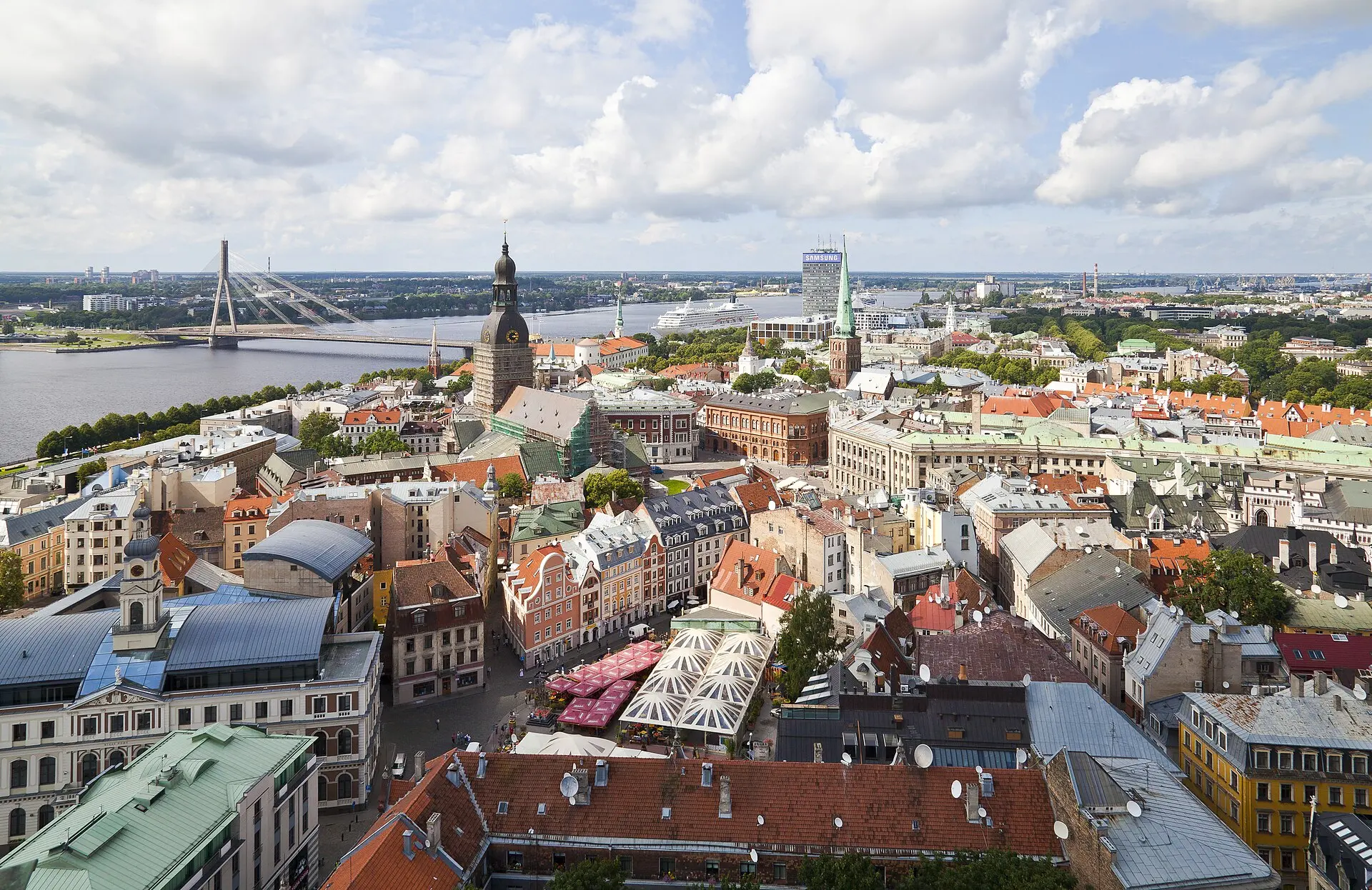
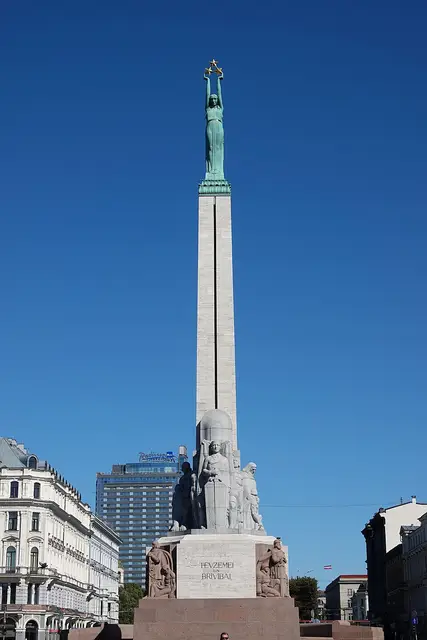
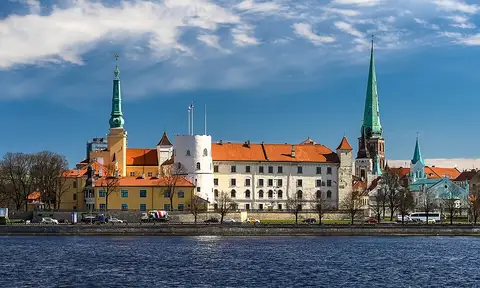
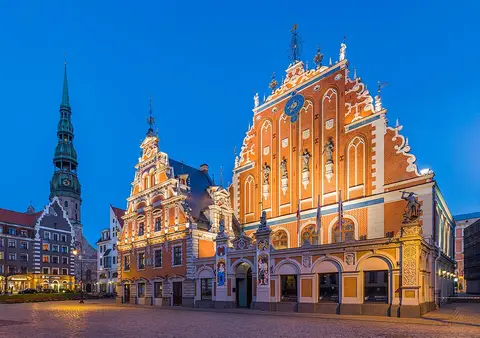
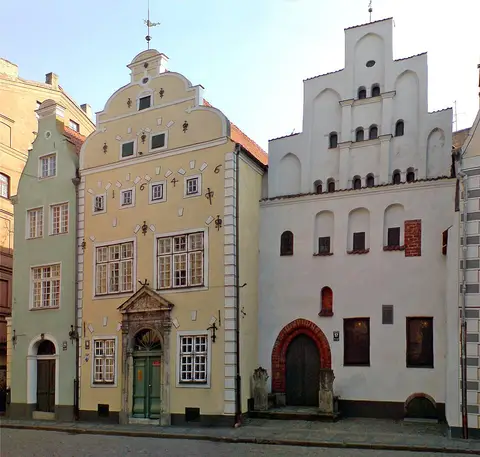
In the Old Town, Vecrīga, you'll find Riga Cathedral, one of the largest medieval churches in the Baltics with a famous organ, and St. Peter's Church, whose tower offers sweeping views over the rooftops. The House of the Blackheads on Town Hall Square, rebuilt after its destruction in World War II, boasts a magnificent Renaissance facade. The Three Brothers are three adjoining residential buildings from different centuries. On the edge of the Old Town, the Freedom Monument commemorates independence. In the Centrs district lies the Art Nouveau quarter around Alberta iela and Elizabetes iela, where Mikhail Eisenstein, the father of the film director, designed facades with masks, women's heads and mythical creatures. Around a third of the buildings in the center are Art Nouveau. The Riga Art Nouveau Museum displays an authentically furnished apartment from around 1900 with a magnificent staircase. The Latvian National Museum of Art and the Museum of the Occupation round out the offerings.
Eating in Riga
The Central Market, housed in five former zeppelin hangars, is one of the largest markets in Europe: here you'll find smoked fish, sauerkraut, rye bread, honey and mushrooms from the forests. Latvian cuisine is hearty, with gray peas with bacon, potatoes, herring and beets. Typical are piragi, small pastries filled with bacon and onions. Riga Black Balsam, a herbal liqueur, is drunk neat or in coffee. In the Āgenskalns district on the other side of the Daugava, there is a restored market hall with cafés and regional products.
Getting Around, When to Go and Day Trips
Riga International Airport (RIX) is about ten kilometers (6 miles) to the west, and buses run to the center. Trams, trolleybuses and buses take you to all parts of the city, such as Avoti or Teika. The best time to visit is between May and September, when the days are long; at the end of June, Līgo and Jāņi, the midsummer festival, is celebrated, and Riga gets quieter because many people head to the countryside. Winters are cold and dark, but charming with the Christmas market. Day trips lead to the seaside resort of Jūrmala with its wooden villas and sandy beaches, to Gauja National Park near Sigulda and to Rundāle Palace, the baroque palace by the architect Rastrelli, who also designed the Winter Palace in St. Petersburg. For a day at the sea, the suburban train, which reaches Jūrmala in about half an hour, is all you need.