About Blackheads House Riga
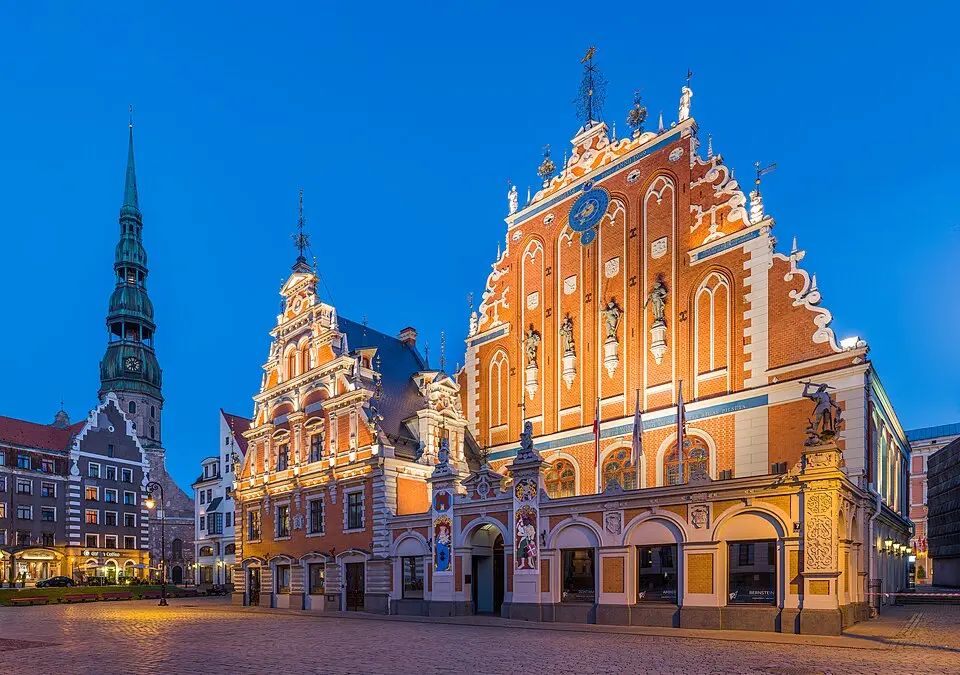
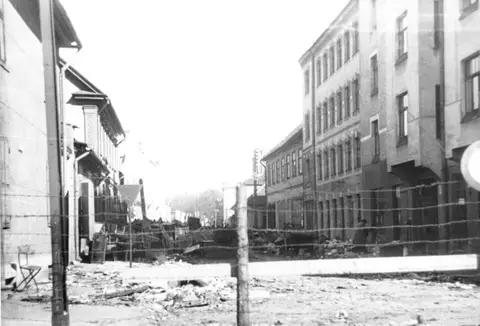
The House of the Blackheads, called Melngalvju nams in Latvian, is a historic landmark on Town Hall Square in Riga. Originally known as the seat of the Great Guild and later of the Brotherhood of Blackheads, the building was first mentioned in documents in 1334. This brotherhood once united young, unmarried foreign merchants who lived in the city without municipal citizenship. The name derives from their patron saint, St. Maurice, whose symbol was the head of a Moor. After its destruction in World War II and the demolition of the ruins during the Soviet era, the house was faithfully reconstructed between 1993 and 1999. Today it is one of the most important sights in the Latvian capital and houses municipal event rooms as well as a tourist office and a café.
The building's architecture reflects several different eras. The Gothic core structure with its steep gabled roof was remodeled in the 17th century in the Mannerist style, inspired by Dutch-Flemish guild houses. A special attraction is the astronomical clock, which was installed in 1626 and is now a replica from Regensburg that shows the time, the date, the day of the week, and the phases of the moon and signs of the zodiac. The richly decorated facade is adorned with numerous sculptures and reliefs, including King Arthur, lions, the patron saints Mary and Maurice, and the coats of arms of the Hanseatic cities of Bremen, Lübeck, and Hamburg. Above the clock, an inscription commemorates the destruction in 1941 and the reconstruction on the occasion of the city's 800th anniversary.
Inside, visitors will find a historically designed complex of rooms. The Great Banquet Hall has been restored to its former splendor and displays paintings of Swedish and Russian rulers. On the way there, you'll pass busts of famous composers such as Bach, Mozart, and Beethoven, since important musical performances took place here in the 19th century. Other rooms, such as the Count of May's Room, the archive, and the Lübeck Hall, offer insights into the history of the guild. In the basement, which was uncovered during the reconstruction, rescued finds are on display. The neighboring Schwabe House and the storehouse of the Blue Guard are also part of the ensemble, while the Roland statue with the Riga coat of arms stands between the house and the town hall as a symbol of civic freedom.
At a glance
- Category
- Sight › Historic sites
- Rating
- no reviews yet · write a review
- Address
- Ratslaukums
Riga, Latvia - District
- Old Riga
- Phone
- —
- Website
- —
- —
- Coordinates
- 56.94753° N · 24.10673° E
- Data quality
- confidence 0.81
- Identifier
- ID 8356eab5-ddf…
Part of the tour
Riga in One Day: Old Town, Freedom Monument and Art Nouveau →Location & surroundings
Toggle layersFAQ about Blackheads House Riga
quick answersWhat is the House of the Blackheads in Riga?
The House of the Blackheads (Latvian: Melngalvju nams) is a historic landmark on Town Hall Square (Ratslaukums) in Riga's Old Town, Vecrīga. The building was first mentioned in documents in 1334, destroyed in World War II, and its ruins were torn down during the Soviet era. Between 1993 and 1999, the House of the Blackheads was faithfully reconstructed. Today it is one of Riga's most important sights and houses municipal event rooms, a tourist office, and a café.
How did the House of the Blackheads in Riga get its name?
The name of the House of the Blackheads in Riga comes from the Brotherhood of Blackheads, whose patron saint was Saint Maurice, symbolized by the head of a Moor. This brotherhood united young, unmarried foreign merchants who lived in Riga without municipal citizenship. The building was originally known as the seat of the Great Guild.
What can you see on the façade of the House of the Blackheads in Riga?
The façade of the House of the Blackheads in Riga combines a Gothic core structure with a steep gabled roof and a 17th-century Mannerist remodeling modeled on Dutch-Flemish guild houses. A special attraction is the astronomical clock, added in 1626 and today a replica from Regensburg, which shows the time, date, day of the week, moon phases, and zodiac signs. Sculptures and reliefs depict King Arthur, lions, the patron saints Mary and Maurice, and the coats of arms of Bremen, Lübeck, and Hamburg, among other things. An inscription above the clock commemorates the destruction in 1941 and the reconstruction for the city's 800th anniversary.
What can you see inside the House of the Blackheads in Riga?
Inside the House of the Blackheads in Riga, you'll find a historically designed complex of rooms with the restored Great Hall, where portraits of Swedish and Russian rulers hang. On the way there, you'll pass busts of Bach, Mozart, and Beethoven, since important musical performances took place in the house in the 19th century. Other rooms include the Room of the May Count, the archive, and the Lübeck Hall. In the basement, which was uncovered during the reconstruction, rescued finds are on display.
What can you see around the House of the Blackheads in Riga?
Right next to the House of the Blackheads in Riga, the Schwab House and the Blue Guard storehouse are part of the ensemble, and between the house and the Town Hall stands the Roland statue with Riga's coat of arms, a symbol of civic freedom. travelguide195 lists the Museum of the Occupation of Latvia about 70 meters away and the Latvian Museum of Fashion (Modes muzejs) about 100 meters away. Within 500 meters, travelguide195 lists around 149 restaurants. The House of the Blackheads is also part of the tour "Riga in One Day: Old Town, Freedom Monument, and Art Nouveau."
Ratings & comments
none yetNear Blackheads House Riga
closest 5 per category · 2 kmSights
Museums
Hotels
More:Historic sites in Riga (356)Sights in Old Riga (47)All sights in Riga (392)
272 places within 2 km loaded.
You need a free account to leave reviews and photos – that keeps comments genuine and lets you edit them later.
The House of Blackheads is where the merchants-to-be had their guild. Part of this building is the tourist information office, the rest is a fascinating museum. The upper levels house grand ballrooms while the basement has a wine cellar and several exhibits relating to trading in Riga.
Source: Wikivoyage, „Riga/Vecrīga“ · authors per page history · CC BY-SA 4.0 · as of 6/27/2017