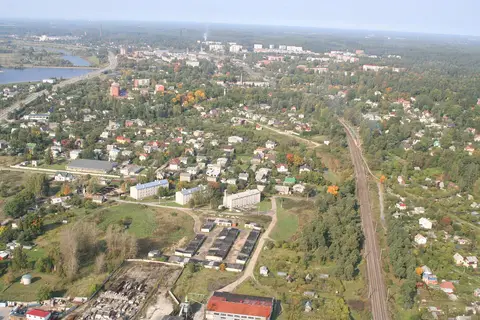
Ogres novads: Pine Hills on the Daugava
Travel guide · editorialWhere the Ogre River flows into the Daugava, a health resort sprang up around 1900 for Riga families who prized the resinous air of the pine forests. A trip to Ogres novads combines this tradition with river landscapes, legends from the Latvian national epic, and some of the oldest architectural monuments in the Baltics. Riga is only about 35 kilometers away, and the train takes a good half hour.
Ogre and the Blue Hills
The town of Ogre itself is mostly a residential community today, but its resort heritage is still palpable in the parks and old wooden villas. On the edge of town rise the Zilie kalni, the "Blue Hills," forested dune ridges with hiking trails, a lookout tower, and cross-country ski tracks in winter. The History and Art Museum recalls the resort era. Along the banks of the Ogre, swimming spots and riverside promenades invite a leisurely stroll. If you're looking for more of a workout, follow the marked path along the river deep into the forests, where blueberries and chanterelles grow in late summer and locals head out with baskets.
Ikšķile, Lielvārde, and Ķegums
Since 2021, Ikšķile, Lielvārde, and Ķegums have also been part of the district. Ikšķile is a historic site: it was here that Bishop Meinhard had the first stone church in the Baltics built in the 12th century. Its ruins now stand on a small island in the dammed river, beneath a modern protective roof. In Lielvārde, everything revolves around Lāčplēsis, the bear-slaying hero of the national epic; a museum and a park commemorate the poet Andrejs Pumpurs and the Lielvārde belt, a woven pattern full of symbols. In Ķegums, a large hydroelectric plant dams the Daugava; the energy museum tells the story of its construction in the 1930s.
Food, Getting There, and the Best Time to Visit
Farms in the region sell honey, apple juice, smoked meats, and rye bread, and restaurants in Lielvārde and Ogre serve hearty Latvian home cooking such as gray peas with bacon. The best time to visit is between May and September, when the forests and riverbanks are ideal for hiking, cycling, and swimming. In winter, the Blue Hills become a cross-country skiing destination. The Riga–Daugavpils rail line and the A6 highway make the district easy to reach.