Sigulda Municipality: Castles above the Gauja Valley
Travel guide · editorialRed sandstone cliffs, a densely wooded river valley, and three medieval castles in close proximity – it's no accident that Sigulda is considered one of Latvia's most popular destinations for a day trip. From Riga, you can reach Sigulda Municipality (Siguldas novads) by train in about an hour. If you stay longer, you'll also discover the quieter villages around Krimulda, Inčukalns, and Mālpils.
Turaida, Sigulda, and Krimulda
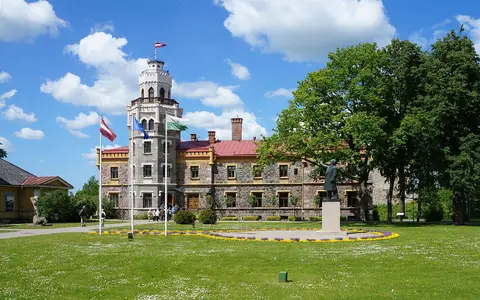
The reconstructed brick castle of Turaida, with its round main tower, towers over the Gauja River; the museum reserve also includes a wooden church, a sculpture park, and the grave of the "Rose of Turaida," a young woman whose tragic love story every Latvian child knows. Across the valley lie the ruins of Sigulda's Livonian Order castle and the New Castle, a 19th-century manor house. On the other side of the valley stands Krimulda Manor, with the remains of a bishop's castle. A cable car glides across the river, linking the two banks, and in summer the brave leap from the gondola on a bungee cord.
Gauja National Park and Activities
Gauja National Park surrounds the town. Hiking trails lead to Gutmanis Cave, the largest sandstone cave in the Baltics, with inscriptions dating back several centuries, to Viktor's Cave, and to viewpoints over the valley. You can drift leisurely downstream by canoe or raft. Sigulda is also a winter sports destination: at the bobsled and luge track, which hosts World Cup races, visitors can book rides in a taxi bob in both summer and winter. Small ski slopes and cross-country trails round out the offerings. Things are quieter in Mālpils, with its neoclassical manor house, and in Inčukalns, where trails wind through pine forests and past small lakes.
Best Time to Visit and Cuisine
The best time to visit is autumn: in late September and early October, the Gauja Valley turns brilliant shades of red and gold, and Sigulda becomes a pilgrimage site for photographers. But the town has its charms in summer, with music festivals, and in winter, with snow. Cafés and inns serve pancakes, mushroom soup, game, and cakes made with wild berries; Sigulda is also known for its wooden walking sticks, sold as souvenirs.