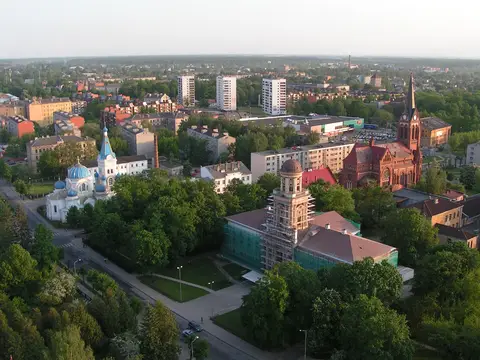
Mitau: The Ducal City of Jelgava on the Lielupe
Travel guide · editorialKnown in German as Mitau, the city on the Lielupe River was once the residence of the Dukes of Courland and Semigallia, and a magnificent Baroque palace still recalls this glittering era. A trip to Mitau, called Jelgava in Latvian, combines easily with a day trip from Riga: the train takes just over half an hour. If you stay longer, you'll find a student town with festivals and plenty of green space.
Palace and History
Jelgava Palace was built in the 18th century to plans by Francesco Bartolomeo Rastrelli, who also designed the Winter Palace in Saint Petersburg. Today the building is used by the Latvia University of Life Sciences and Technologies, but you can still visit the ducal crypt with its ornately decorated sarcophagi. Mitau was heavily destroyed in World War II, and little of the old townscape survived. The reconstructed tower of Holy Trinity Church serves as a visitor center with an observation deck, where you can look out over the rooftops all the way to the Lielupe. The Academia Petrina, an early Neoclassical building, houses the History and Art Museum.
Festivals, Surroundings, and Food
Jelgava is known for its international ice sculpture festival, which draws artists from many countries every February; in summer, sand sculptures and a city festival follow. The Lielupe offers boat trips and riverside paths. The surrounding area is the flat, fertile region of Semigallia, with wheat and sugar beet fields. A worthwhile side trip leads to Rundāle Palace, another Rastrelli building about 40 kilometers to the south, as well as to Mežotne Manor. Local tables feature rye bread, pearl barley, pork, and cakes made from regional grain.
Best Time to Visit
Between May and September is the most pleasant time to enjoy the parks and riverbanks. The city and its surroundings are then easy to explore by bike, for example along trails beside the Lielupe or to the manor houses of Semigallia. If you'd like to experience the ice sculpture festival, come in February and dress warmly: the sculptures are lit in color in the evening, and the stalls sell hot mulled wine and pancakes. That also makes Jelgava a good winter outing from Riga.