Discover Munich: Beer Gardens, Art, and the Isar
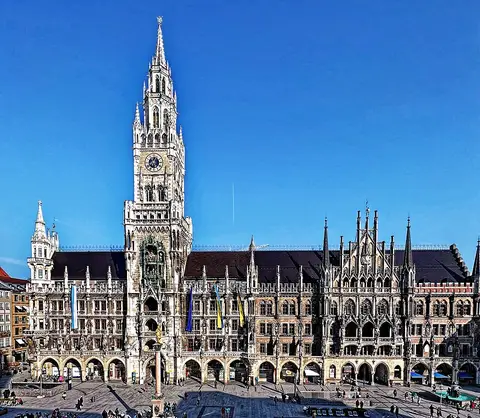
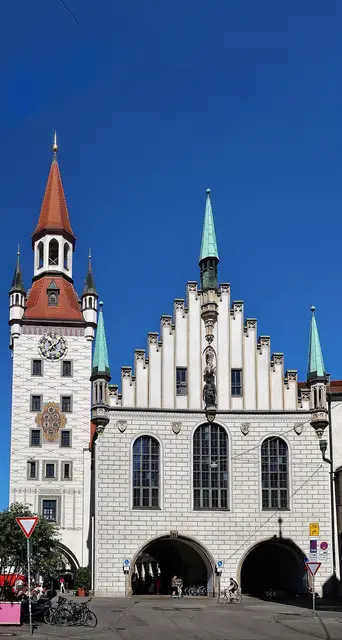
Travel guide · editorialWhen the glockenspiel in the Town Hall tower starts up at midday and the first white sausages leave the counter at the Viktualienmarkt, Munich shows its favorite face. The Bavarian state capital combines world-class art, brewing tradition, and views of the Alps, and a city break in Munich is easy to combine with lakes and mountains.
From Monks to the Wittelsbachs
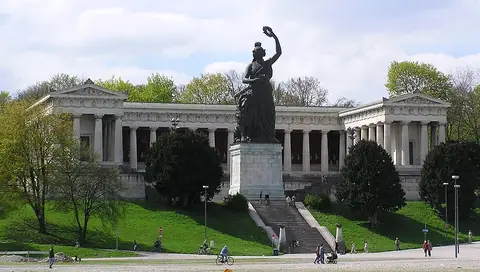
The name goes back to monks, the "Munichen" of the Münchner Kindl on the city's coat of arms. Henry the Lion founded a market on the Isar in 1158, and from 1255 the Wittelsbachs, who ruled Bavaria until 1918, resided here. In the 19th century, King Ludwig I turned Munich into an "Athens on the Isar" with Ludwigstrasse, Königsplatz, and the Pinakotheken. In the 20th century the city was the scene of the Beer Hall Putsch and the Nazi movement; after the war it was carefully rebuilt. The Olympic Games took place here in 1972, overshadowed by the attack on the Israeli team.
Sights in Munich
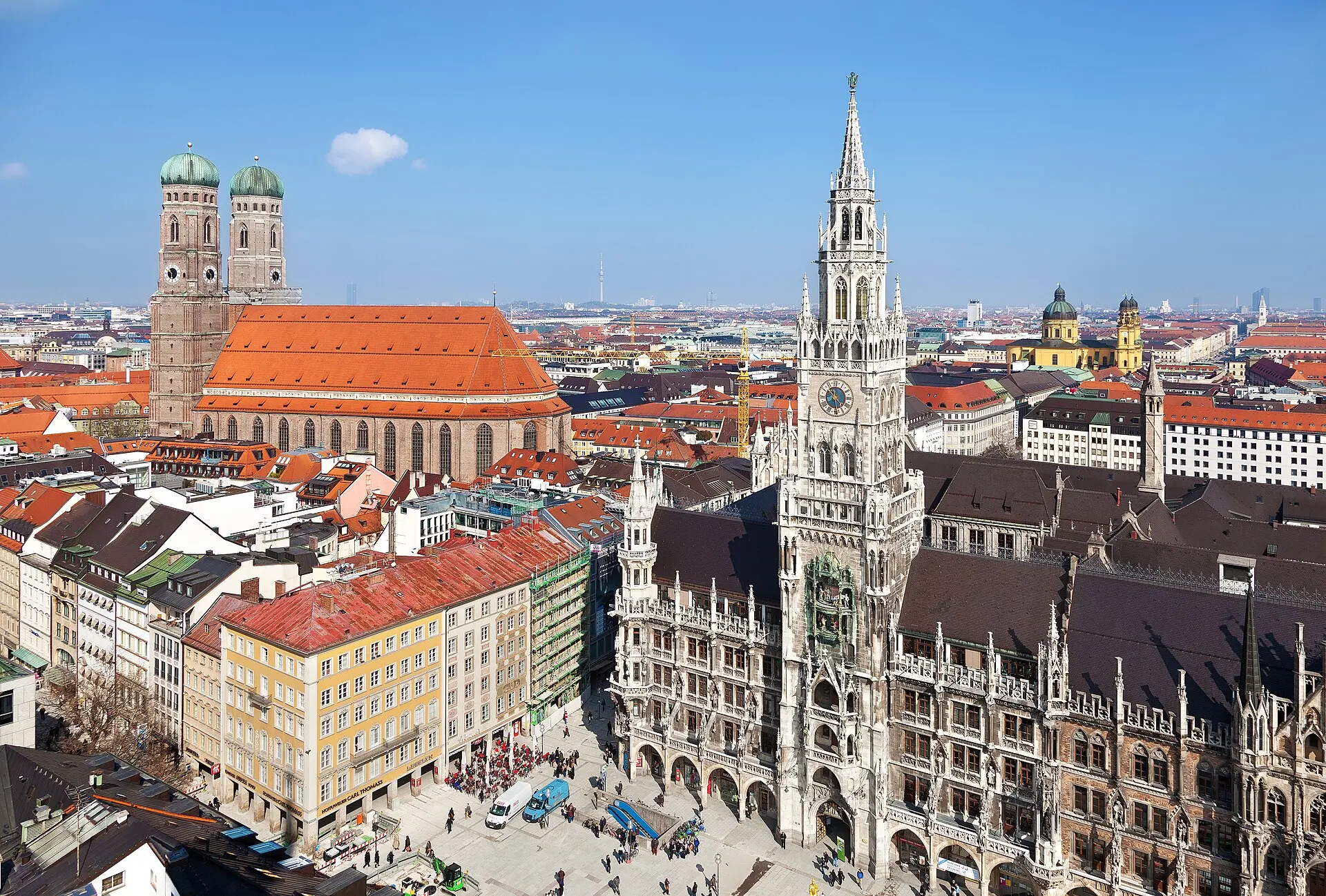
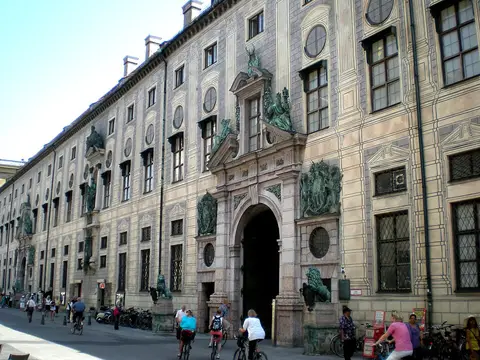
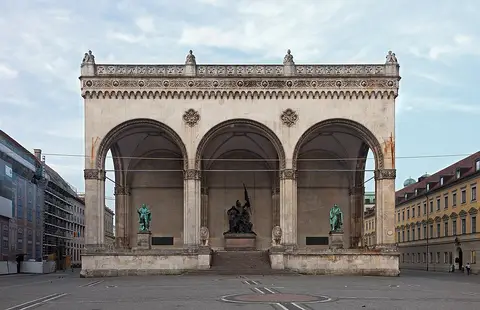
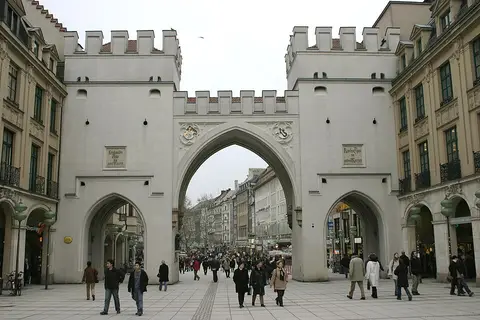
In the heart of the Old Town, in the Altstadt-Lehel district, lies Marienplatz with the New Town Hall and its glockenspiel. The twin towers of the Frauenkirche define the skyline, and from the tower of St. Peter's Church, known as "Old Peter," you can look out over the rooftops all the way to the Alps. The Residenz, for centuries the Wittelsbachs' city palace, impresses with its Antiquarium and Treasury; next to it are the Hofgarten and the Feldherrnhalle. On the Eisbach in the English Garden, surfers ride a standing wave; the park itself is larger than New York's Central Park. To the west lies Nymphenburg Palace with its park and the Marstallmuseum, and to the north the Olympiapark with its tent-roof stadium and TV tower.
Museums and Culture
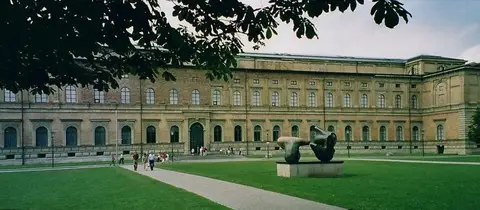
The Kunstareal in the Maxvorstadt is one of Europe's most important museum districts: the Alte Pinakothek shows Dürer, Rubens, and Leonardo, the Neue Pinakothek covers the 19th century (currently closed for renovation, with parts of the collection shown in other venues), and the Pinakothek der Moderne presents art, design, and architecture. The Lenbachhaus holds the most important collection of the "Blue Rider" group. On an island in the Isar stands the Deutsches Museum, one of the largest science and technology museums in the world. BMW Welt and the BMW Museum sit next to the Olympiapark. With the Bavarian State Opera and the Munich Philharmonic, the city is also first-rate musically.
Eating in Munich and Beer Gardens
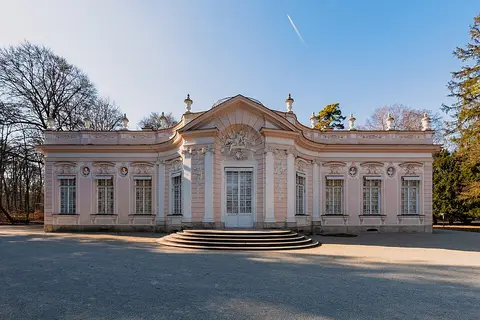
Traditionally, white sausage is eaten before noon, with sweet mustard, pretzels, and wheat beer. Classics include roast pork with dumplings, pork knuckle, Obatzda, and Leberkäs. The Viktualienmarkt has been Munich's market for gourmet foods, fruit, and cheese since the 19th century, complete with a maypole and a beer garden. In beer gardens such as the one at the Chinese Tower or the Hirschgarten, one of the largest in the world, you are traditionally allowed to bring your own picnic. Six major breweries supply the beer for Oktoberfest.
Neighborhoods and Nightlife
Ludwigsvorstadt-Isarvorstadt, with the Glockenbach and Gärtnerplatz quarters, is the go-to nightlife district, with bars, cafés, and a queer scene. Haidhausen, part of Au-Haidhausen, offers French-style squares and pubs, while Schwabing has its artistic past and Leopoldstrasse. In summer, people sit on the gravel banks along the Isar. Oktoberfest on the Theresienwiese begins in mid to late September and draws millions of visitors; during that time hotels are expensive and book up quickly.
Getting Around and Best Time to Visit
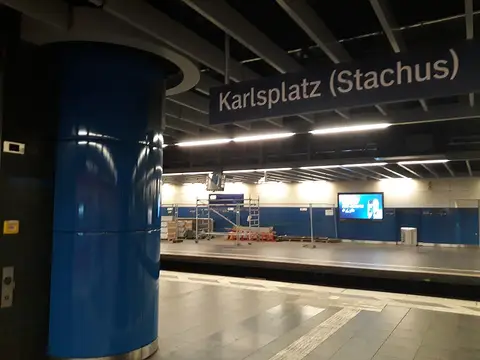
The airport is about 30 kilometers (19 miles) to the northeast and can be reached in around 40 minutes on two S-Bahn lines. The U-Bahn, S-Bahn, trams, and buses cover the city densely. The best time to visit is May through October; in Advent, Christmas markets are a draw. Day trips lead to Neuschwanstein Castle, Lake Starnberg and Lake Tegernsee, the Dachau concentration camp memorial site, and the Alps. With the Bayern-Ticket from Deutsche Bahn you can get inexpensively in a single day to Garmisch-Partenkirchen at the foot of the Zugspitze, to Salzburg, or to Lake Chiemsee with Herrenchiemsee Palace. If you're here in summer, plan an afternoon at the Flaucher meadows in the south of the city, where Münchners barbecue and swim along the restored Isar. In winter, the museums and concert halls are the best choice, and in December the Christkindlmarkt on Marienplatz smells of mulled wine and roasted almonds. In spring, Starkbierzeit (strong beer season) at the Nockherberg beckons, when potent Lenten beer is served and politicians are roasted in the traditional Derblecken.