Bavaria: Alps, Old Towns, and Beer Gardens
Travel guide · editorialBavaria is Germany's largest state by area, combining Alpine peaks, lakes, Baroque monasteries, and medieval imperial cities. A vacation in Bavaria might begin in a beer garden on Lake Chiemsee, continue on the Zugspitze, and end in the wine taverns of Franconia.
Four Landscapes, Three Tribes
The Free State is roughly divided into Old Bavaria, which includes Upper and Lower Bavaria and the Upper Palatinate, Franconia in the north, and Swabia in the west. Each region has its own dialects and customs, which Franconians like to point out if you mistake them for Bavarians. In the south, the Alps stretch from Lindau on Lake Constance to Berchtesgaden, with the Zugspitze as Germany's highest mountain. In front of them lies the Alpine foothills, with lakes such as Chiemsee, Starnberger See, Ammersee, and Tegernsee. Farther north you'll find the Danube, the Bavarian Forest as part of the largest forested area in Central Europe, the Fichtel Mountains, Franconian Switzerland, and the Main Valley with its vineyards.
Munich and the Major Cities
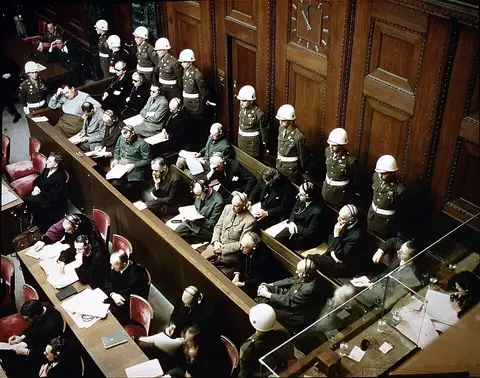
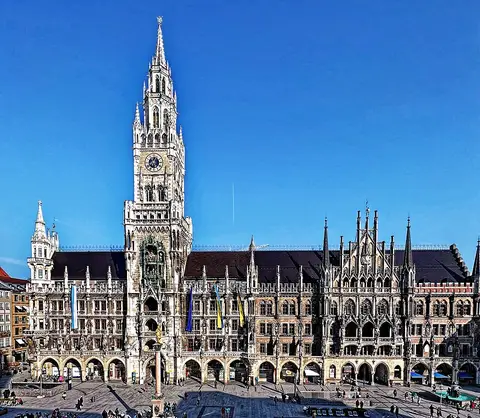
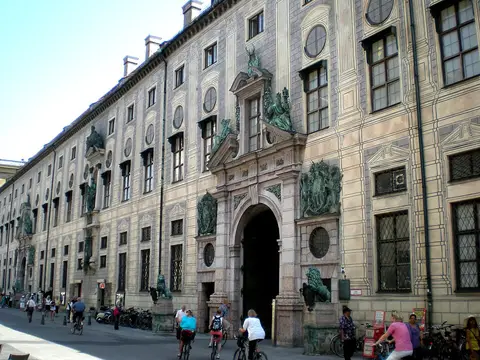
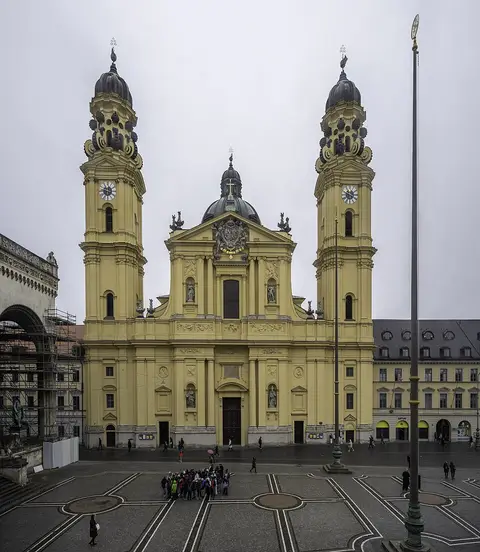
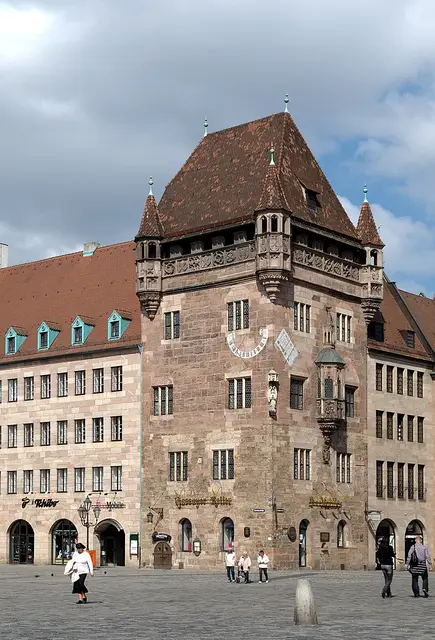
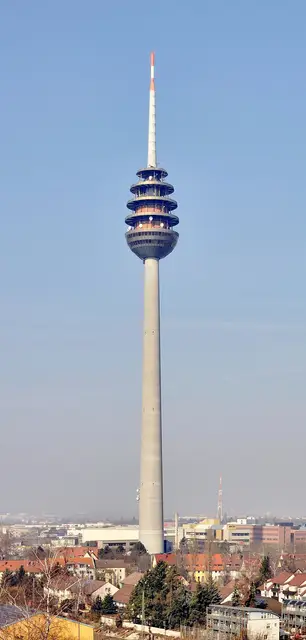
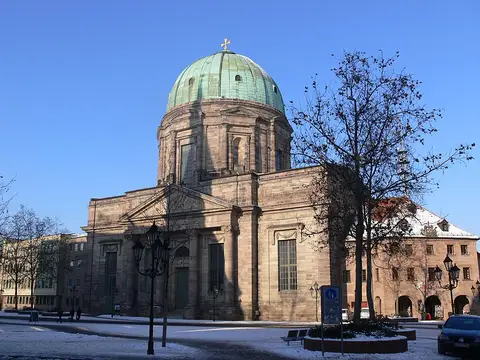
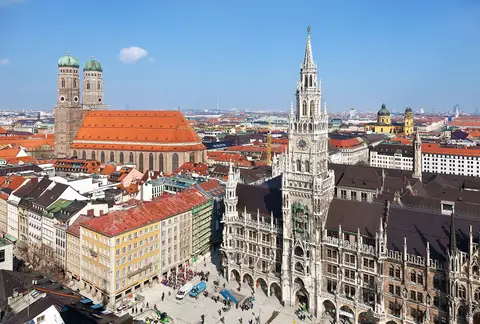
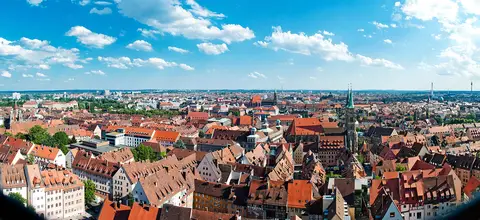
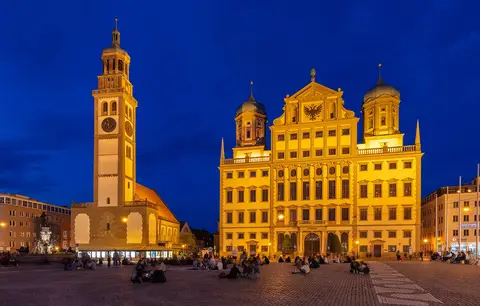
Munich is the state capital and one of the wealthiest cities in Europe. Marienplatz with its Glockenspiel at the New Town Hall, the Frauenkirche, the Viktualienmarkt, and the Hofbräuhaus are all in the center, and the Pinakotheken art museums and the Deutsches Museum are among the country's most important collections. In the English Garden, people surf on the Eisbach wave, and Nymphenburg Palace showcases courtly Baroque. Every year at the end of September, Oktoberfest begins on the Theresienwiese. Nuremberg offers an imperial castle, the Dürer House, the Christkindlesmarkt, and the Documentation Center Nazi Party Rally Grounds, which examines Nazi history. Right next door are Fürth, with well-preserved Gründerzeit streets, and the university town of Erlangen with its Bergkirchweih festival. Augsburg, over 2,000 years old, is the city of the Fuggers, with the Fuggerei, the oldest social housing complex still in existence in the world. Smaller towns such as Landshut with its Princely Wedding festival, Passau at the confluence of the Danube, Inn, and Ilz, or Lindau on its island in Lake Constance show that the Free State is far more than Munich. In summer, many towns hold folk festivals with beer tents, brass bands, and traditional costumes, where locals keep to themselves but visitors are welcome all the same.
Sights in Bavaria
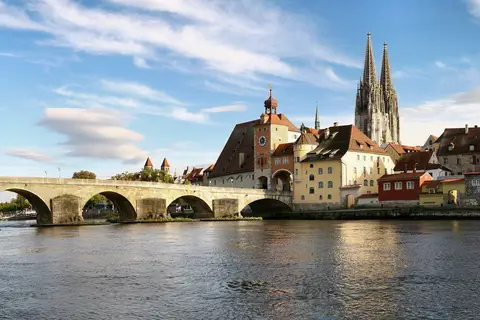
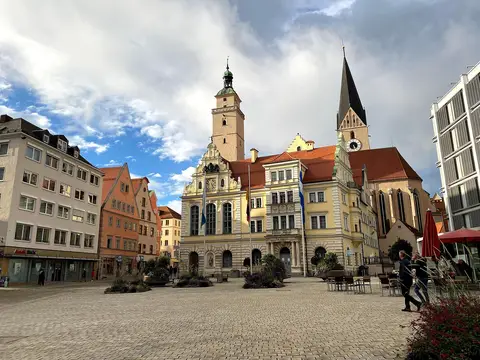
Neuschwanstein Castle near Füssen, King Ludwig II's fairy-tale castle, is one of Germany's most-visited landmarks; since 2025 it has been part of a UNESCO World Heritage site together with Linderhof, Herrenchiemsee, and the Royal House on the Schachen. Regensburg has the best-preserved medieval large city in Germany, with its Stone Bridge and cathedral. Würzburg draws visitors with the Residence, whose staircase hall Tiepolo decorated with the largest continuous ceiling fresco in the world, and with Marienberg Fortress above the vineyards. Bamberg, Rothenburg ob der Tauber, and Dinkelsbühl are more Bavarian destinations for lovers of half-timbered houses and winding lanes. The Wieskirche in the Pfaffenwinkel, Weltenburg Abbey at the Danube Gorge, and the Königssee near Berchtesgaden are highlights in the south.
Mountains and Lakes
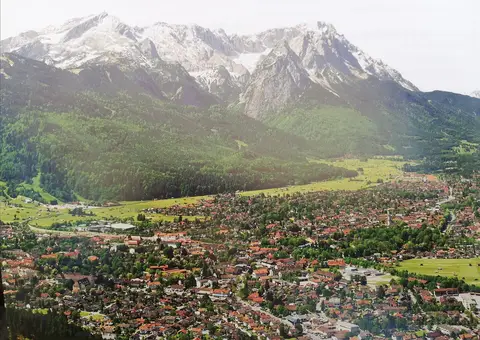
Garmisch-Partenkirchen lies at the foot of the Zugspitze, which you can reach by cog railway and cable car. Oberstdorf in the Allgäu is Germany's southernmost town, with ski jumping hills, the Nebelhorn, and the Breitach Gorge. The Allgäu Alps and the Werdenfelser Land offer hundreds of kilometers of hiking trails and staffed alpine huts. In the Berchtesgadener Land, you can take an electric boat across the Königssee to St. Bartholomä. On the Herreninsel in Lake Chiemsee stands Ludwig's copy of Versailles. If you prefer something quieter, hike the treetop trails in Bavarian Forest National Park.
Food and Drink
Bavaria is brewery country, with more than 600 breweries, many of them in Franconia. A traditional Brotzeit snack includes white sausages with sweet mustard and pretzels, Leberkäse, and Obatzda. Roast pork with dumplings, pork knuckles, and Kässpatzen in the Allgäu are hearty classics. In Nuremberg, you eat small grilled sausages and gingerbread, and in Franconia, Schäufele (roast pork shoulder). Franconian wines in the Bocksbeutel bottle, especially Silvaner, have a good reputation. In a beer garden, it is traditional to bring your own Brotzeit.
Getting There and Best Time to Visit
Munich Airport is Germany's second-largest hub, supplemented by Nuremberg and Memmingen. ICE high-speed routes connect Munich and Nuremberg with Berlin, Frankfurt, and Vienna. For the Alps and lakes, regional trains and buses work well, and the Deutschlandticket is valid on local transit. The best time to visit for hiking is June through October, and for cities, late spring and fall. In winter, ski areas and Christmas markets are the draw, for example in Nuremberg, Regensburg, and Augsburg.