Discover Estonia: Tallinn, Islands and Bogs
Travel guide · editorialEstonia is nearly as big as Lower Saxony but has fewer inhabitants than Munich, so a vacation in Estonia means, above all, plenty of space: pine forests, raised bogs, more than 2,000 islands and a coastline where you can often walk alone. Right in the middle lies Tallinn, one of the best-preserved medieval Hanseatic cities in Northern Europe.
Tallinn: Hanseatic City and Digital Capital
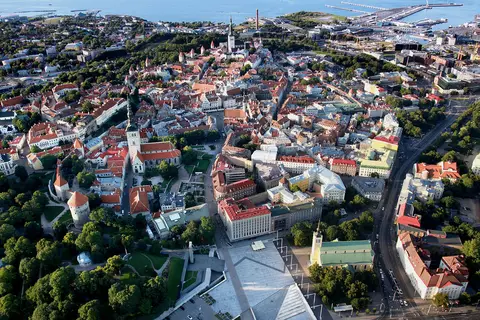
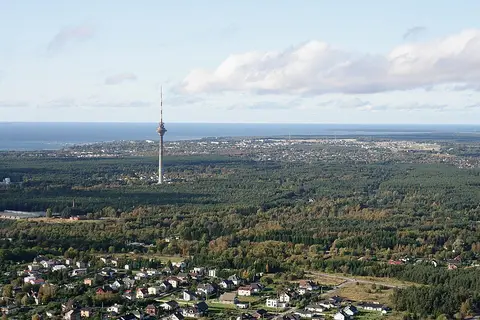
The Old Town of Tallinn, a UNESCO World Heritage Site since 1997, is divided into two parts. Down below, in the merchants' town, gabled merchant houses surround Town Hall Square, where the Gothic town hall is considered the oldest surviving one in Northern Europe. The city wall, with a good two dozen surviving towers, encloses lanes where marzipan shops, craftsmen's courtyards and old pharmacies have survived. Up on Toompea Hill, the nobility and administration once resided, and today it is home to the parliament; from the viewing platforms you look out over red roofs to the harbor. Right across from it stands the Orthodox Alexander Nevsky Cathedral with its onion domes, a legacy of the tsarist era.
Outside the walls, Tallinn shows how the city has changed since independence. In the Kalamaja district, part of Põhja-Tallinn, 19th-century wooden houses have been lovingly restored, and in the Telliskivi creative district, galleries and cafés occupy old factory halls. In the harbor at Lennusadam, a submarine and an icebreaker lie inside a historic concrete seaplane hangar. Kadriorg Park, with Peter the Great's Baroque palace and the KUMU art museum, is a peaceful counterpoint to the Old Town. That almost every government office in Estonia can be reached online becomes obvious to visitors when they notice how naturally people here pay contactlessly and book everything digitally.
Tartu, Pärnu and Other Estonia Destinations
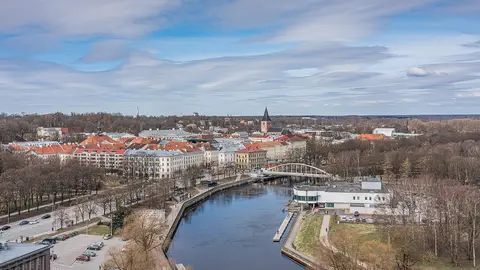
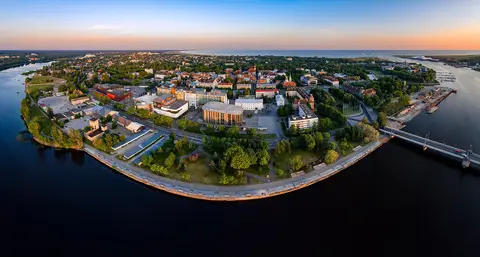
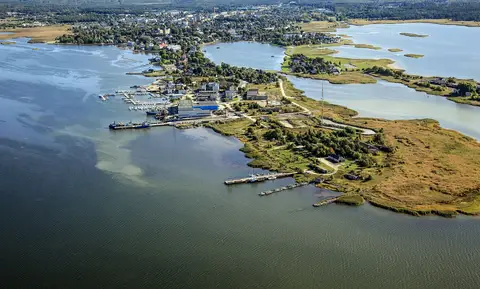
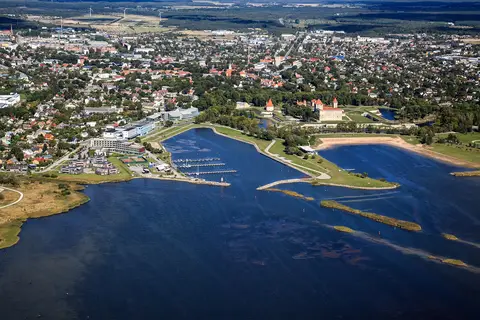
Tartu, the second-largest city, is home to the country's oldest university, founded in 1632 under Swedish rule. On the slope of Toome Hill stand the ruins of a Gothic cathedral, and the Estonian National Museum on the edge of town tells the country's history in an impressive modern building. In 2024 Tartu was a European Capital of Culture, and the students keep the pubs lively all year round. Pärnu on the west coast is the classic summer seaside resort, with a long sandy beach, wooden villas and a spa tradition. Haapsalu, smaller and quieter, has a bishop's castle and a seaside promenade where Tchaikovsky once strolled.
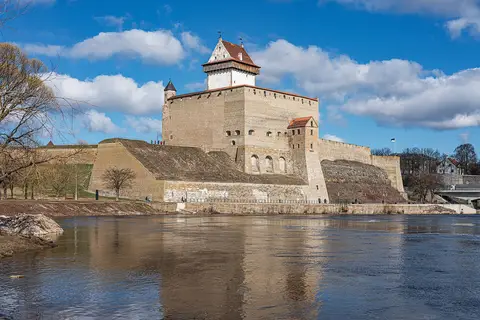
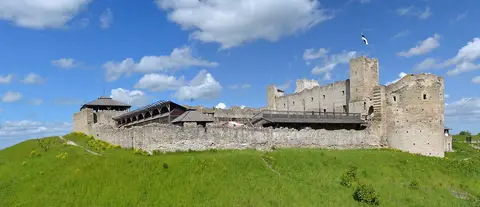
In the far east lies Narva, on the border with Russia. Hermann Castle and the Russian fortress of Ivangorod face each other directly across the river, an image that explains the country's situation better than any history book. The city is predominantly Russian-speaking, and its everyday life is a world of its own. If you are in the northeast, you should also visit Lahemaa National Park, with manor houses such as Palmse and Sagadi, fishing villages and erratic boulders along the coast.
Islands, Bogs and National Parks
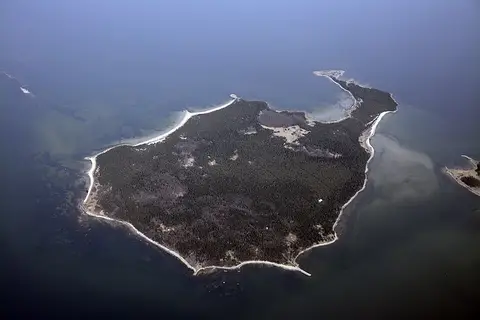
Many of Estonia's sights are found in nature. Saaremaa, the largest island, is a place of windmills, juniper meadows and stone walls. In Kuressaare stands one of the best-preserved bishop's castles in the Baltics, and near Kaali a meteorite struck a nearly circular crater into the landscape several thousand years ago. On Hiiumaa, old lighthouses such as the one at Kõpu rise above the forests, and the small island of Muhu is known for its colorful folk costumes. Inland, bogs cover about a fifth of the land. On boardwalks, for example in Viru Bog or Soomaa National Park, you walk over peat moss to dark bog pools. In Soomaa people even speak of a "fifth season": in spring the rivers overflow their banks, and meadows and forests can then only be explored by dugout canoe or canoe.
Culture and History: The Singing Revolution
Over the centuries, Estonia was ruled by the Danes, the Teutonic Order, Sweden and Russia. The Baltic German nobility shaped the country into the 20th century, which is the origin of many manor estates and loanwords. After brief independence from 1918 came Soviet occupation; in 1991 Estonia became free again, and since 2004 it has been a member of the EU and NATO. Singing played a central role on the road to independence: during the Singing Revolution in the late 1980s, hundreds of thousands gathered at the Song Festival Grounds in Tallinn. The Laulupidu song festival takes place there roughly every five years and is part of UNESCO's intangible cultural heritage, as is the smoke sauna tradition in the southeast, in the Võrumaa region. On Midsummer Eve, June 23, bonfires burn all across the country.
Eating and Drinking in Estonia
The foundation of Estonian cuisine is dark rye bread, rukkileib, which accompanies almost every meal. Topped with kilu, small marinated sprats, along with egg and onions, kiluvõileib is a national dish. In winter you'll find verivorst, blood sausage with lingonberries, and mulgipuder, a porridge of potatoes and barley groats with bacon. Kama, a flour made from roasted grains and peas, is stirred into kefir or buttermilk. On Saaremaa, strong beer is brewed, and Tallinn has developed a lively craft beer scene. Many visitors take home Vana Tallinn as a souvenir, a sweet rum liqueur with vanilla and citrus. At the same time, Tallinn is now a good address for modern Nordic cuisine, often considerably cheaper than in Scandinavia.
Getting There, Getting Around and the Best Time to Visit Estonia
You can reach Tallinn by direct flight from several German cities or by ferry from Helsinki in about two hours, with additional connections from Stockholm. By car, the Via Baltica leads through Poland, Lithuania and Latvia. Rail Baltica, a new rail line to Central Europe, is under construction. Within the country, modern trains run from Tallinn to Tartu, Narva and Pärnu, buses serve almost every town, and ferries carry cars to Saaremaa and Hiiumaa. The best time to visit Estonia is between May and September: in July temperatures reach 68 to 77°F, the Baltic Sea becomes pleasantly warm at shallow beaches, and around midsummer it stays light almost all night. Winters are cold and dark, but Tallinn draws visitors with its Christmas market on Town Hall Square.