Tartu County: University Town and Lake Peipus
Travel guide · editorialTartu is Estonia's second-largest city and its intellectual center, and the county of the same name stretches all the way to the shore of Lake Peipus. A trip to Tartu County combines a lively student town, world-class museums, and villages of Russian Old Believers with their onion fields.
Tartu: Knowledge and Culture
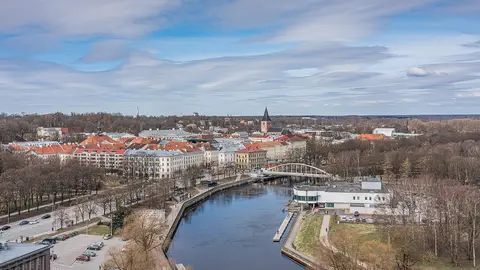
The University of Tartu, founded in 1632 under Swedish rule and known by its German name, Dorpat, still shapes the city today. Its neoclassical main building, the ruins of the cathedral on Toome Hill, and the observatory, part of the UNESCO World Heritage Struve Geodetic Arc, are all close together. On Town Hall Square stands the sculpture of the kissing students, and not far away is the leaning house, which holds the art museum. The Estonian National Museum, a long, modern building on a former Soviet military airfield, offers a striking portrait of the country's everyday life and history. The AHHAA science center draws families. In 2024, Tartu was a European Capital of Culture, and many of the projects launched at that time have remained. In the evening, students gather in the pubs along the banks of the Emajõgi.
Sights in Tartu County
On the western shore of Lake Peipus, Europe's largest transboundary lake, lie the Old Believers' linear villages, such as Kolkja and Varnja. These Russian Orthodox refugees arrived beginning in the 17th century and still grow onions, which hang on strings in front of the houses; the route is known as the Onion Road. Alatskivi Manor, a neo-Gothic castle modeled on Scottish examples, is a popular excursion. South of the city, the forests and lakes around Elva invite hiking and, in winter, cross-country skiing. Along the Emajõgi, which connects Tartu with Lake Peipus, lie floodplain meadows that you can explore by canoe or aboard a replica cargo barge called a lodja.
Food, Getting There, and Best Time to Visit
On Lake Peipus you'll find smoked vendace and perch, served with tea from a samovar in small cafés. In Tartu, small breweries make their own beer, and the traditional A. Le Coq brand also comes from here. Tartu is reachable from Tallinn by train in a little over two hours, and buses run to Riga. The best time to visit is May through September, when the terraces are open and the lake is inviting for a swim; in winter it often freezes over.