Harju County: Tallinn, Coastal Cliffs, and Bogs
Travel guide · editorialHarju County, or Harjumaa, surrounds the Estonian capital and is home to almost half of the country's population. A vacation in Harju County usually starts in Tallinn's medieval Old Town and then heads out to coastal cliffs, peninsulas, bogs, and manor houses on the Gulf of Finland.
Tallinn: Old Town and New Neighborhoods
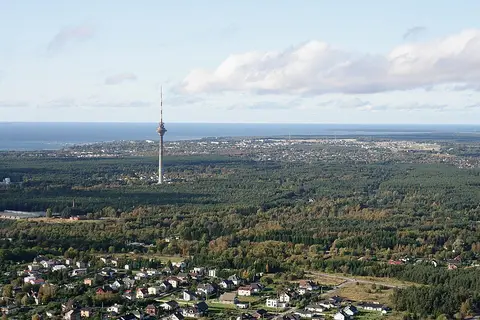
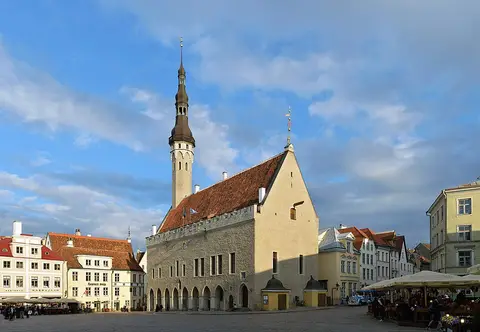
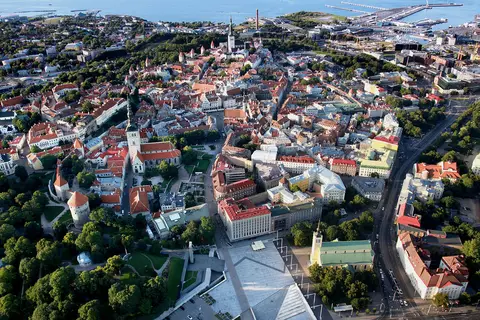
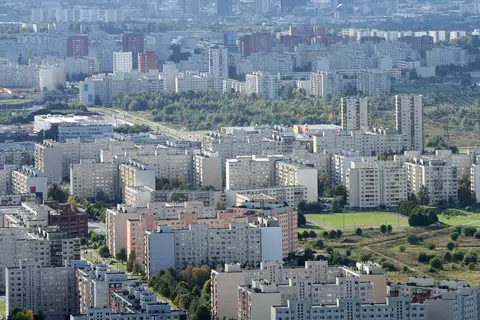
Tallinn's Old Town, located in the Kesklinn district, is one of the best-preserved Hanseatic towns in Northern Europe and a UNESCO World Heritage Site. Down below lies the merchants' town with its Gothic Town Hall, the Church of the Holy Spirit, and the Town Council Pharmacy, one of the oldest still-operating pharmacies in Europe. Up above sits Toompea Hill, with the parliament in the castle, Alexander Nevsky Cathedral, and viewing platforms overlooking a sea of red tile roofs. The town wall with its towers, including Fat Margaret and Kiek in de Kök, is largely intact. Beyond the walls, Tallinn shows a different face: in the Põhja-Tallinn district, the old Telliskivi factory quarter is now a neighborhood of studios, markets, and restaurants, and the fishermen's district of Kalamaja is lined with colorful wooden houses. The Estonian Maritime Museum in the seaplane hangar at Lennusadam harbor is one of the most impressive museums in the Baltics. Lasnamäe and Mustamäe are large Soviet-era prefab housing estates where many Russian-speaking Tallinners live. To the east lies Kadriorg, with Peter the Great's Baroque palace and the KUMU art museum.
Attractions in Harju County
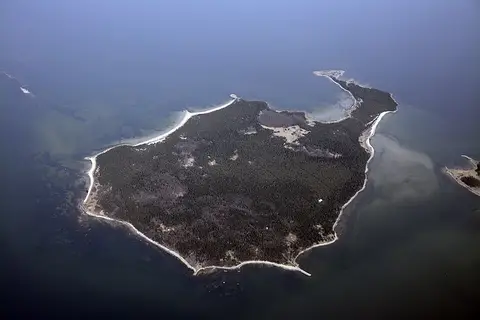
West of Tallinn, the North Estonian Klint, a limestone coastal escarpment, drops up to 30 meters to the sea near Türisalu and Paldiski. The Keila-Joa waterfall lies in a park surrounding a Neo-Gothic manor house. East of the capital begins Lahemaa National Park, Estonia's oldest, which extends into Lääne-Viru County: forests, boulders, raised bogs, and manor estates such as Kolga. You can reach the small islands of Aegna and Prangli by boat. The Viru raba raised bog can be explored on boardwalk trails, which are among the best-known excursions from Tallinn.
Food, Drink, and Daily Life
In Tallinn, the dining scene ranges from New Nordic restaurants to pubs serving dark rye bread, sprats, and blood sausage, which is in season before Christmas. Kama, a flour blend made from roasted grains, is stirred into kefir. Vana Tallinn, a sweet rum liqueur, is the classic souvenir. Estonia is a digital country: card payments and good Wi-Fi are taken for granted almost everywhere.
Smaller Towns and Coastal Villages
Outside the capital, Harju County is sparsely populated. Keila, Saue, and Maardu are small commuter towns, while Paldiski was a closed naval base in Soviet times with a training center for nuclear submarines; today you'll see harbor facilities and abandoned buildings there. At Padise Monastery, the walls of a Cistercian abbey still stand, and in Laulasmaa and Klooga, sandy beaches and pine forests draw day visitors. The open-air museum at Rocca al Mare on the edge of the city displays farmsteads, windmills, and a village church from all parts of the country.
Getting There and Best Time to Visit
Tallinn Airport is only a few kilometers from the center and is connected by tram. Ferries link Tallinn with Helsinki several times a day in just over two hours, and also with Stockholm. Buses run to Riga. The best time to visit is the long, bright days from May through August, especially around Midsummer on June 23 and 24. In December, the Christmas market on Town Hall Square is a big draw.