About Bronze Soldier
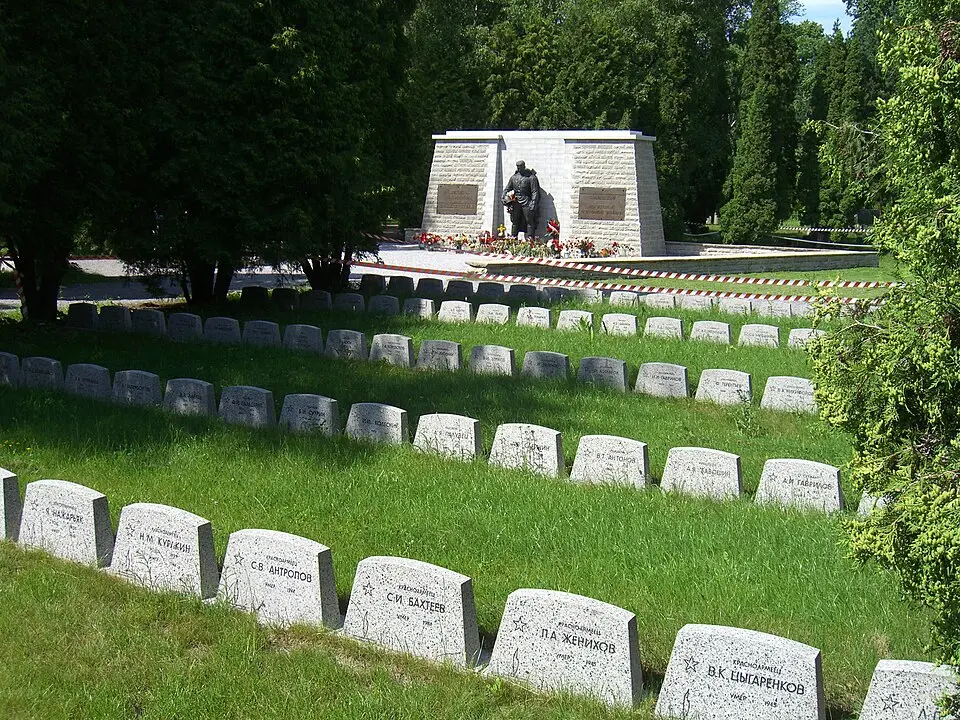
The Bronze Soldier is a historically significant and politically controversial monument in the Estonian capital, Tallinn. Originally conceived as a monument to the liberators of Tallinn, it was erected by the Soviet authorities in 1947 to commemorate the Red Army's liberation of the country from German occupation in 1944 and to honor the fallen soldiers. From the Estonian perspective, however, the statue symbolizes Soviet occupation and oppression more than anything else. Designed by the architect Arnold Alas, the monument stands on the Tõnismägi hill and features a bronze figure of a soldier, roughly two meters tall, created by the sculptor Enn Roos. The soldier is shown with his head bowed, his helmet removed, and his rifle shouldered pointing downward, a pose that conveys the memorial character of the monument to fallen comrades. The wrestler Kristjan Palusalu served as the model for the figure. In 1945, the remains of thirteen Red Army soldiers, who had previously been buried elsewhere, were interred beneath the monument. In 1964, an eternal flame was added to the ensemble, further emphasizing the site's role as a place of remembrance.
The history of the monument is closely tied to the political upheavals that followed the restoration of Estonian independence. While the Russian minority continued to use the site for commemorative events, tensions and protests from the Estonian population grew. After the passage of a law against prohibited monuments in 2007, which provided for their removal, the monument was taken down by the authorities during the night of April 27, 2007. The stated reason was the lack of peace for the war dead buried there, since the site was located in the city center next to a bus stop. The relocation led to severe unrest in Tallinn that lasted two nights and left numerous people injured and one person dead. The incident also triggered a wave of hacker attacks against Estonian government and private institutions, which are considered among the first major cyberattacks in history.
Today the Bronze Soldier stands in the Defence Forces Cemetery on Filtri Street in Tallinn. The monument was first reassembled there as a freestanding structure and later set up at its final location, after the surrounding stone structures had been reconstructed. The official opening at the new site took place on May 8, 2007. The move also had significant economic consequences for Estonia, as the incident led to a decline in tourism from Russia and to rerouting of freight traffic. Despite the political controversies, the Bronze Soldier remains a central place of remembrance that reflects the complex historical relationship between Estonia and Russia and offers visitors insight into the region's turbulent past.
At a glance
- Category
- Sight › Monuments
- Rating
- no reviews yet · write a review
- Address
- Filtri tee 14
10139 Tallinn, Estonia - District
- Kesklinna linnaosa
- Phone
- —
- Website
- —
- —
- Coordinates
- 59.42167° N · 24.76541° E
- Data quality
- confidence 0.95
- Identifier
- ID 8c83e493-078…
Location & surroundings
Toggle layersFAQ about Bronze Soldier
quick answersWhat is the Bronze Soldier in Tallinn?
The Bronze Soldier is a historically significant and politically controversial monument in Tallinn, the capital of Estonia. Soviet authorities erected it in 1947 as a monument to the liberators of Tallinn, commemorating the expulsion of the German occupiers by the Red Army in 1944 and honoring the fallen soldiers. From an Estonian perspective, however, the statue is more a symbol of occupation and oppression by the Soviet Union. Today it is regarded as a site of remembrance that reflects the complex relationship between Estonia and Russia.
Where is the Bronze Soldier in Tallinn today?
The Bronze Soldier now stands in the Defense Forces Cemetery on Filtri Road in Tallinn, at Filtri tee 14 in the Kesklinn district. The monument originally stood on the Tõnismägi hill in the city center. At its new location, it was first rebuilt as a freestanding statue and was then set up in its final spot after the surrounding stone structures were reconstructed. The official opening at the new site took place on May 8, 2007.
Why was the Bronze Soldier moved in 2007, and what were the consequences?
The Bronze Soldier in Tallinn was removed by the authorities during the night of April 27, 2007, after a law on prohibited monuments provided for its dismantling. The stated reason was the lack of peaceful rest for the war dead buried there, since the old site in the city center was next to a bus stop. The relocation triggered two nights of severe unrest with numerous injuries and one death, as well as hacker attacks on Estonian institutions that are considered among the first major cyberattacks in history. In addition, tourism from Russia declined and freight traffic was rerouted.
Who designed the Bronze Soldier in Tallinn, and what does it depict?
The Bronze Soldier monument in Tallinn was designed by the architect Arnold Alas; the bronze figure, roughly two meters tall, was created by the sculptor Enn Roos. The soldier is shown with his head bowed, his helmet removed, and his rifle slung downward, emphasizing the memorial character in honor of fallen comrades. The wrestler Kristjan Palusalu served as the model. In 1945, the remains of thirteen Red Army soldiers were buried beneath the monument, and an eternal flame was added in 1964.
What can you see around the Bronze Soldier in Tallinn?
Very close to the Bronze Soldier in Tallinn is the Monument to the Leaders of the War of Independence (Vabadussõja juhtide mälestussammas). travelguide195 lists it at a distance of about 89 meters from the Bronze Soldier on Filtri tee. This way, you can combine two memorials with very different historical backgrounds in a single visit.
Ratings & comments
none yetNear Bronze Soldier
closest 5 per category · 2 kmSights
Restaurants
Museums
Hotels
More:Sights in Kesklinna linnaosa (126)All sights in Tallinn (303)
216 places within 2 km loaded.
You need a free account to leave reviews and photos – that keeps comments genuine and lets you edit them later.