Discover Yokohama: Harbor, Chinatown and Ramen
Travel guide · editorialWhen an unremarkable fishing village became a treaty port for foreign traders in 1859, the story of Yokohama began – and with it, Japan's opening to the world. Today the port city is the country's second-largest after Tokyo, yet it feels airier and more relaxed than the capital next door. A trip to Yokohama combines waterfront promenades, colonial architecture and Japan's largest Chinatown with short trips to Tokyo and Kamakura.
From Fishing Village to Gateway to Japan
After Commodore Perry forced Japan to open up with his "Black Ships," Yokohama became one of the first ports for foreign trade. British, Americans, French and Chinese settled here, and many things arrived in Japan for the first time: gas lamps, beer, ice cream, a newspaper, and in 1872 the first railway line, to Shimbashi in Tokyo. Silk from the hinterland was shipped from here to the world. The Great Kantō Earthquake of 1923 and the air raids of 1945 destroyed large parts of the city. Starting in the 1980s, the new downtown Minato Mirai 21 rose from reclaimed shipyard land, and in 2002 Yokohama hosted the World Cup final.
Neighborhoods Between Harbor and Hills
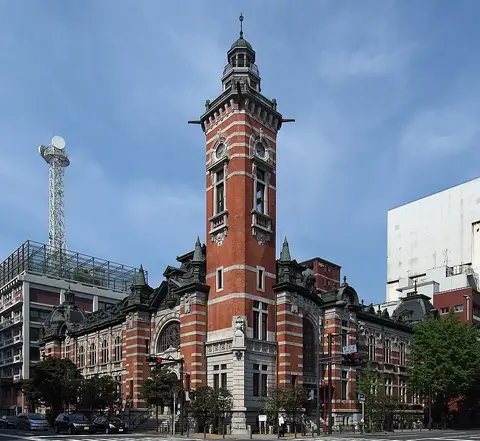
Naka Ward is the historic heart: here you'll find Kannai with its old bank and administrative buildings, Chinatown, the shopping street Motomachi, and the Bluff (Yamate), the hillside district of the former foreign residents with Western-style villas and the Foreign General Cemetery. Yamashitachō on the waterfront is known for Yamashita Park and for Chinatown, which spreads across much of this area. Nishi Ward is home to Yokohama Station, one of the busiest in Japan, with huge department stores, and the high-rise district of Minato Mirai. Kanagawa and Tsurumi to the north are characterized by industry and residential areas; Tsurumi has a large Latin American and Okinawan community. Kōhoku, with Shin-Yokohama Station, is the gateway to the Shinkansen, while Kanazawa in the south offers beaches, an amusement park and temples.
Sights in Yokohama
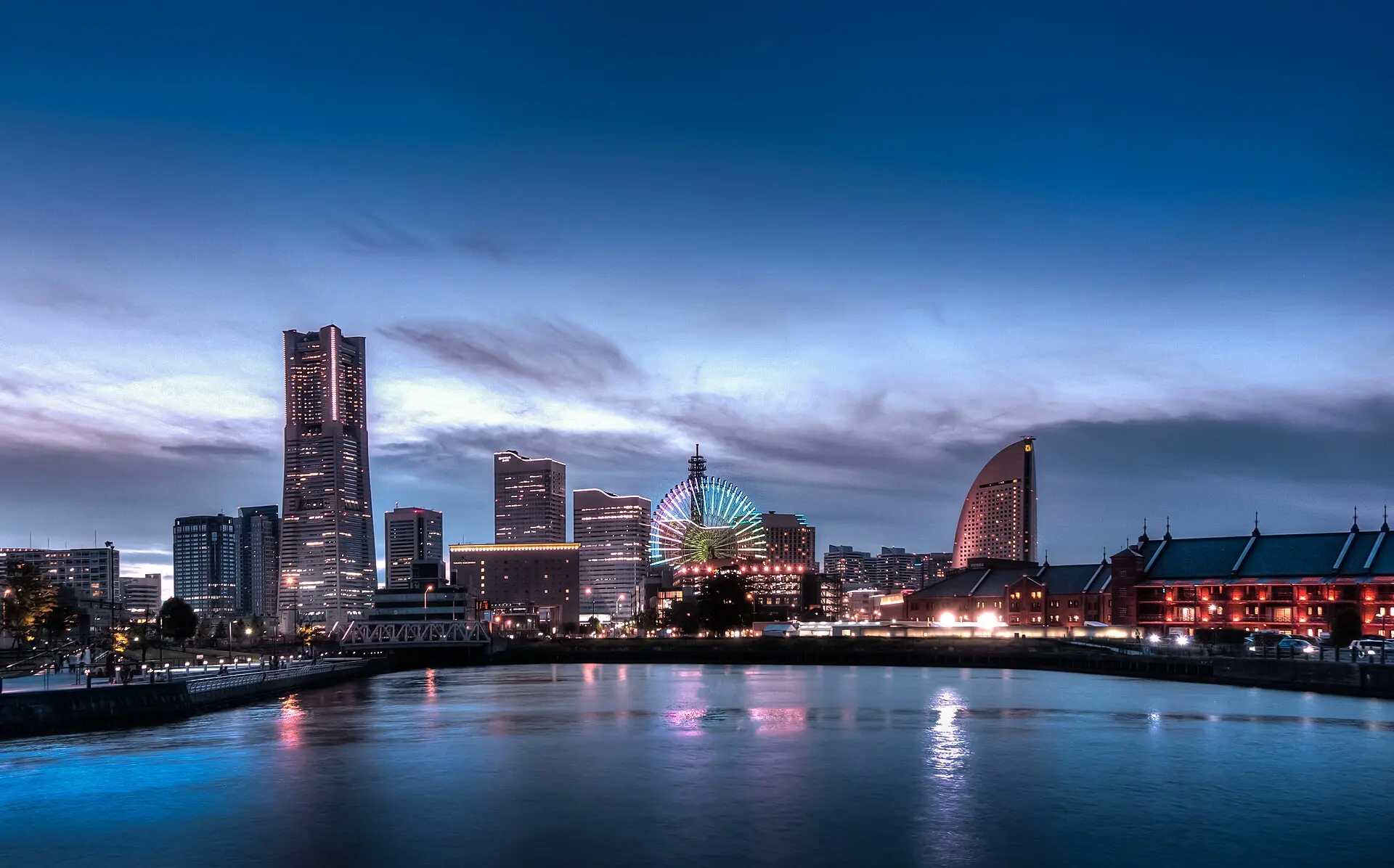
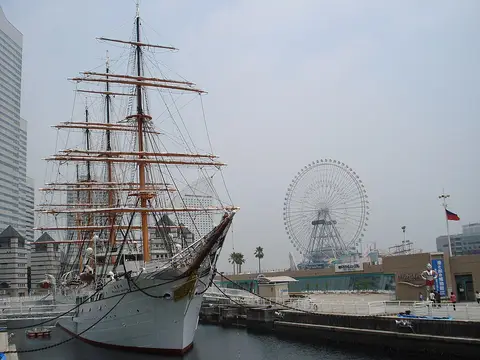
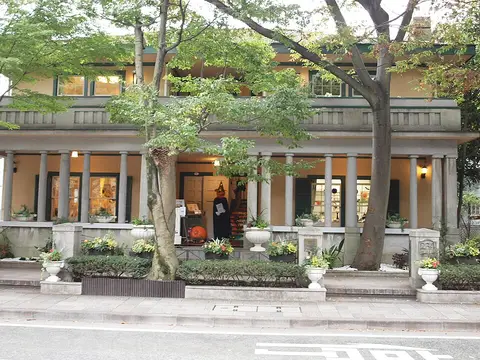
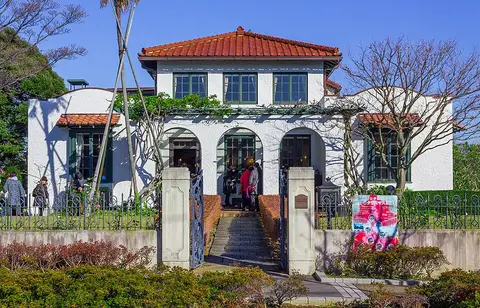
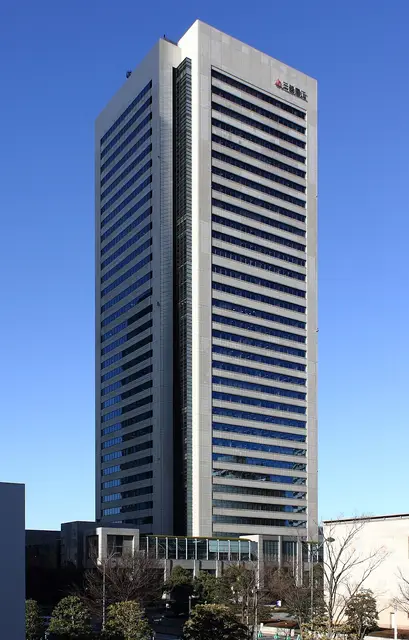
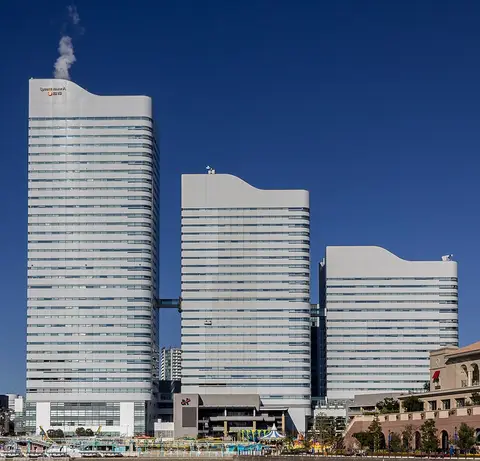
The Minato Mirai skyline is dominated by the Landmark Tower, whose Sky Garden observation deck offers views of Mount Fuji on clear days. In front lies the sail training ship Nippon Maru in dry dock, and next to it the Cosmo Clock 21 Ferris wheel. The Red Brick Warehouses, once customs storehouses, now house shops, restaurants and events such as a Christmas market in winter. You can stroll to the water along the Ōsanbashi Pier with its wave-shaped wooden roof, and in Yamashita Park the passenger ship Hikawa Maru, which once sailed to Seattle, lies at anchor. Sankei-en in the south is a sprawling landscape garden with historic buildings from Kyoto and Kamakura, including a three-story pagoda. Since 2021, the Yokohama Air Cabin gondola has glided over the harbor. On the Bluff, a walk past the freely accessible villas such as Berrick Hall or the Ehrismann House is worthwhile, and in between you'll find rose gardens and spots like Harbor View Park with its view of the Bay Bridge. In fall, the ginkgo-lined avenues along Nihon-Ōdōri turn golden yellow.
Museums and Culture
The Cup Noodles Museum tells the story of instant noodles with wit, and you can design your own cup creation. At the Shin-Yokohama Ramen Museum, several well-known ramen shops from across Japan are gathered in a recreated 1950s street scene. The Yokohama Museum of Art in Minato Mirai shows modern art, while the Yokohama Triennale presents international contemporary art. The Hara Model Railway Museum is a treat for model train fans, and the Silk Museum recalls the city's trading history. In summer, the fireworks over the harbor draw hundreds of thousands of people, soccer fans make the pilgrimage to Nissan Stadium, and baseball fans head to Yokohama Stadium to see the BayStars.
Eating in Yokohama
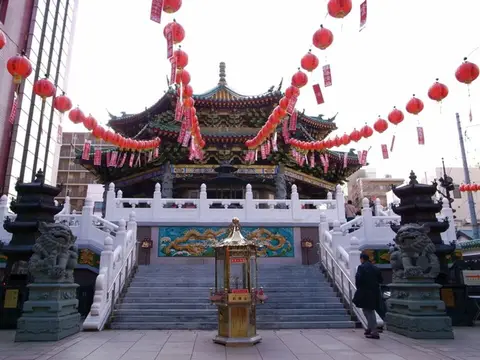
Yokohama Chinatown, with its colorful gates and the magnificent Kanteibyō temple, is the largest Chinese quarter in Japan. Hundreds of restaurants serve Cantonese cuisine, dim sum and above all nikuman, steamed buns you eat out of hand. The city also has its own ramen style: iekei ramen with a thick pork-and-soy-sauce broth, spinach and nori. Napolitan – spaghetti with ketchup – and sanma-men, noodles with vegetables in sauce, are said to have been invented here. You'll also find good food in the department stores at the station and in the izakaya of Noge, the winding old-town quarter next to Sakuragichō.
Nightlife and Evenings by the Water
In the evening, the best way to start is a stroll along the illuminated waterfront promenade from Minato Mirai to Yamashita Park. Noge is the quintessential bar district: tiny bars, yakitori under lanterns, jazz clubs – Yokohama is considered the birthplace of jazz in Japan, and the jazz festival in October fills the clubs. In Kannai and Bashamichi, with its old gas lamps, you'll find beer bars, since one of the country's first breweries was founded in Yokohama.
Getting Around Yokohama and the Best Time to Visit
From Haneda Airport, you can reach Yokohama Station by Keikyū train or bus in about half an hour, and from Tokyo's Shibuya the Tōyoko Line runs directly to Motomachi-Chūkagai. The Shinkansen stops at Shin-Yokohama. In the city, the Minatomirai Line, the subway, the gondola and sightseeing boats help you get around, and the waterfront areas are easy to connect on foot. The best times to visit are spring and fall, when the gardens bloom or change color. Day trips lead to Kamakura with its Great Buddha, to Enoshima Island, or to Hakone. If you stay longer, you can also use Yokohama as a quieter base for Tokyo: the hotels are often right on the water, and Shibuya or Shinagawa is half an hour away.