Discovering Kyōto: Temples, Gardens, and Geishas
Travel guide · editorialFor more than a thousand years, Japan's emperor resided in Kyōto, and today the city still counts around 1,600 temples and several hundred shrines. A vacation in Kyōto takes you through moss gardens, wooden alleys, and teahouses – and if you get up early or look beyond the big names, you'll find surprisingly quiet places despite the crowds. For any trip to Japan, the old capital is a must-see.
A Thousand Years as Capital
In 794, Emperor Kanmu founded the city of Heian-kyō on the Chinese model as a chessboard, a grid you can still recognize in the center today by the numbered east-west streets. This is where the court culture that shaped Japan emerged: the novel "The Tale of Genji," the tea ceremony, Nō theater, ikebana. In the 15th century, the Ōnin War burned the city to the ground, and Toyotomi Hideyoshi rebuilt it. In 1868 the emperor moved to Tokyo, but Kyōto remained the center of religion and craftsmanship. The city was largely spared in World War II, which is why so much old wooden architecture has survived here. Seventeen sites in and around Kyōto together make up the UNESCO World Heritage listing.
Neighborhoods and Districts
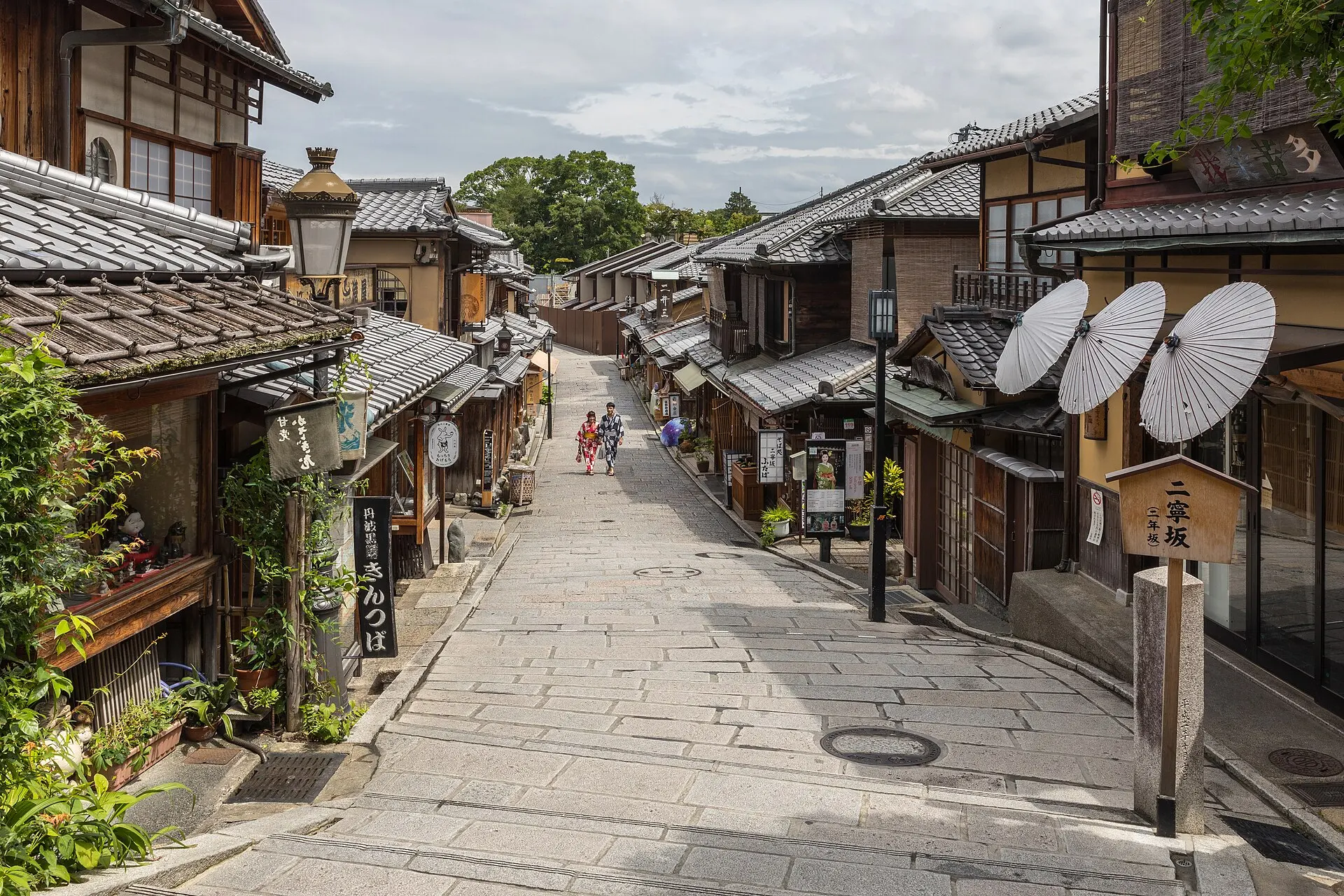
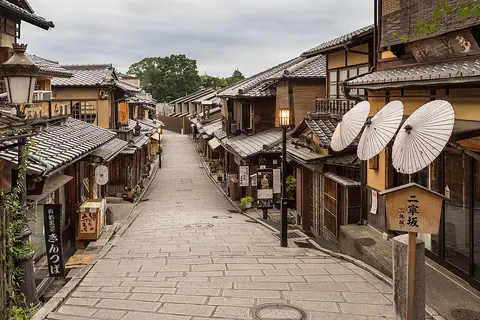
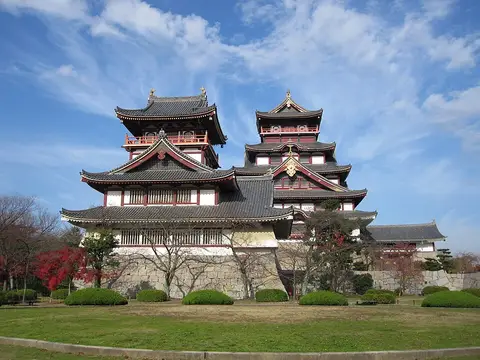
Higashiyama, at the foot of the eastern mountains, is the Kyōto of postcards: the cobbled lanes of Ninenzaka and Sannenzaka lead up to Kiyomizu-dera, and in the evening you can stroll through Gion, where with a little luck a maiko may be hurrying to an appointment at a teahouse. Please don't photograph or crowd her – some private lanes are now closed off. Nakagyō is the business center, with shopping arcades, the Nishiki Market, and the Pontochō alley of bars along the Kamo River. Shimogyō around the train station has the most hotels, while Sakyō in the northeast has the Philosopher's Path, the university, and quiet Zen temples. Ukyō in the west includes Arashiyama with its bamboo grove, and Fushimi in the south has the sake district and the fox shrine. Kamigyō around the Imperial Palace is home to the weaving district of Nishijin.
Sights in Kyōto
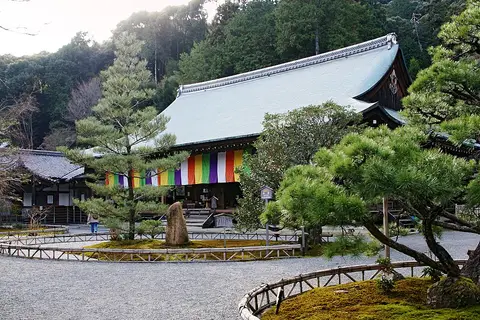
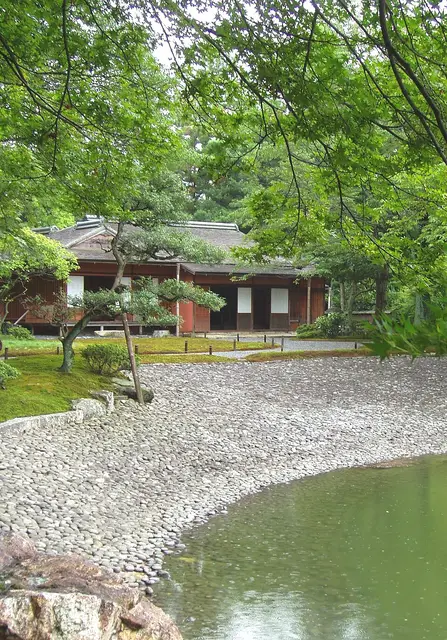
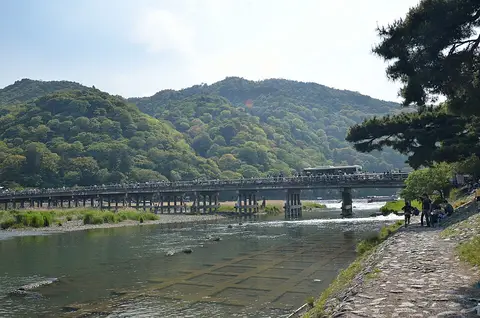
The list of sights in Kyōto is endless, but a few places are indispensable. At Fushimi Inari Taisha, thousands of vermilion torii gates wind up Mount Inari, donated by companies and families – if you hike all the way to the summit, you'll soon leave the crowds behind. Kinkaku-ji, the Golden Pavilion, is reflected in its pond, while its plainer counterpart Ginkaku-ji sits at the start of the Philosopher's Path. Kiyomizu-dera perches on a wooden terrace above the hillside without a single nail. At Ryōan-ji you meditate before 15 stones in raked gravel, and at Kokedera more than a hundred species of moss grow (by advance reservation only). Nijō Castle, with its "nightingale floors" that chirp with every step, shows the power of the shoguns. In Arashiyama, after the bamboo grove, the Zen garden of Tenryū-ji and a boat ride on the Hozu River are well worth your time; early risers will find the paths there almost to themselves.
Culture and Crafts
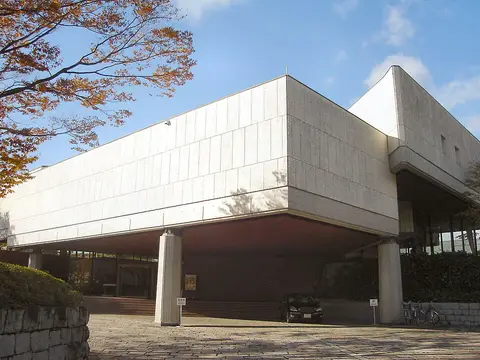
Kyōto is the city of living traditions. At the Kyoto National Museum you can see Buddhist sculptures and hanging scrolls, while the Kyoto International Manga Museum, housed in an old elementary school, offers a very different Japan. In Nishijin you can watch weavers at work, and at many teahouses you can take part in a tea ceremony. The highlight of the year is the Gion Matsuri in July, with huge ornate floats that dominate the cityscape for an entire month; in August, bonfires light up the mountainsides during Gozan no Okuribi. In spring, geikos and maikos dance in public performances such as the Miyako Odori.
Eating in Kyōto
Kyōto cuisine is refined and understated. Kaiseki, the multi-course seasonal menu, has its roots here, as does shōjin ryōri, Buddhist temple cuisine, which you can try at temples such as Tenryū-ji. Yudōfu, tofu simmered in broth, is a specialty around Nanzen-ji, and yuba, the skin that forms on soy milk, appears on many menus. At the Nishiki Market, known as "Kyōto's Kitchen," you'll find pickled vegetables (tsukemono), skewers, and matcha sweets. The green tea comes from nearby Uji, and sake from the breweries in Fushimi such as Gekkeikan. In summer, meals are served on platforms above the Kamo River and in cooler Kibune.
Evenings in Kyōto
Kyōto goes to bed earlier than Osaka, but Pontochō, with its lanterns and wooden facades, is especially atmospheric at night. Around Kiyamachi there are bars and izakaya, and in Fushimi, sake tastings. The light festivals are magical: during Hanatōro in March and December, the lanes of Higashiyama and Arashiyama are lit with lanterns, and many temples open in the evening in autumn for illuminations of the maple trees. If you want to stay the way people did in the old days, choose a ryokan or a restored machiya townhouse with tatami, a wooden bath, and a small inner courtyard. A walk along the Kamo River is also part of the evening: students, couples, and musicians sit at regular intervals along the bank, where the lights of Sanjō and Shijō shimmer on the water.
Getting Around Kyōto and the Best Time to Visit
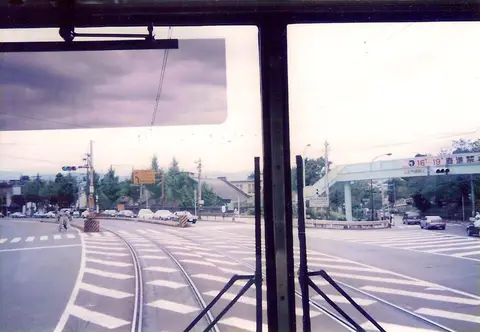
From Kansai Airport, the Haruka express takes about 75 minutes to Kyōto Station, and from Tokyo the Shinkansen needs a good two hours. In the city, buses are often crowded; it's quicker by subway, the Keihan and Hankyū railways, on foot, or by rental bike – Kyōto is flat and easy to navigate. The best time to visit is during the cherry blossoms from late March to early April and the autumn foliage in November, though hotels are then full. January and February are quieter, when snow sometimes covers the Golden Pavilion. Excursions lead to Nara, to Uji with Byōdō-in, or to Ōhara and Kurama in the mountains.