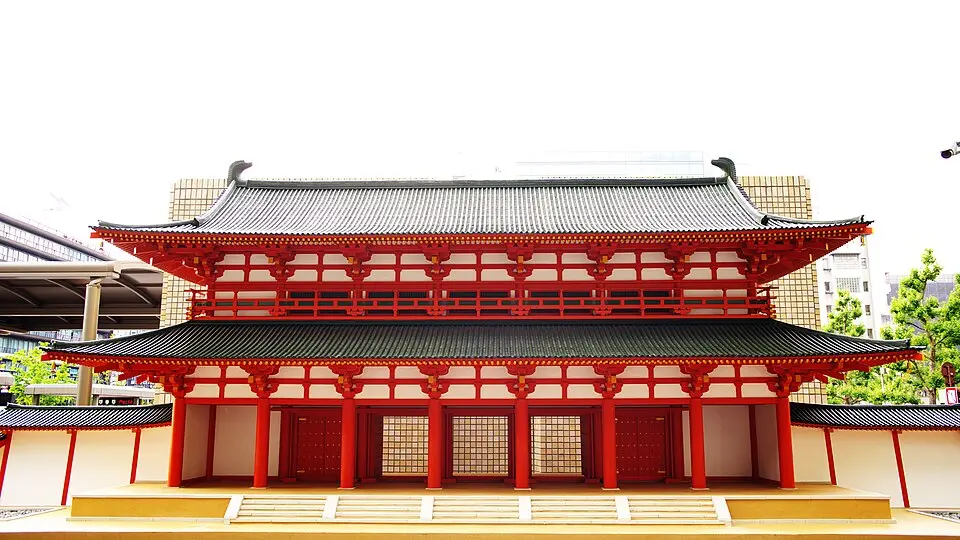
About Rajōmonato
The Rajōmon, also known as the Raseimon, was the historic main gate at the southern end of the ancient Japanese capital Heian-kyō, present-day Kyoto. Part of a fortified city modeled on Chinese examples, it marked the outer ring of defenses and the main entrance to the walled city. Completed in 789, the structure was enormous for its time, measuring 32 meters wide, 9 meters deep, and 21 meters high. The gate rested on a heavily reinforced stone foundation and was topped with a ridge beam. Despite its massive construction, its depth was too shallow in proportion to its height and width, and strong winds brought the structure down as early as 816. After it was rebuilt, it collapsed a second time in 980, and the gate was never restored again. It had already lost its political significance as a showpiece structure by then, since the fall of the Korean kingdoms of Balhae and Silla meant that their diplomatic missions no longer came. In 1023, stones from the gate were reused by Fujiwara no Michinaga for the construction of the Buddhist temple Hōjō-ji.
Today, no structural remains of the Rajōmon survive, as even the foundation was completely removed and the city's layout was altered several times. At the historic site on Kujō Street, west of National Route 1 and near Tō-ji Temple, a memorial stone now marks the spot. A bilingual sign explains the historical and literary significance of the site, which is now occupied by a children's playground. A nearby bus stop is named Rajōmon. A reconstruction of the gate is not currently planned, as there is no authentic architectural evidence that would allow a faithful replica.
In Japanese culture, the gate has taken on profound symbolic meaning. In literature, it stands for a place of moral decay, where shady figures, criminals, or abandoned corpses gather in times of hardship. This apocalyptic mood at the end of the Heian period was taken up in various works, including a popular legend about a demon who lived in the gate. The site gained worldwide fame through Akutagawa Ryūnosuke's 1915 story "Rashōmon," which uses the ruined gate as a setting for human despair and ethical transgression. That story in turn served as the basis for Akira Kurosawa's famous 1950 film Rashōmon, in which the gate provides the backdrop for a complex, contradictory portrayal of truth.
At a glance
- Category
- Sight › Historic sites
- Rating
- no reviews yet · write a review
- Address
- 南区唐橋羅城門町花園児童公園内
601-8453 Kyoto, Japan - District
- Minami Ward
- Phone
- —
- Website
- —
- —
- Coordinates
- 34.97933° N · 135.74264° E
- Data quality
- confidence 0.72
- Identifier
- ID 67dbc593-d79…
Part of the tour
From Heian-kyō to the Biwa Canal: Kyōto's History in One Day →Location & surroundings
Toggle layersFAQ about Rajōmonato
quick answersWhat is the Rajōmon in Kyoto?
The Rajōmon, also known as the Raseimon, was the historic main gate at the southern end of the ancient Japanese capital Heian-kyō, present-day Kyoto. It was part of a fortified city modeled on Chinese examples and served as the main entrance to the walled urban area. Completed in 789, the gate was 32 meters wide, 9 meters deep, and 21 meters high, and stood on a heavily reinforced stone foundation.
What can you see of the Rajōmon in Kyoto today?
No structural remains of the Rajōmon survive in Kyoto; today, a memorial stone marks the gate's former site. The spot lies in the Minami Ward on Kujō Street, west of National Route 1 and near Tō-ji Temple, on the grounds of a children's playground. A bilingual sign explains the historical and literary significance of the site, and a nearby bus stop is named Rajōmon.
Why does the Rajōmon in Kyoto no longer exist?
The Rajōmon in Kyoto collapsed twice and was never restored afterward. Because its depth was too shallow in proportion to its height and width, strong winds brought the gate down as early as 816; after it was rebuilt, a second collapse followed in 980. In 1023, Fujiwara no Michinaga had stones from the gate reused for the Buddhist temple Hōjō-ji, and no reconstruction is planned, since authentic architectural evidence for a faithful replica is lacking.
Why is the Rajōmon in Kyoto famous in literature and film?
The Rajōmon in Kyoto became world-famous mainly through Akutagawa Ryūnosuke's 1915 short story "Rashōmon" and Akira Kurosawa's 1950 film of the same name. In Japanese literature, the gate stands for a place of moral decay, where shady figures, criminals, or discarded corpses gathered in times of hardship, and a popular legend tells of a demon that lived in the gate. In Akutagawa's story, the ruined gate is the setting for human desperation; in Kurosawa's film, it provides the frame for a contradictory portrayal of truth.
What can you visit around the Rajōmon in Kyoto?
Around the Rajōmon in Kyoto, you'll find several historic sites and museums within about one kilometer. travelguide195 lists, among others, the Kanjō-in of Tō-ji Temple (東寺 灌頂院) about 370 meters away, the historic site of Sai-ji Temple (史蹟西寺阯) with the remains of its lecture hall about 460 to 480 meters away, and the Kyoto Railway Museum (京都鉄道博物館) about 850 meters away. travelguide195 also lists around 19 restaurants within 500 meters, and the site is part of the tour "From Heian-kyō to the Biwa Canal: Kyoto's History in One Day."
Ratings & comments
none yetNear Rajōmonato
closest 5 per category · 2 kmMuseums
Hotels
More:Historic sites in Kyoto (901)Sights in Minami Ward (20)All sights in Kyoto (1,084)
207 places within 2 km loaded.
Don't miss in Kyoto
All sights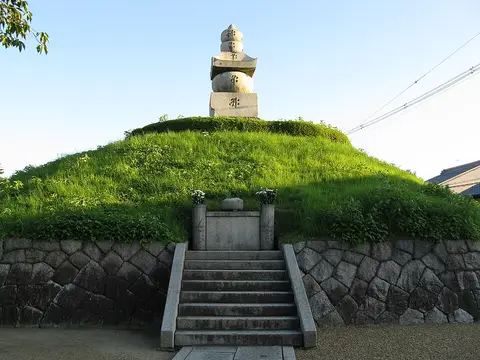 Monuments01
Mimizuka
533-1 Chayacho · Kyoto● Website● Phone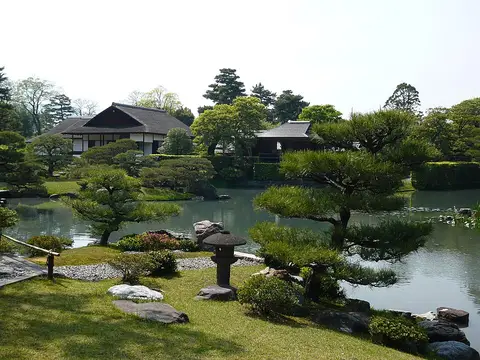 Historic sites02
Katsura Imperial Villa
Katsuramisono · Kyoto● Website● Phone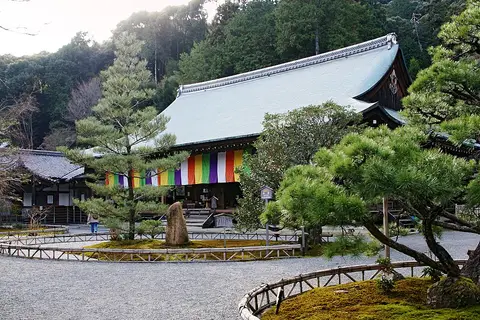 Historic sites03
Nisonin Temple
27 Saganisonin Monzen Chojincho · Kyoto● Website● Phone Historic sites04
You need a free account to leave reviews and photos – that keeps comments genuine and lets you edit them later.