About Lupa Romana
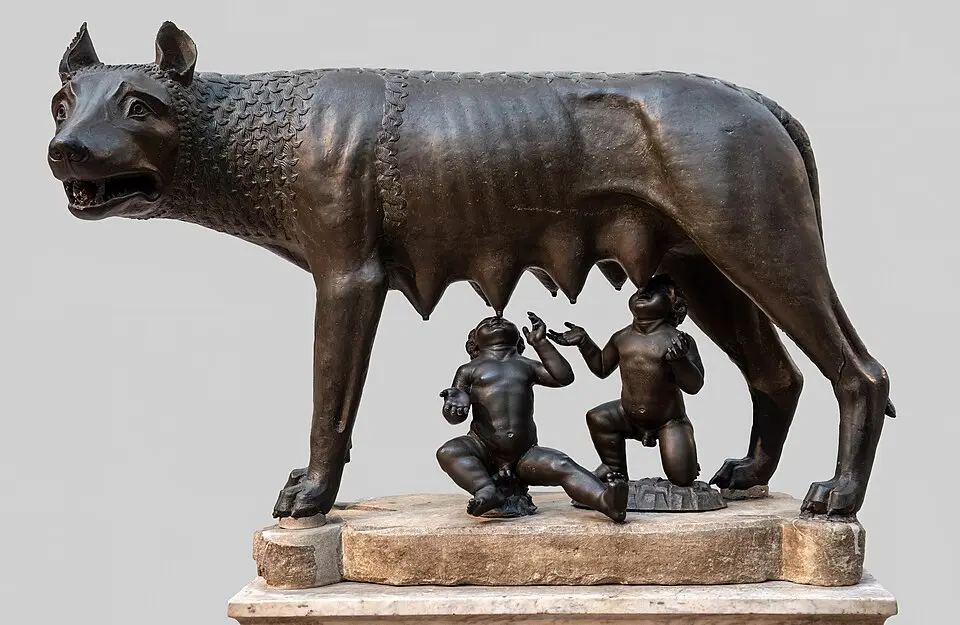
The Capitoline Wolf, in Latin Lupa Capitolina, is a life-size bronze statue that shows Rome's mythical founders, Romulus and Remus, being nursed by a she-wolf. At 75 centimeters tall and 114 centimeters wide, it is one of the best-known icons of the Italian capital. Today the sculpture is housed in the Capitoline Museums, more precisely in the Sala della Lupa of the Palazzo dei Conservatori. There it has stood since 1586 on a pedestal in the middle of the room, forming a central point of the collection. Before that, the statue was displayed at various locations in Rome, including in front of the old Lateran Palace and in the church of San Teodoro al Palatino, before Pope Sixtus IV gave it to the city's Conservatori in 1471.
The exact date of the wolf's creation has been the subject of scholarly debate for some time. For a long time the work was considered a masterpiece of Etruscan art from the fifth century B.C. This assumption was called into question, however, by restoration work and modern scientific analyses. Studies of the casting method showed that the figure was cast in a single piece, a technique that is unusual for antiquity, since ancient bronzes of this size were usually made of several parts. Carbon-14 dating and spectrometric analyses suggest that the wolf was only made in the Middle Ages, probably between the eleventh and twelfth centuries. This dating is further supported by an analysis of lead isotopes published in 2025. The two boy figures, by contrast, were undoubtedly added only during the Renaissance, probably by the sculptor Antonio del Pollaiuolo, who was active around 1471.
The myth behind the statue tells of the founding of Rome. According to the legend, the twins, sons of the war god Mars, were abandoned on the Tiber to escape their great-uncle Amulius. A she-wolf sacred to Mars found the children at the foot of the Palatine Hill and nursed them until a shepherd took them in and raised them. As adults, they killed the tyrant Amulius and founded a new city. The dispute over who would rule ended with Romulus killing Remus, and the city was named after Romulus. This motif of divine origin and the eternity of the city was very popular on coins, medals, and reliefs during the Roman imperial era and served as a symbol of imperial ambition.
The history of the statue is closely tied to the political history of Rome and Italy. During the Fascist era, the wolf was used as a propaganda tool, as Benito Mussolini saw himself as the founder of a new Rome. Numerous copies of the statue were erected in various parts of the former Roman Empire and in territories conquered by Italy. Copies were also used in international diplomacy and found their way to the U.S., Japan, and other countries. At the 1960 Olympic Games, the figure again served as an emblem, and to this day it can be seen on signs of the City of Rome and in advertising for Roman products as an unmistakable trademark.
Today the Capitoline Wolf is not only a historical artifact but also a living symbol of Rome. Besides the original in the Capitoline Museums, there are numerous copies in the city and beyond. One well-known copy stands at the northern corner of the Palazzo Senatorio, today the seat of Rome's mayor. The motif also appears in other Italian cities, such as Siena, where the wolf stands in the Palazzo Pubblico, and in Aquileia. International copies can be found in Paris, Timișoara in Romania, and the Moldovan capital Chișinău, among other places. This wide distribution underscores the lasting cultural and symbolic importance of the Lupa Romana far beyond the borders of Rome.
At a glance
- Category
- Sight › Monuments
- Rating
- no reviews yet · write a review
- Address
- Piazza del Campidoglio, 1
00186 Rome, Italy - District
- Roma I
- Phone
- +39066792076
- Website
- —
- —
- Coordinates
- 41.89323° N · 12.48283° E
- Data quality
- confidence 0.83
- Identifier
- ID 4caf8d49-f97…
Location & surroundings
Toggle layersRatings & comments
none yetNear Lupa Romana
closest 5 per category · 2 kmSights
Restaurants
Museums
Hotels
More:Monuments in Rome (235)Sights in Roma I (642)All sights in Rome (1,312)
300 places within 2 km loaded.
Don't miss in Rome
All sights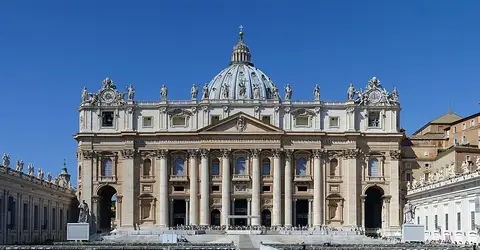 Historic sites01
The Dome at San Pietro Basilica
No address · Rome○ Website○ Phone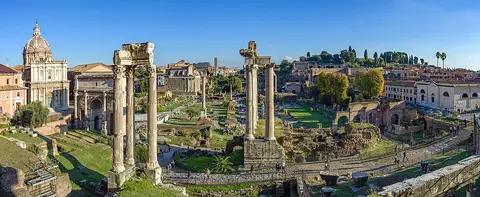 Historic sites02
Roman Forum
Via della Salara Vecchia, 5/6 · Rome● Website● Phone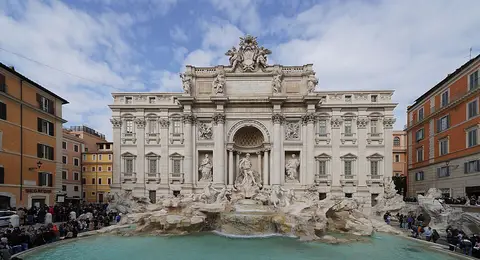 Historic sites03
Restauro Fontana di Trevi
Piazza di Trevi, 91 · Rome● Website○ Phone Monuments04
You need a free account to leave reviews and photos – that keeps comments genuine and lets you edit them later.