About S. Maria d'Aracoeli
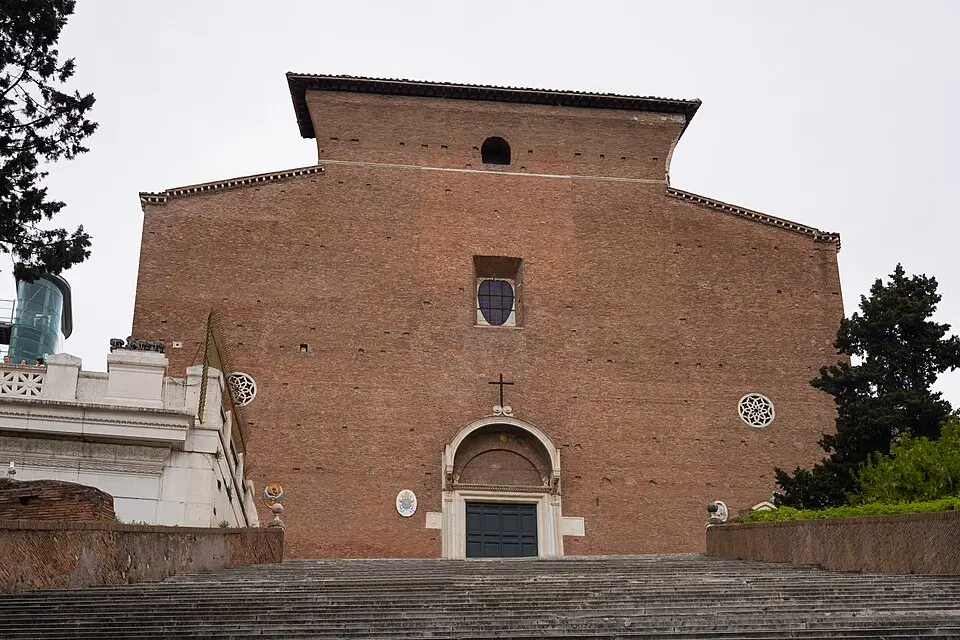
Santa Maria in Aracoeli, also known as Santa Maria in Capitolio, is one of the most important churches in Rome and officially bears the name Santa Maria in Ara Coeli al Campidoglio. It stands on Capitoline Hill, a site that has been the political and religious heart of the city since antiquity. As a regional church of the city of Rome and a former Franciscan church, it carries great symbolic significance, rooted in its location, its legendary history, and its use in the Middle Ages as the seat of the city council and a court of law. You can reach the church directly from Piazza d'Aracoeli via the steep Scalinata di Aracoeli, or from Capitoline Square via a second staircase leading to the south side entrance.
The history of the site goes back to antiquity. Archaeological excavations have shown that the Temple of Juno Moneta, wife of the god Jupiter, once stood here. The temple was built after the Romans' victory over the Aurunci, and in the course of the third century B.C. a mint was established next to it. The first historically documented church building dates to the sixth century, in the time of Pope Gregory the Great, and was attached to a monastery of Greek monks. Later, Benedictine monks took over the care of the site. In the twelfth century, when the Roman Senate was reinstated, the Roman people chose Capitoline Hill as the seat of their governing bodies, which gave the church and monastery new political importance.
In 1249, Pope Innocent IV handed the church over to the Franciscan Order. Under the protection of the Senate and influential noble families such as the Savelli, the Franciscans began building the present three-aisled basilica in 1251, based on a design by Arnolfo di Cambio. Construction lasted until around 1287. Over time, numerous family chapels were added to the choir, expanding the space. A particular art-historical treasure is the Bufalini Chapel, which Pinturicchio decorated in the 1480s with frescoes depicting the life of Saint Bernardino of Siena. This preacher, highly revered by the Franciscans, is said to have preached here often.
Despite later lavish furnishings, the church's architecture preserves the look of the thirteenth century. It is a large columned basilica with rows of side chapels attached to both aisles, giving it an architectural layout of five aisles. The nave is supported by ancient columns of varying styles and stones, taken from the forums and the Palatine Hill. The floor is a masterpiece of the Cosmati, the famous Roman guild of stonemasons, from the thirteenth century, made up of large rectangular slabs of white marble framed with mosaic strips. Numerous tomb slabs from the fourteenth and fifteenth centuries are set into the floors of the side aisles.
The ceiling of the nave was raised in the sixteenth century by Giacomo della Porta and fitted with a carved and gilded coffered ceiling, made by Flaminio Bolangier and painted by Cesare Trapassi. It is decorated with nautical symbols and bears the coats of arms of several popes as well as the emblem of the Roman Senate. A gold mosaic inscription above the triumphal arch commemorates the victory over the Turks at the naval Battle of Lepanto, in which the ceiling's donor, Admiral Marcantonio Colonna, took part. Weapons captured from the Turks are incorporated into the ceiling. On the inner wall above the main portal is a magnificent inscription from the Roman Senate honoring Pope Urban VIII, executed in marble and stucco to a design by Gian Lorenzo Bernini.
The Romanesque brick facade is plain, with emphasis on the main portal, which is adorned with round arches. In front of the portal are several tomb slabs, including that of the humanist Flavio Biondo. The steep staircase, with 124 marble steps leading from the piazza to the west facade, was built in 1348. It was the Roman people's thanks for deliverance from the plague and was constructed by Lorenzo di Simeone Andreozzi. The tribune Cola di Rienzo is said to have delivered his speeches to the people from this staircase. His monument now stands between the Aracoeli staircase and the Cordonata staircase that leads up to the Capitoline.
Inside the church you will find numerous tombs of members of Roman noble families such as the Orsini, Savelli, Mattei, and Cenci, as well as of important cardinals and architects such as Giacomo della Porta and Giovanni Fontana. In the left apse, the Cappella di San Gregorio, lies the missionary John of Triora, who worked in China. In the right apse, the Cappella del Santissimo Sacramento, stands a wooden statue of the Immaculate Conception from the Neapolitan school. The chapel can be entered only through this apse and holds the remains of a thirteenth-century mosaic.
A particular focus of devotion is the Santo Bambino, a miracle-working Christ Child venerated in its own chapel. According to legend, the figure was carved from the wood of an olive tree from the Garden of Gethsemane and completed by an angel. The original, a 500-year-old olive-wood figure, was stolen on February 1, 1994, and has been missing ever since. The Franciscans refused to pay a ransom, so only a copy of the figure is currently on display, though pilgrims still cover it with votive offerings. During the Christmas season, the figure is brought every day to a large nativity scene in the Cappella della Trasfigurazione.
The church also holds the burial place of the Bosnian queen Katarina Kosača-Kotromanić, who spent her last years as a nun in this Franciscan monastery. Her tomb is at the eastern crossing pier. The former monastery, which once covered the entire Capitoline Hill, was greatly altered over time. After the French occupation of Rome, the church was temporarily deconsecrated and the monastery converted into barracks. To make way for the national monument to King Victor Emmanuel II in the late nineteenth century, most of the monastery, the sacristy, and the Tower of Paul III had to be demolished. Of this once significant complex, only the Loggia of Paul III facing Capitoline Square remains today.
The importance of Santa Maria in Aracoeli lies not only in its architectural and art-historical splendor but also in its deep roots in the history of Rome. It is a place where ancient, medieval, and modern history merge. Here you can discover traces of the Roman Republic, papal rule, and the Franciscan Order. The church remains an important pilgrimage site and a symbol of the spiritual and political identity of the city of Rome. The combination of sacred relics, historic tombs, and artful frescoes makes it an essential stop for every visitor to the Eternal City.
At a glance
- Category
- Sight › Monuments
- Rating
- no reviews yet · write a review
- Address
- Scale dell'Arce Capitolina, 12
00186 Rome, Italy - District
- Roma I
- Phone
- +39066798155
- Website
- —
- —
- Coordinates
- 41.89345° N · 12.48324° E
- Data quality
- confidence 0.59
- Identifier
- ID 939ee5b2-eee…
Location & surroundings
Toggle layersFAQ about S. Maria d'Aracoeli
quick answersWhat is Santa Maria in Aracoeli in Rome?
Santa Maria in Aracoeli is one of the most important churches in Rome, located on Capitoline Hill, which has been the city's political and religious center since antiquity. Its official name is Santa Maria in Ara Coeli al Campidoglio, and it is also known as Santa Maria in Capitolio. The former Franciscan church is the civic church of the city of Rome and in the Middle Ages also served as the seat of the city council and as a court.
How do you get to the Church of Santa Maria in Aracoeli in Rome?
You reach Santa Maria in Aracoeli in Rome via the steep Scalinata di Aracoeli, which leads straight up from Piazza d'Aracoeli to the main entrance. Alternatively, another staircase leads from Capitoline Square (Piazza del Campidoglio) to the south side entrance. The address is Scale dell'Arce Capitolina, 12, in the Roma I district.
How old is the Church of Santa Maria in Aracoeli, and what stood on this site before?
The present-day Basilica of Santa Maria in Aracoeli in Rome was built between 1251 and about 1287 to a design by Arnolfo di Cambio. Archaeological excavations show that in antiquity the Temple of Juno Moneta stood on this site, next to which a mint was established in the third century B.C. A first church building with a monastery of Greek monks is documented for the sixth century under Pope Gregory the Great. In 1249, Pope Innocent IV handed the church over to the Franciscan Order.
What is there to see in Santa Maria in Aracoeli?
A special artistic treasure of Santa Maria in Aracoeli in Rome is the Bufalini Chapel, which Pinturicchio decorated in the 1480s with frescoes depicting the life of Saint Bernardino of Siena. The nave is supported by ancient columns of various styles and stones, taken from the forums and the Palatine Hill. Also worth seeing is the 13th-century Cosmati floor, with white marble slabs framed by strips of mosaic. Thanks to the rows of chapels along both side aisles, the columned basilica appears architecturally to have five aisles.
What can you visit around Santa Maria in Aracoeli in Rome?
Around Santa Maria in Aracoeli in Rome, the sights of Capitoline Hill are just a few yards away. travelguide195 lists the Palazzo Nuovo (about 18 m), Capitoline Square (about 25 m), the Palazzo Senatorio (about 32 m), the equestrian statue of Marcus Aurelius (about 38 m), the Capitoline Museums (about 41 m), as well as the Lupa Romana and the Palazzo dei Conservatori (each about 42 m). For a break, travelguide195 lists about 131 restaurants within 500 meters.
Ratings & comments
none yetNear S. Maria d'Aracoeli
closest 5 per category · 2 kmSights
Restaurants
Museums
Hotels
More:Monuments in Rome (235)Sights in Roma I (642)All sights in Rome (1,312)
300 places within 2 km loaded.
Don't miss in Rome
All sights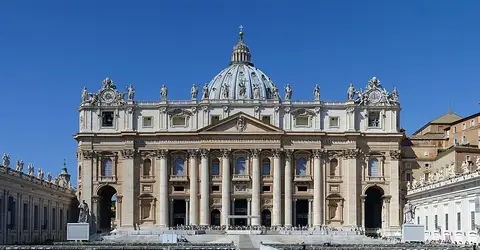 Historic sites01
The Dome at San Pietro Basilica
No address · Rome○ Website○ Phone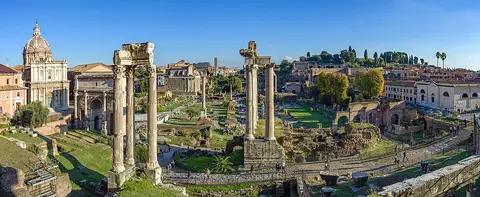 Historic sites02
Roman Forum
Via della Salara Vecchia, 5/6 · Rome● Website● Phone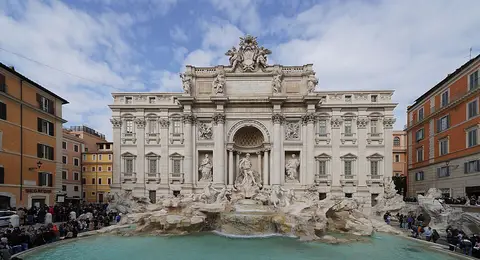 Historic sites03
Restauro Fontana di Trevi
Piazza di Trevi, 91 · Rome● Website○ Phone Monuments04
You need a free account to leave reviews and photos – that keeps comments genuine and lets you edit them later.
Ballroom-like church which crowns part of the Capitoline Hill. Don't be fooled by the plain stone exterior.
Source: Wikivoyage, „Rome/Colosseo“ · authors per page history · CC BY-SA 4.0