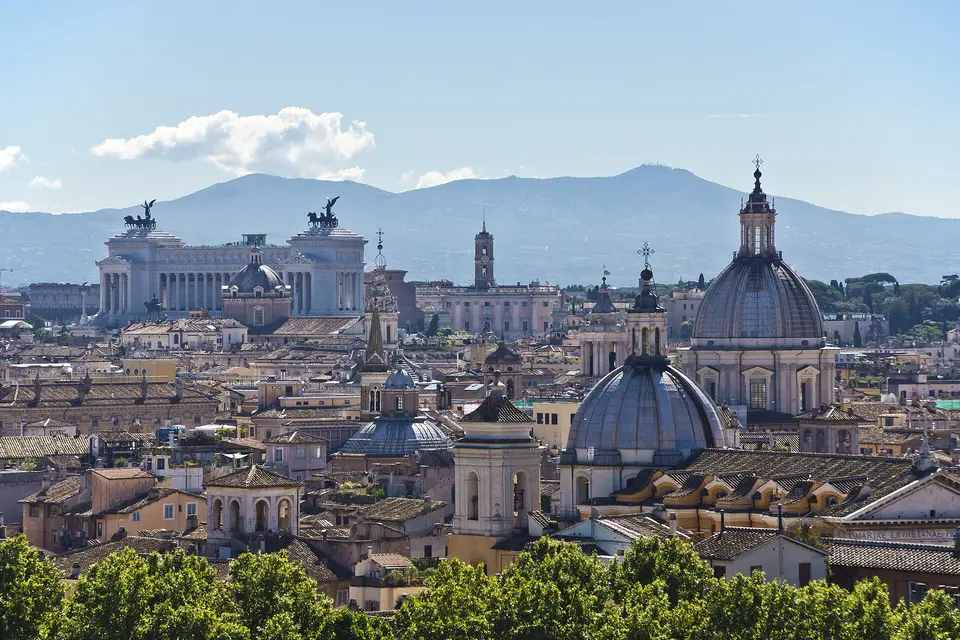
About Rome, Italy
Rome, the capital of Italy and the main city of the Lazio region, lies in the middle of the Italian Peninsula on the banks of the Tiber River. The country's largest city and the third-largest in the European Union, it is home to around three million people within the city limits, while the metropolitan area counts roughly four million residents. With a municipal area of almost 1,300 square kilometers, Rome is also the largest city in Italy by area. The nickname "Eternal City" goes back to the ancient poet Tibullus and underscores the immense historical significance of a metropolis whose history spans three millennia. According to legend, the city was founded in 753 B.C., although archaeological finds point to settlements dating to around 1000 B.C.
Rome's geography is shaped by the Campagna Romana, a broad plain bounded by the Apennines to the east and the Alban Hills to the southeast. The Tiber winds its way through the city in several bends, while to the north the Aniene River flows into the Tiber. The climate is typically Mediterranean, with dry, hot summers and mild, damp winters. These conditions have helped shape the vegetation and the look of the city over the centuries. Administratively, the city is divided into 15 municipi, with the historic Old Town, Municipio I, made up of 22 traditional districts known as rioni. Neighborhoods such as Trastevere and Monti have their roots in antiquity and remain the cultural heart of the metropolis to this day.
Rome's history began with the union of small Latin and Sabine villages into a city-state that at first freed itself from Etruscan influence. After the expulsion of the kings, the Republic took hold and, through constant expansion and military successes, particularly in the Punic Wars against Carthage, rose to become the dominant power in the Mediterranean. In the imperial era, the city reached its peak as the political and geographic center of the Roman Empire. At that time Rome had an extensive road network and a functioning sewer system, and it was a city of a million people. Emperors such as Augustus, Nero, and Trajan commissioned monumental buildings, including the Colosseum, the Imperial Forums, and large bath complexes that shaped city life.
With the decline of the Western Roman Empire, Rome lost political and economic influence but remained an important center of Christianity. The sacking of the city by the Goths and Vandals and the loss of grain shipments from North Africa led to a dramatic drop in population. While the ancient monuments partly fell into ruin in the Middle Ages or served as quarries, urban life concentrated along the banks of the Tiber and around St. Peter's Basilica. The popes increasingly took over administrative functions, and Rome became the capital of the Papal States. This era was marked by power struggles between the Roman noble families and the papacy, resulting in a complex political landscape.
The Middle Ages and the Renaissance brought new momentum to the city. The coronation of Charlemagne in 800 strengthened Rome's importance as a Christian center. In the 16th century, the city experienced a cultural and architectural boom under the popes, shaped by the Renaissance and the Baroque. Major buildings such as St. Peter's Basilica, the Basilica of St. John Lateran, and Santa Maria Maggiore were built or remodeled. This period created the cityscape still visible today, with its broad avenues, squares, fountains, and obelisks. The sack of Rome by the troops of Charles V in 1527 was a severe setback, but the city recovered and continued to develop.
In the 19th century, Rome became the stage for Italian unification. After the French protection troops withdrew in 1870, Italian troops marched into the city, which led to the abolition of the Papal States and to Rome being named capital of the Kingdom of Italy. This political change had profound effects on the city's structure and on the relationship between state and church. The differences were not settled until 1929 with the Lateran Treaty, which established the independent state of Vatican City. In the period that followed, under the Fascist dictatorship, large urban planning projects were carried out, including the development of the EUR district and the restoration of ancient sites in order to glorify Roman history.
World War II left deep marks on the city. Rome was bombed by the Allies in 1943, causing severe destruction and many casualties. After the German occupation and liberation by Allied troops in 1944, the city developed into a modern metropolis. In the postwar years, Italy experienced an economic boom that triggered a strong rural exodus. Millions of people flocked to the capital, leading to rapid growth and the emergence of new residential areas. Urban planning of this period was often marked by improvised solutions that are still visible in the suburbs today.
Today Rome is a major tourist destination and cultural center. The Old Town, St. Peter's Basilica, and Vatican City were designated a UNESCO World Heritage Site in 1980. Visitors can experience a fascinating mix of ancient ruins, medieval churches, and Baroque palaces. The Colosseum, the Roman Forum, and the Imperial Forums bear witness to the grandeur of ancient Rome, while the Vatican, with the Sistine Chapel and St. Peter's Basilica, is the spiritual center of the Catholic Church. The city has a unique atmosphere in which past and present come together in the tightest of spaces.
Modern Rome faces challenges that stem from its complex history. While the city center is protected by strict preservation rules, the suburbs struggle with problems such as inadequate infrastructure and social inequality. Integrating the many visitors into city life remains a task, as high tourist numbers put a strain on residents' daily lives. Despite these difficulties, Rome remains a symbol of cultural diversity and historical continuity. The city combines its ancient roots with the demands of a modern metropolis and offers residents and visitors alike a rich cultural experience.
All in all, Rome is more than just a capital; it is a living museum that reflects the history of Europe. The city has grown from a small cluster of settlements into a global metropolis known worldwide for its architecture, art, and religion. Its ability to absorb different eras and cultures makes Rome a unique place that remains of great importance to the international community. Whether you're visiting the ancient sites, exploring the Vatican Museums, or immersing yourself in local life, Rome offers an inexhaustible wealth of impressions and experiences.
At a glance
- Category
- Sight › Historic sites
- Rating
- no reviews yet · write a review
- Address
- —
Rome, Italy - District
- Roma I
- Phone
- —
- Website
- —
- —
- Coordinates
- 41.89344° N · 12.48253° E
- Data quality
- confidence 0.81
- Identifier
- ID 03819abd-0dd…
Location & surroundings
Toggle layersRatings & comments
none yetNear Rome, Italy
closest 5 per category · 2 kmSights
Restaurants
Museums
Hotels
More:Historic sites in Rome (1,014)Sights in Roma I (642)All sights in Rome (1,312)
300 places within 2 km loaded.
Don't miss in Rome
All sights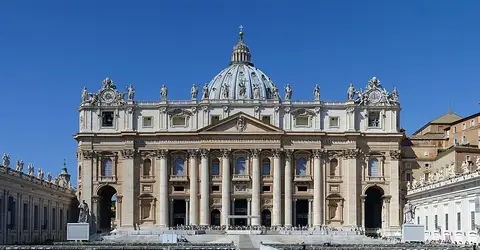 Historic sites01
The Dome at San Pietro Basilica
No address · Rome○ Website○ Phone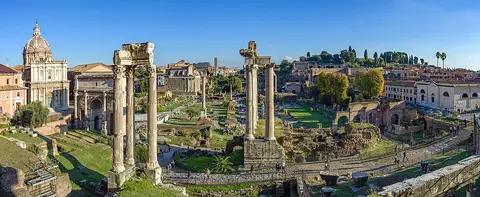 Historic sites02
Roman Forum
Via della Salara Vecchia, 5/6 · Rome● Website● Phone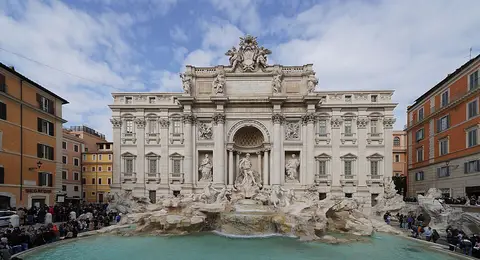 Historic sites03
Restauro Fontana di Trevi
Piazza di Trevi, 91 · Rome● Website○ Phone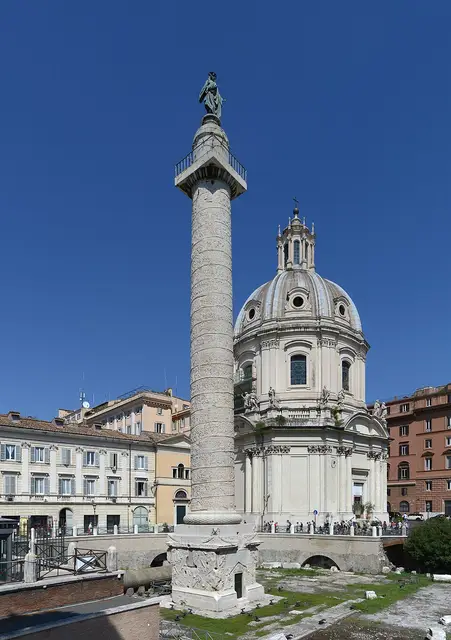 Monuments04
You need a free account to leave reviews and photos – that keeps comments genuine and lets you edit them later.
The capital of the Roman Empire contains many religious sites, including the Pantheon, the Temple of Saturn, and the Temple of Hadrian.
Source: Wikivoyage, „Greek and Roman mythology“ · authors per page history · CC BY-SA 4.0