About Cour Carrée
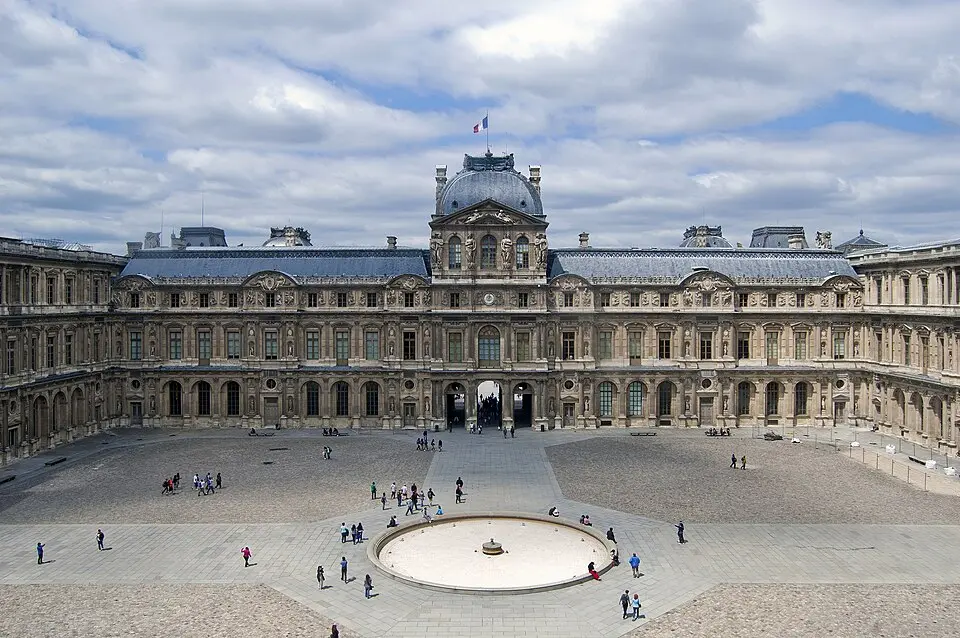
The Cour Carrée is the historic heart of the Louvre in Paris, an almost perfect courtyard enclosed by eight wings and pavilions. In the 12th century, a medieval fortress stood on this site, built by King Philip II Augustus to protect the city. Over the centuries, this military complex was gradually transformed into a stately Renaissance palace. In the 16th century, King Francis I launched the first major renovations, having the old keep torn down and replacing the west wall with an elegant wing known today as the Lescot Wing. Under his successors, especially Henry II and Henry IV, the complex was expanded further, and the medieval defensive walls gave way to magnificent palace structures that brought the courtyard to its present square shape.
In the 17th century, architects such as Jacques Lemercier and Louis Le Vau completed the transformation by adding the north and east sides and building the famous colonnade on the east side. Despite a construction period of more than 200 years, the architecture looks surprisingly harmonious today. The facade is richly decorated with statues, reliefs, and the monograms of the rulers who commissioned each phase of construction. One particular highlight is the Pavillon Sully, also known as the Pavillon de l'Horloge, which stands out for its clock, its caryatids, and its tall dome, which served as a model for other domes at the Louvre. In the center of the courtyard is a fountain that draws the eye to the symmetrical layout.
For visitors, the Cour Carrée offers a fascinating glimpse into the history of the palace. The architecture tells the story of a fortress turned royal residence, and details such as the allegorical figures at the windows, including Moses and the Egyptian goddess Isis, point to the cultural influences of the time. The uniform design of the ground and upper floors, with their rows of windows and niche statues, creates an impressive ensemble that reflects the transition from the Middle Ages to the Renaissance and the Baroque.
At a glance
- Category
- Sight › Historic sites
- Rating
- no reviews yet · write a review
- Address
75001 Paris, France- District
- 1st Arrondissement
- Phone
- +33140205317
- Website
- www.louvre.fr
- info@louvre.fr
- Coordinates
- 48.86038° N · 2.33855° E
- Data quality
- confidence 0.93
- Identifier
- ID a56b6067-bb7…
Location & surroundings
Toggle layersFAQ about Cour Carrée
quick answersWhat is the Cour Carrée in Paris?
The Cour Carrée is the historic inner courtyard of the Louvre in Paris's 1st arrondissement and is considered its heart. The almost perfectly square courtyard is enclosed by eight wings and pavilions. Its architecture reflects the transition from the Middle Ages through the Renaissance to the Baroque.
How did the Cour Carrée of the Louvre come about?
Over more than two hundred years, the Cour Carrée in Paris evolved from a medieval fortress into a Renaissance palace. King Philip II Augustus had the original castle built in the 12th century. In the 16th century, Francis I had the old keep demolished and the west wall replaced by today's Lescot Wing, and Henry II and Henry IV expanded it further. In the 17th century, the architects Jacques Lemercier and Louis Le Vau completed the north and east sides, including the famous Colonnade.
What should you look at in particular at the Cour Carrée?
At the Cour Carrée in Paris, the highlight is above all the Pavillon Sully, also called the Pavillon de l'Horloge, with its clock, its caryatids, and its tall dome, which served as a model for other Louvre domes. The facades are adorned with statues, reliefs, and the monograms of the rulers from the various building phases. Also look out for the allegorical figures at the windows, including Moses and the Egyptian goddess Isis. In the middle of the courtyard stands a fountain that draws the eye to the symmetrical layout.
What can you visit around the Cour Carrée?
Around the Cour Carrée in Paris, you'll find above all the collections of the Louvre. travelguide195 lists the Musée du Louvre about 95 meters away, the Egyptian antiquities about 88 meters away, the Venus de Milo about 108 meters away, and the Winged Victory of Samothrace about 135 meters away. Also nearby, about 148 meters away, is the Monument de Gaspard de Coligny de Chatillon.
Are there restaurants near the Cour Carrée?
Yes, there are plenty of restaurants around the Cour Carrée in Paris's 1st arrondissement. travelguide195 lists about 286 restaurants within 500 meters of the Louvre courtyard.
Ratings & comments
none yetNear Cour Carrée
closest 5 per category · 2 kmSights
Restaurants
Museums
Hotels
More:Historic sites in Paris (1,524)Sights in 1st Arrondissement (131)All sights in Paris (1,859)
300 places within 2 km loaded.
You need a free account to leave reviews and photos – that keeps comments genuine and lets you edit them later.