
Île-de-France: Paris and Its Royal Surroundings
Travel guide · editorialThe Île-de-France is the region surrounding Paris and the political, economic, and cultural heart of France. A vacation in the Île-de-France takes you to the Eiffel Tower and the Louvre, but also to royal châteaux, forests, Impressionist villages, and lively suburbs that are often underestimated.
Location and Landscape
The name "Island of France" refers to the land between the Seine, Marne, Oise, and other rivers, which was the core territory of the French kings in the Middle Ages. Paris sits in the middle of a flat basin, surrounded by a ring of suburbs, the Petite Couronne, and farther out by fields, forests, and small towns. Large forests such as Fontainebleau, Rambouillet, and Saint-Germain were royal hunting grounds and are now popular recreation areas. The rocks of Fontainebleau are among the best-known bouldering areas in the world.
Paris and Its Neighboring Cities
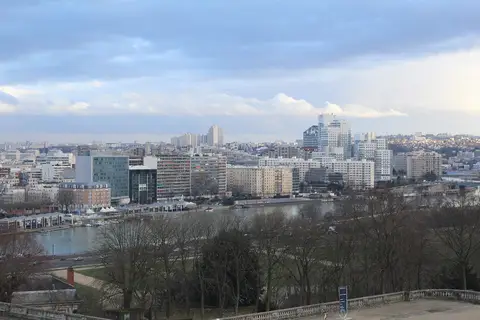
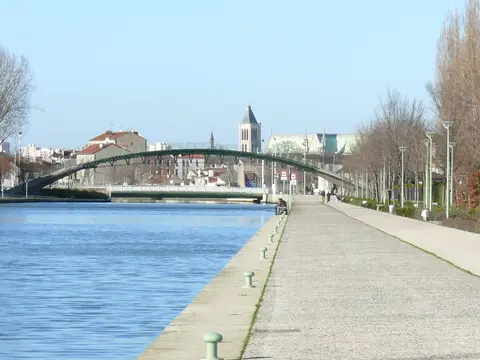
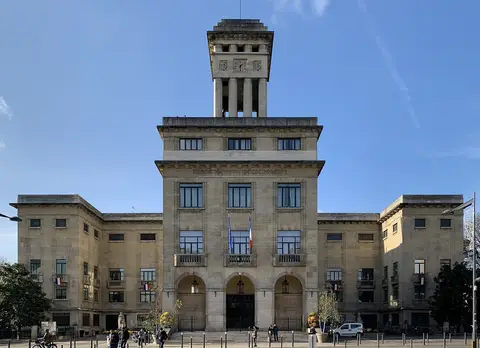
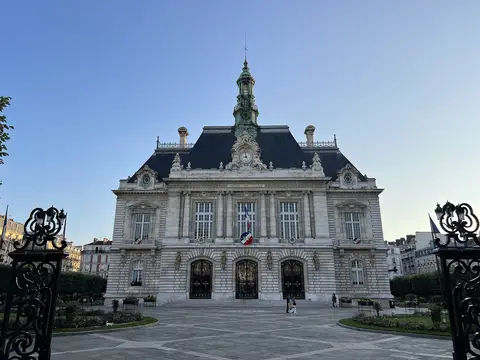
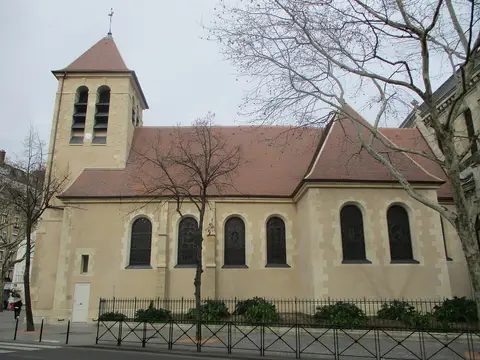
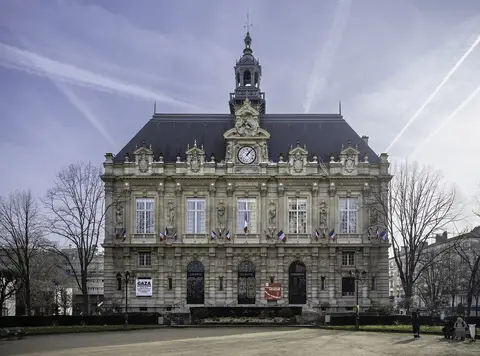
Paris, with its 20 arrondissements, has around 2.1 million residents, and the metropolitan area more than five times that. Each neighborhood has its own character: the Marais with its aristocratic mansions and Jewish quarter, Saint-Germain-des-Prés with its literary cafés, Montmartre with Sacré-Cœur and its artists' square, and Belleville with street art and restaurants from all over the world. Just beyond the Boulevard périphérique, separate cities begin: Boulogne-Billancourt with its museums of 1930s modernism, Saint-Denis with its Gothic basilica, the burial place of the French kings, and the Stade de France, and Levallois-Perret and Clichy as densely built residential and office districts. Montreuil is considered an artists' town, and Nanterre is home to a university and the La Défense business district with the Grande Arche.
There is also plenty to discover beyond the well-known neighborhoods: the Canal Saint-Martin with its iron footbridges and locks, the Parc des Buttes-Chaumont with its artificial cliffs, the 19th-century arcades such as the Galerie Vivienne, and the markets of Belleville. In the Bois de Vincennes and the Bois de Boulogne, Parisians row on small lakes on weekends, and along the banks of the Seine, a UNESCO World Heritage site, the bouquinistes sell old books.
Sights in the Île-de-France
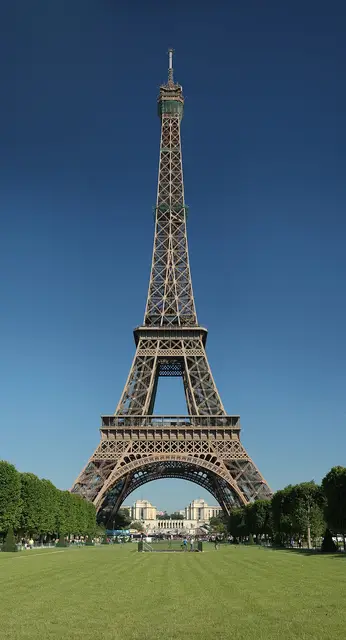
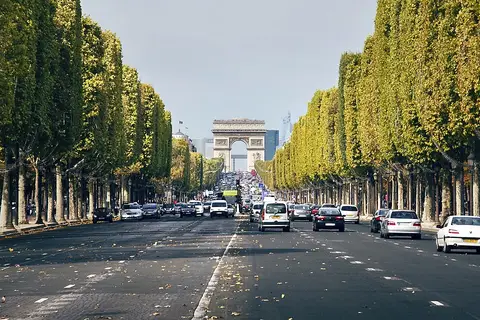
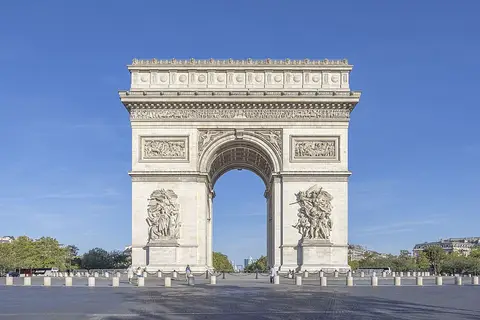
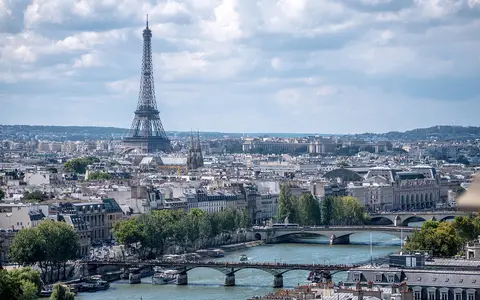
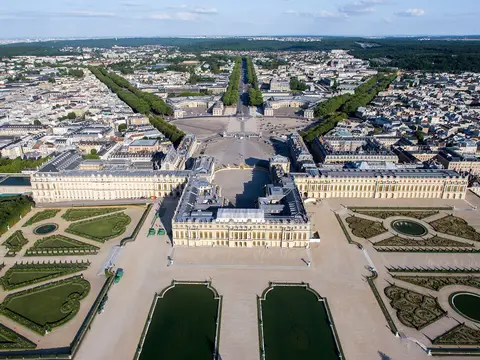
The best-known sights in the Île-de-France include, in Paris, the Eiffel Tower, the Louvre with the Mona Lisa, the Musée d'Orsay with its Impressionists, Notre-Dame Cathedral, restored after the 2019 fire and reopened in December 2024, and the Arc de Triomphe on the Champs-Élysées. Just outside the city lies Versailles, the palace of Louis XIV with its Hall of Mirrors and gardens by André Le Nôtre. Equally magnificent are Fontainebleau, the Château de Vaux-le-Vicomte, and the Château de Saint-Germain-en-Laye with its terrace above the Seine. In Giverny, just outside the region in Normandy, Monet's garden is a big draw, but Auvers-sur-Oise, where Van Gogh spent his last weeks, is in the Île-de-France. For families, Disneyland Paris in Marne-la-Vallée is a top destination.
History and Culture
From here the Capetians expanded their realm starting in the 10th century, and here the French Revolution began in 1789 with the storming of the Bastille. In the 19th century, Paris was rebuilt under Baron Haussmann with broad boulevards that still shape the cityscape today. The 2024 Olympic Games brought new buildings, a cleaned-up stretch of the Seine for open-water swimming, and new bike lanes. Museums, theaters, opera houses, and more than 100 movie theaters make the region one of the densest cultural landscapes in Europe.
Food and Drink
Paris is a capital of food: from the croissant at the boulangerie to steak frites at a bistro to Michelin-starred cuisine. At weekly markets such as the Marché d'Aligre, you can buy cheeses like Brie de Meaux and Brie de Melun, both from the region. Bakeries compete every year for the best baguette. In the suburbs, North African, West African, and Asian cuisines are part of everyday life, for example in Chinatown in the 13th arrondissement.
Getting There and Best Time to Visit
Paris is easy to reach from Germany by TGV and ICE, in around four hours from Frankfurt or Stuttgart. Charles de Gaulle and Orly airports are connected by RER lines. The Metro, the RER, and the growing Grand Paris Express network link the entire region. The best time to visit is spring, from April to June, and early fall; in August many Parisians are on vacation and some restaurants are closed, but the streets are quieter.