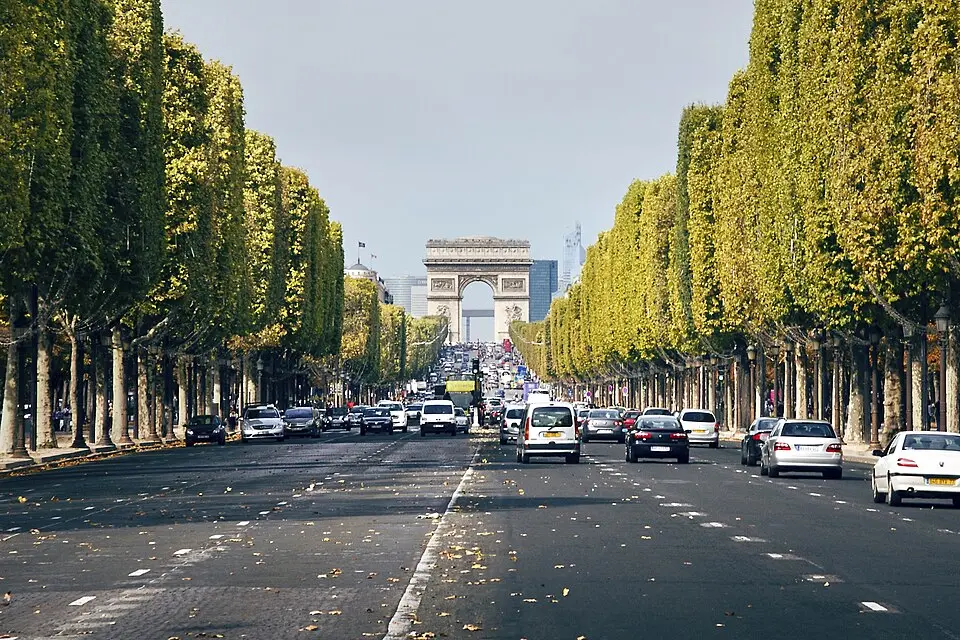
About Avenue des Champs-Élysées
The Avenue des Champs-Élysées is considered one of the most famous grand boulevards in the world and stretches just under two kilometers through Paris's 8th arrondissement. It connects the Place de la Concorde in the east with the Place Charles-de-Gaulle in the west, forming the central section of the so-called Historic Axis, which runs from the Louvre to the Grande Arche in La Défense. At seventy meters wide and paved from end to end, the street presents itself as an imposing avenue. Its name, in use since 1789, refers to the Elysian Fields of Greek mythology, the place where chosen heroes found eternal happiness. Originally known as the Grand Cours, it went by various names over the centuries before receiving its present, myth-inspired name.
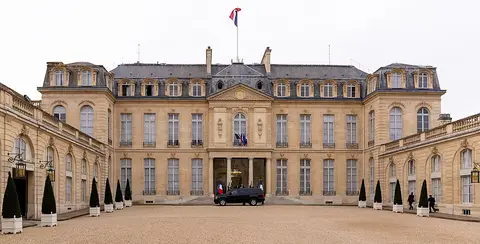
The street's history goes back to the 17th century, when the landscape gardener André Le Nôtre, on the orders of Louis XIV, laid out a second promenade parallel to the Cours la Reine. This avenue served as a westward-facing showpiece axis that lay exactly in line with the central path of the Tuileries Garden. In the 18th century the axis was extended further, all the way to the Place de l'Étoile, today's Arc de Triomphe square. While its early phases were still characterized by open fields and clusters of trees, by the end of the 18th century the area had become a popular meeting place. The mature trees formed rectangular clearings, and the gardens of the neighboring buildings in the Faubourg Saint-Honoré bordered the park directly. The Élysée Palace, completed in 1722 and the official residence of the French president since 1873, is one of the most striking buildings in this area.
In the 19th century the avenue underwent a fundamental transformation. Napoleon I had the road built from the Rond-Point to the Place de l'Étoile in order to modernize and beautify Paris. Only in 1828 did the avenue pass into the city's ownership, which added sidewalks, fountains, and gas lighting. By the end of the century, the Champs-Élysées had firmly established itself as a shopping boulevard and showcase of aristocratic and upper-middle-class Paris. For the 1900 World's Fair, major buildings were erected, such as the Grand Palais, which today houses a science museum, and the Petit Palais with its municipal fine arts museum. These buildings stand in the lower, eastern part of the avenue, which is lined on both sides by the Jardin des Champs-Élysées.
The upper, western section of the street is now defined above all by its shops and restaurants. Here you'll find a wide range of stores, cafés, restaurants, and cinemas, including well-known names such as the restaurant Le Fouquet's, the perfume shop Guerlain, and the Lido cabaret theater. The upper floors of the buildings are mostly occupied by banks, insurance companies, and trade offices, while shopping arcades such as the Arcades des Champs-Élysées can be found at street level. The change in retail is striking: where many airlines and car dealerships were once represented, international chain stores and restaurants increasingly dominate today. The Comité des Champs-Élysées, an association founded in 1916, watches over the prestige of the street and holds a veto right over the opening of new businesses in order to preserve the avenue's character.
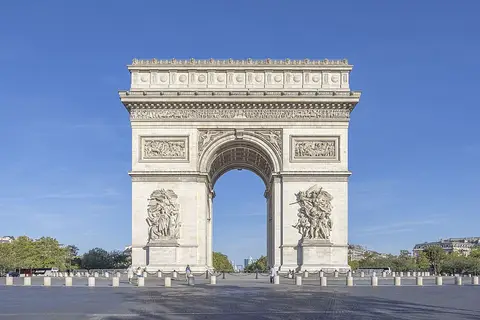
For visitors, the avenue offers a varied experience that goes beyond simply strolling. The Historic Axis lets you take in architectural highlights such as the Luxor Obelisk on the Place de la Concorde and the Arc de Triomphe at the western end in a single, continuous view. The Arc de Triomphe, built between 1806 and 1836, houses the Tomb of the Unknown Soldier and serves as the symbolic end point of the avenue. The surrounding area is also rich in cultural venues, including the Théâtre Marigny, the Théâtre du Rond-Point, and the Théâtre des Champs-Élysées. Air quality has also gained importance in recent years; on certain Sundays the street is closed to automobile traffic, which noticeably improves air quality and gives pedestrians more room to linger.
The avenue is also the setting for major national and international events. On July 14, France's national holiday, the president reviews the military parade from a grandstand beneath the obelisk before moving on to a garden party at the Élysée Palace. Another highlight is the finish of the Tour de France, which has regularly ended on the Champs-Élysées since 1975. The professional cyclists ride the course several times before the award ceremony takes place against the backdrop of the Arc de Triomphe. Public transportation access is excellent, as Métro Line 1 runs the entire length of the street and stops at several stations, including Concorde, Champs-Élysées – Clemenceau, Franklin D. Roosevelt, George V, and Charles de Gaulle – Étoile. This infrastructure makes the avenue not only a tourist magnet but also a central hub of city life in Paris.
At a glance
- Category
- Sight › Historic sites
- Rating
- no reviews yet · write a review
- Address
75008 Paris, France- District
- 8th Arrondissement of Paris
- Phone
- +33892683000
- Website
- www.comite-champs-elysees.com
- info@comitechampselysees.com
- Coordinates
- 48.86951° N · 2.30875° E
- Data quality
- confidence 0.76
- Identifier
- ID 0ea3c0e8-b7c…
Part of the tour
Paris in One Day: From Notre-Dame to the Eiffel Tower →Location & surroundings
Toggle layersFAQ about Avenue des Champs-Élysées
quick answersWhat is the Avenue des Champs-Élysées?
The Avenue des Champs-Élysées in Paris is considered one of the most famous grand boulevards in the world and lies in the 8th arrondissement. Its history dates back to the 17th century, when the master gardener André Le Nôtre laid out a promenade, commissioned by Louis XIV, extending the central path of the Tuileries Garden. In the 19th century, Napoleon I had the road extended to the Place de l’Étoile. In 1828, the avenue passed into the ownership of the City of Paris, which added sidewalks, fountains, and gas lighting.
How long is the Avenue des Champs-Élysées and where does it run?
The Avenue des Champs-Élysées in Paris is just under two kilometers (about 1.2 miles) long and seventy meters (about 230 feet) wide. It connects the Place de la Concorde in the east with the Place Charles-de-Gaulle and the Arc de Triomphe in the west. This makes it the central section of the historic axis that stretches from the Louvre to the Grande Arche in La Défense.
Where does the Avenue des Champs-Élysées get its name?
The name of the Avenue des Champs-Élysées in Paris goes back to the Elysian Fields of Greek mythology, the place where chosen heroes found eternal happiness. The street has carried this name since 1789. It was originally called the Grand Cours and has had several other names over the centuries.
What can you see around the Avenue des Champs-Élysées?
Around the Avenue des Champs-Élysées in Paris, you can visit several important buildings, especially in the lower, eastern section by the Jardin des Champs-Élysées. This is where you'll find the Grand Palais, which houses a science museum, and the Petit Palais with the city's fine arts museum, both built for the 1900 World's Fair. Nearby is also the Élysée Palace, completed in 1722 and the official residence of the French president since 1873. travelguide195 also lists the Triangle d’Or district about 370 meters (roughly 1,200 feet) away.
Can you shop and eat on the Avenue des Champs-Élysées?
Yes, the upper, western section of the Avenue des Champs-Élysées in Paris is characterized above all by shops, cafés, restaurants, and movie theaters. Well-known addresses include the restaurant Le Fouquet’s, the perfume shop Guerlain, and the cabaret theater Lido. travelguide195 lists around 414 restaurants within 500 meters (about 1,640 feet). The avenue is also part of the tour “Paris in One Day: From Notre-Dame to the Eiffel Tower.”
Ratings & comments
none yetNear Avenue des Champs-Élysées
closest 5 per category · 2 kmSights
Museums
Hotels
More:Historic sites in Paris (1,524)Sights in 8th Arrondissement of Paris (87)All sights in Paris (1,859)
300 places within 2 km loaded.
You need a free account to leave reviews and photos – that keeps comments genuine and lets you edit them later.
For many visitors one of the must-see places in Paris is the Avenue des Champs-Elysées which was first created in 1667 by Louis XIV's gardener, Andre Le Nôtre, in order to improve the view from the Tuileries garden. This elegant and broad avenue was extended towards the end of the 18th century, now running from the place de la Concorde to the Arc de Triomphe. It is noted today as one of the most prestigious shopping boulevards of Paris.
Source: Wikivoyage, „Paris/8th arrondissement“ · authors per page history · CC BY-SA 4.0 · as of 7/21/2018