
State of Mexico: Pyramids, Volcanoes, and the Capital Belt
Travel guide · editorialThe state that shares its name with the whole country curves around the capital like a horseshoe. If you're planning a trip to Mexico – meaning the Estado de México – you'll find the pyramids of Teotihuacán, a volcano crater you can walk into, and quiet colonial towns, all just one to two hours from the bustle of the big city.
Location and Landscape
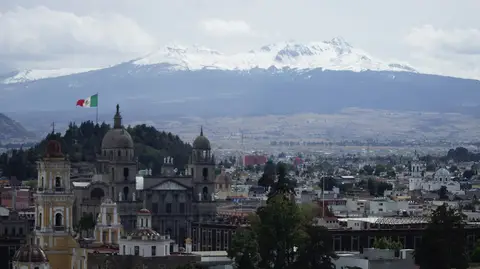
With around 17 million residents, the State of Mexico is the most populous state in the country. Many of them live in the suburbs that merge seamlessly into Mexico City. Beyond this belt of settlement, the landscape quickly turns rural and mountainous. To the west rises the Nevado de Toluca, an extinct volcano of more than 4,600 meters, with two lagoons in its crater, the Lagoon of the Sun and the Lagoon of the Moon. To the east, Popocatépetl and Iztaccíhuatl form the border with Puebla; a road runs between the two over the Paso de Cortés pass. Pine and fir forests cover the heights, and in the area bordering Michoacán, millions of monarch butterflies spend the winter every year.
Cities Between Industry and Everyday Life
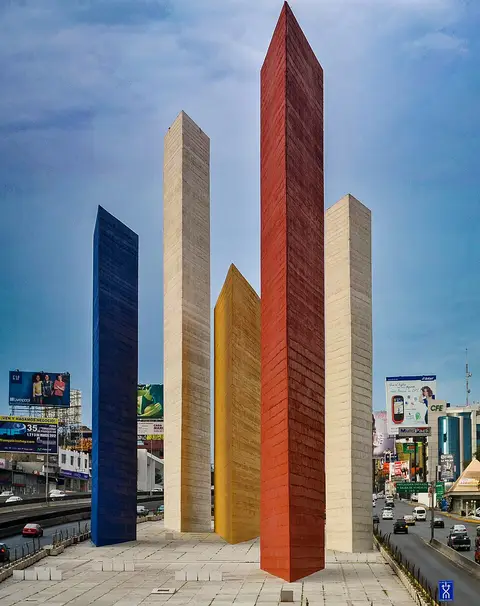
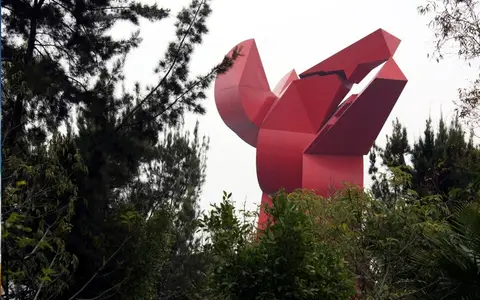
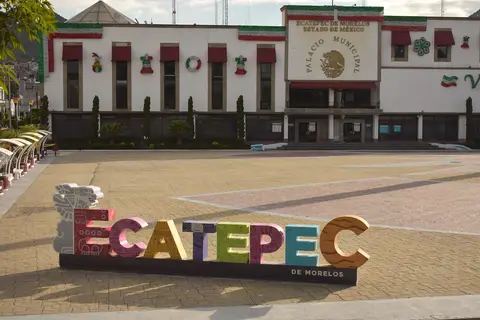
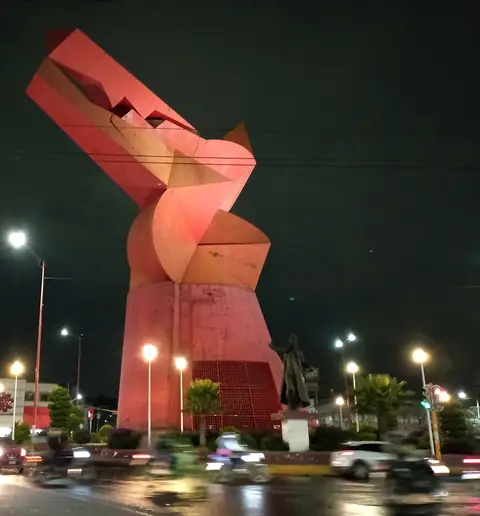
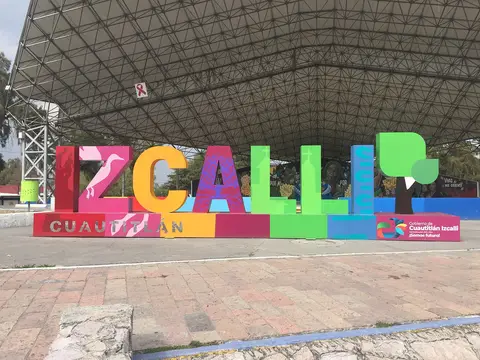
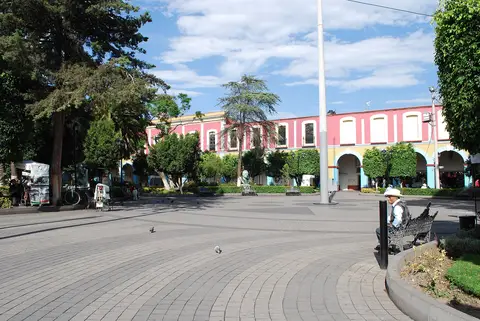
Ecatepec de Morelos and Nezahualcóyotl are among the largest cities in Mexico, but they are above all home to commuters who travel into the capital every day. Naucalpan de Juárez, Tlalnepantla, and Cuautitlán Izcalli in the northwest are industrial and shopping hubs; Naucalpan is home to the Torres de Satélite, the colorful concrete towers by Luis Barragán and Mathias Goeritz from the 1950s. Atizapán de Zaragoza and Ciudad López Mateos adjoin them to the north. The state capital, Toluca, sits at roughly 2,660 meters and is one of the highest-lying large cities in the country. Its center, with the arcades of the Portales and the Cosmovitral, a botanical garden beneath enormous stained-glass windows, is well worth a visit.
Sights in the State of Mexico
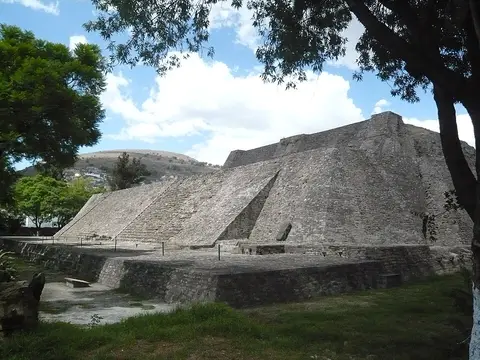
Teotihuacán is the big draw. The ruined city, which flourished between about 100 and 550 CE, impresses with its Avenue of the Dead, the Pyramid of the Sun, and the Pyramid of the Moon; at dawn, hot-air balloons float over the site. To the south, Malinalco is worth a stop for its Aztec temple of the eagle and jaguar warriors, carved into the rock. In Tepotzotlán, the former Jesuit college preserves one of the finest Baroque complexes in the country, now home to the Museo Nacional del Virreinato. Valle de Bravo, on its reservoir, is a weekend getaway for residents of the capital: sailing, paragliding, and strolls through steep lanes lined with white houses and red-tile roofs. Farther south, you'll find the Grutas de la Estrella, limestone caves near Tonatico, and the warm thermal baths of Ixtapan de la Sal.
Culture and History
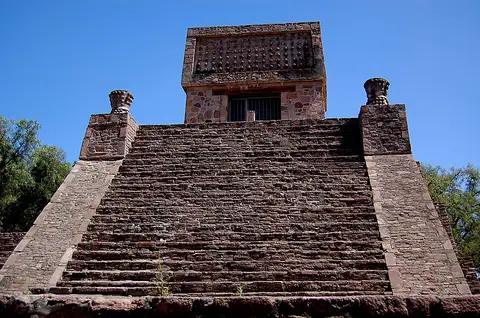
Before the Spanish arrived, the Matlatzinca and Otomí lived in the Toluca Valley, while the city-state of Texcoco ruled in the east under the poet-king Nezahualcóyotl, whose name now belongs to a city of over a million people. Indigenous languages such as Mazahua and Otomí are still spoken in some villages. Metepec is famous for its painted clay trees of life, and Tenancingo for handwoven rebozos, the traditional shawls. Augustinian monasteries from the 16th century have survived in San Juan Teotihuacán and Acolman.
Food and Drink
Toluca is the capital of chorizo, both the red kind and a green variety made with herbs and chili. The markets also sell fruit liqueurs from Toluca, known as moscos. Around Teotihuacán, you'll find barbacoa, lamb cooked in agave leaves in an earth oven, served with consomé and fresh tortillas. The region is also known for pulque; escamoles (ant eggs) and dishes made with prickly pears and nopales appear on menus in season.
Getting There and Best Time to Visit
Most visitors arrive via Mexico City. Toluca has its own airport (TLC), and since 2023 the El Insurgente interurban train has been gradually linking Toluca with the capital. Felipe Ángeles Airport (NLU) near Zumpango mainly handles domestic flights. Buses run regularly to destinations such as Teotihuacán and Valle de Bravo. The best time to visit is the dry season from October to May; the monarch butterflies can be seen from about mid-November to March. It gets cold at night at higher elevations, and frost and occasional snow are possible on the Nevado de Toluca. In parts of the suburbs, you should check the local safety situation before you go.