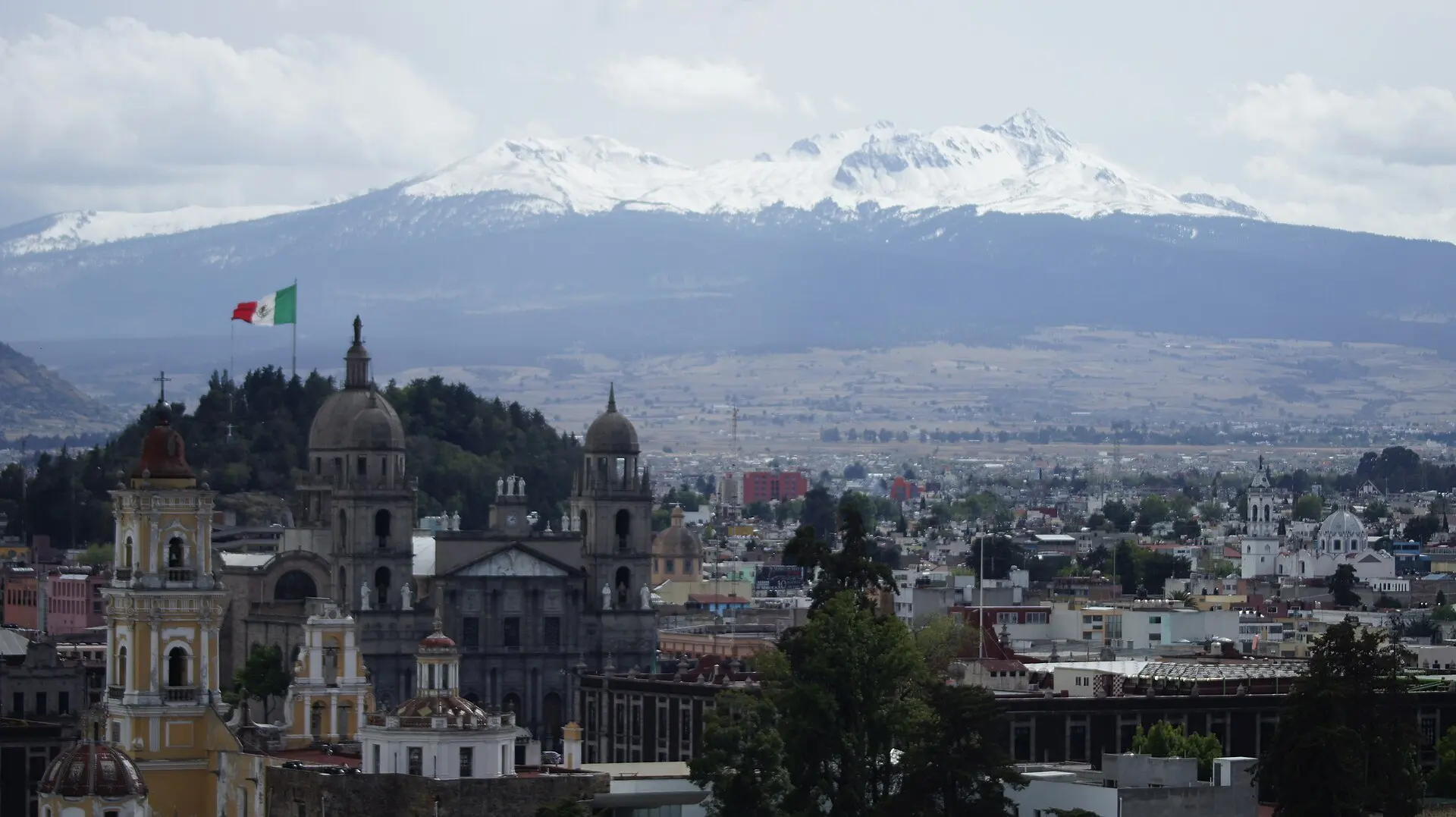
Discover Toluca: Cosmovitral, Chorizo, and a Volcano
Travel guide · editorialA market hall whose windows glow in a thousand colors, arcades full of sweets, and a snow-capped volcano on the horizon: Toluca de Lerdo is the capital of the State of Mexico and one of the highest-lying large cities in the country. A trip here combines art, hearty cuisine, and excursions to the crater lake of the Nevado de Toluca.
A Highland City with History
Before the Spanish conquest, the Toluca Valley was settled by the Matlatzinca and Otomí, and the Aztecs later conquered the region. After 1521, Hernán Cortés claimed the valley as part of his Marquesado. In the 19th century, Toluca became the capital of the State of Mexico; the addition "de Lerdo" honors the politician Miguel Lerdo de Tejada. Today Toluca is a major industrial center with automotive and food-processing plants. Neighborhoods such as San Lorenzo Tepaltitlán, San Felipe Tlamimilolpan, and Cacalomacán preserve the character of the villages they once were.
Sights in Toluca
The highlight is the Cosmovitral, a former Art Nouveau market hall whose walls and ceiling the artist Leopoldo Flores adorned in the 1980s with around 3,000 square meters of stained glass. The work depicts the struggle between good and evil, between day and night. A botanical garden grows inside. The Portales in the center, long arcades from the 19th century, are lined with shops, cafés, and candy stands. The cathedral and the government palace stand on the Plaza de los Mártires. Toluca also has many museums, including the Museo de Bellas Artes and the Centro Cultural Mexiquense, with crafts and folk art, a Museo de Antropología, and a large library. The Museo Taller Nishizawa is dedicated to the painter Luis Nishizawa, whose work blends Mexican and Japanese influences.
Eating in Toluca
Toluca is famous for its chorizo, red or green, the latter colored with herbs, chiles, and pumpkin seeds. It is served in tacos, tortas, and with potatoes. The Portales are the place to go for sweets such as alfajores, mostachones, and dulces de leche. A traditional drink is moscos, an orange liqueur served in small glasses under the arcades. The Mercado Juárez, one of the largest markets in the region, offers fruit, vegetables, and food stalls. Also typical of the highlands are tacos de plaza, a picnic of tortillas, chicharrón, avocado, and cheese assembled at the market, as well as trout from the mountain streams in the area. The restaurants along the Portales and in Metepec serve regional dishes in historic surroundings.
Getting Around, When to Go, and Excursions
Toluca Airport (TLC) lies east of the city and is used by some airlines as an alternative to Mexico City. The new El Insurgente train connects Toluca with western Mexico City over mountains and through tunnels. In the city, buses and taxis get you around. The best time to visit is between October and April, although nights can turn frosty at an elevation of over 2,600 meters; in summer it rains in the afternoons. The most important excursion leads to the Nevado de Toluca, an extinct volcano with two crater lakes, the Lago del Sol and the Lago de la Luna, at over 4,000 meters. Also worthwhile are Metepec with its clay figures, the Árboles de la Vida (Trees of Life), and Valle de Bravo with its lake and forests.