Discover Tlalnepantla: A Monastery Church on the Edge of the Big City
Travel guide · editorialTlalnepantla de Baz borders Mexico City directly and is part of the vast metropolitan area. If you're planning a trip to the capital, you'll find a little-known side of the region here: a 16th-century cathedral, an Aztec pyramid, and plenty of everyday life in Mexico's industrial belt.
"Land Between Two Peoples"
In Nahuatl, the name roughly means "in the middle of the land." In the 16th century, the Franciscans founded a monastery here to convert the surrounding Otomí and Mexica together, which is why the name is interpreted as a place between two peoples. For centuries, Tlalnepantla remained a rural market town. Starting in the 1940s, factories moved in and the city grew rapidly; today it is a densely built-up part of the Valley of Mexico with industrial zones, residential neighborhoods, and large shopping malls. The municipality is split in two: an eastern section lies apart from the main area and borders Gustavo A. Madero.
Sights in Tlalnepantla
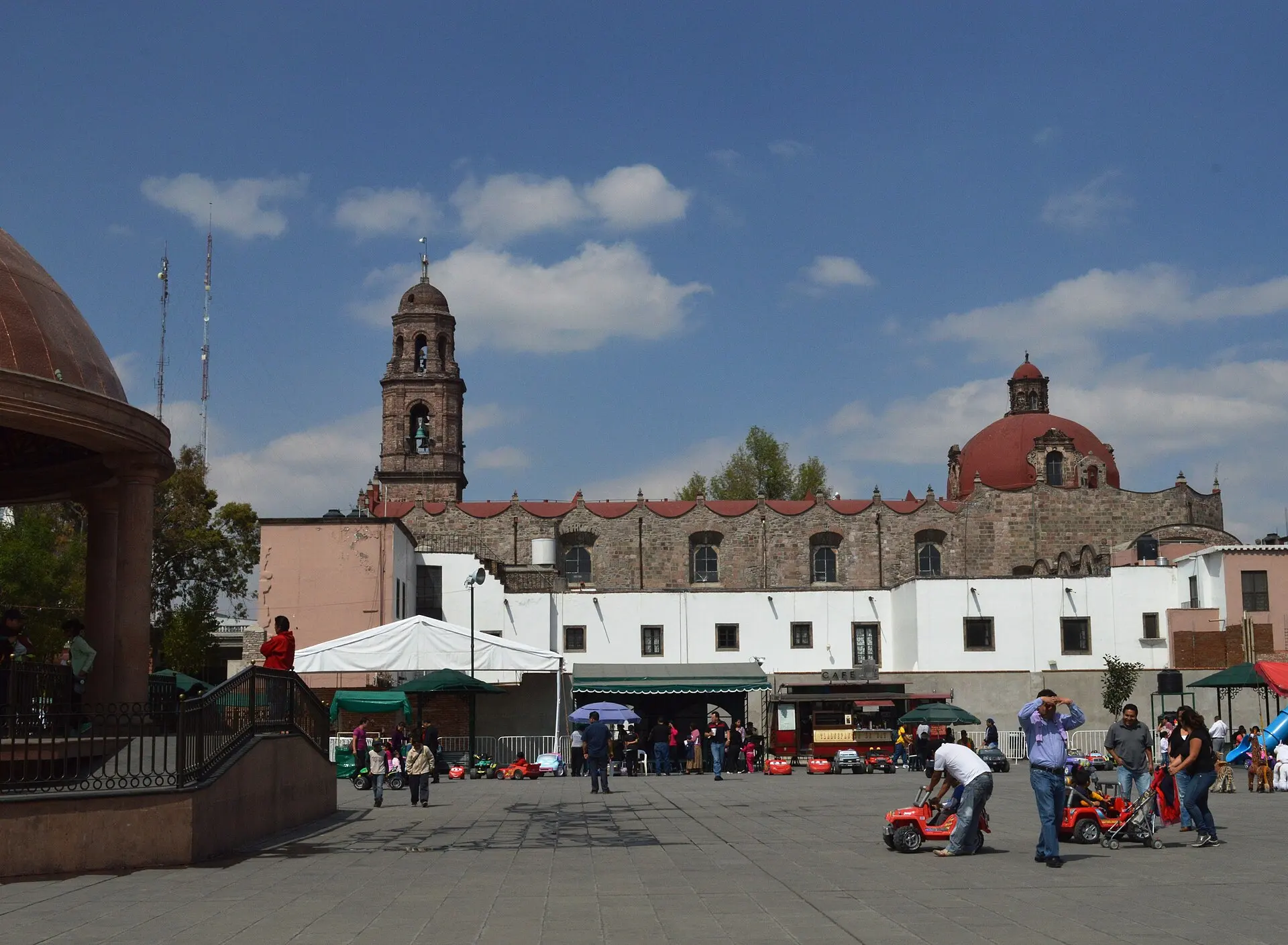
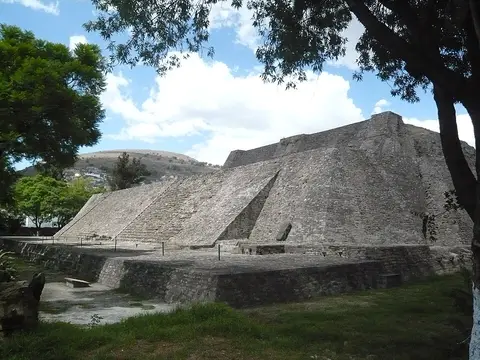
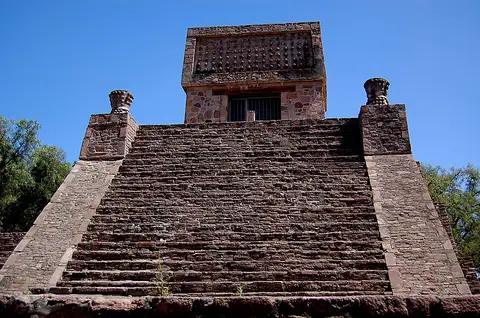
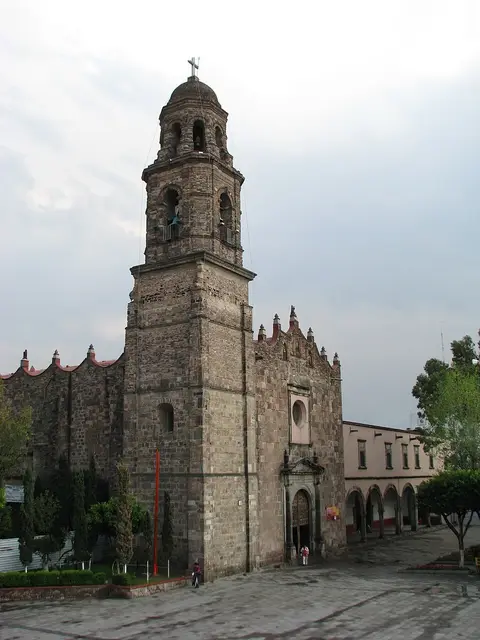
At the center stands the Catedral de Corpus Christi, the former Franciscan monastery church. Its simple Renaissance facade, cloister, and open portal are fine examples of early colonial architecture. Around it are the main square, Plaza Gustavo Baz, and a lively market district. Even more significant is the Pyramid of Tenayuca in the eastern section: this double pyramid was built over in several construction phases and is surrounded by a row of stone serpents that rank among the most impressive sculptures of their kind. Nearby is the smaller site of Santa Cecilia Acatitlan, with a reconstructed temple. The area around the Sierra de Guadalupe offers hiking trails with views over the sea of houses.
Eating and Going Out
The restaurants in Tlalnepantla cater to locals: taquerías, fondas with inexpensive lunch menus, and barbacoa stands on weekends. Be sure to try barbacoa de borrego, lamb cooked in an earth oven, served with consomé, as well as tlacoyos, quesadillas with huitlacoche, and pulque in a traditional pulquería. The shopping malls along the highway to Querétaro have chain restaurants and movie theaters; for nightlife in the classic sense, you're better off in neighboring Mexico City.
Neighborhoods and Nearby Excursions
Tlalnepantla is not a uniform whole. Around the old center, families live in long-established colonias, while to the south, commercial areas blend almost seamlessly into Naucalpan and the capital. Just across the municipal border lies Ciudad Satélite with the Torres de Satélite, five colorful concrete towers designed by Luis Barragán and Mathias Goeritz in 1958 and among the best-known landmarks of modern Mexican architecture. To the north, the Basilica of Guadalupe, the most visited shrine in Latin America, is worth a visit, and on clear days you can take a trip to the pyramids of Teotihuacán, about an hour away.
Getting Around and Best Time to Visit
The Tren Suburbano takes you quickly from Tlalnepantla station to Buenavista station in Mexico City. The capital's airport and the new Felipe Ángeles Airport (AIFA) are each about an hour away, depending on traffic. Mexibús lines and buses connect the neighborhoods. As in many parts of the metropolitan area, keep an eye on your valuables and use app-based taxis at night. The best time to visit is during the dry season from October to May; in summer it rains almost every afternoon, though the elevation of around 2,250 meters keeps temperatures pleasant.