About Quartiere Testaccio
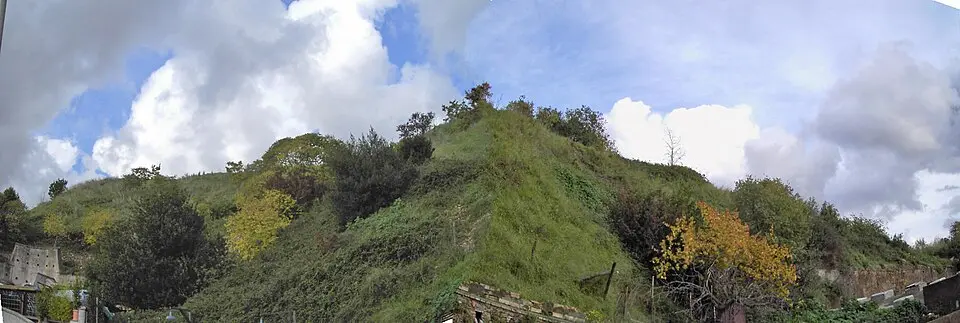
Monte Testaccio is an extraordinary archaeological monument in Rome that gives the Testaccio neighborhood its name. This artificial hill is made up entirely of pottery shards from broken ancient amphorae. Today it rises almost fifty meters high, and the layers of fragments reach roughly forty-five meters down into the ground. The hill measures around a thousand meters in circumference and is now largely covered with grass and trees. Geographically, it sits in a hollow between the Aventine Hill and the bank of the Tiber, northwest of the Aurelian Wall and the Pyramid of Cestius. In antiquity, this spot served as the city's largest dump, where the empty containers from the trade in grain, oil, and wine, shipped up the Tiber to ancient Rome, were disposed of.
The history of this place is inseparably tied to Rome's port system. Originally, Ostia at the mouth of the Tiber served as the main port but increasingly silted up. Starting in 42 A.D., Emperor Claudius therefore had a new harbor built farther north, and in 103 A.D. Emperor Trajan created a huge hexagonal harbor basin nearby, whose outline is still visible today as the Lago di Traiano. From the second century on, oil freighters from the province of Baetica also docked there. The oil was transferred to barges and carried upriver to the landing stages below the Aventine. There the cargo was unloaded into large two-story storage buildings known as horrea, which stood packed closely together along the riverbank. Today only a few wall fragments of this Roman-era development remain visible, including arched elements of the Porticus Aemilia. The city plan known as the Forma Urbis Romae shows that Monte Testaccio rose up between these warehouses.
Scientific study of the hill began in 1872 with the German epigrapher Heinrich Dressel. He examined the inscriptions painted on the shards, the so-called tituli picti, and classified the amphorae by shape. Many amphora types have borne his name ever since, especially the Dressel 20, a vessel seventy to eighty centimeters tall that held about seventy liters of oil. Dressel was able to prove that these amphorae came from the province of Baetica, present-day Andalusia. His research showed how revealing simple mass-produced goods can be for economic history. Interest in Dressel's work was not revived until the 1970s, and in cooperation with the University of Barcelona and La Sapienza in Rome, the CEIPAC research center was founded. Using statistical methods and modern analyses such as X-ray fluorescence, scientists confirmed the origin of the amphorae and estimate that the hill consists of around twenty-five million amphorae, eighty percent of which are of the Dressel 20 type.
The stamps and inscriptions found on the shards functioned as ancient bills of lading. They listed the empty weight, the quantity of oil, the owner, and the recipient, and were confirmed with abbreviations when the cargo reached the port and the warehouse. Because the inscriptions also named the serving consul, the exact year of filling can be determined. The most recent dates fall between 255 and 257 A.D., a time when production of Dressel 20 amphorae in Baetica came to an end. The stamps often name members of Baetica's upper class, possibly senators, while the painted inscriptions are associated with middlemen. These documents provide a detailed look at trade flows and administration in ancient Rome.
The interior structure of the hill has been studied through gravimetric measurements and excavations. It consists of two superimposed layers of differing density. The lower part was less compact, since the refuse there was initially simply dumped, while the material above it was more densely packed. Monte Testaccio grew upward like a stepped pyramid, with the shards unloaded via ramps to form steeply sloped platforms on which further tiers were piled. This structure shows how systematically waste disposal was organized in antiquity.
The amphorae served mainly as single-use packaging for bulk goods such as olive oil. Because the narrow-necked oil amphorae could not be fully cleaned after being emptied, and an oily film on the inner wall produced unpleasant odors, they were smashed and discarded at their destination. This explains the enormous quantity of shards on the hill. Rome's demand for olive oil was huge, since it was used not only as food but also as fuel, medicine, and a cosmetic ingredient. Supplying the city, the so-called annona, was of enormous importance for the political stability of the empire.
The province of Baetica experienced a tremendous economic boom beginning in the time of Emperor Augustus. Archaeologists have discovered around a hundred potteries there, near cities such as Seville and Córdoba, located on navigable rivers and with access to the necessary clay deposits. The filled amphorae were carried by river barge to the Atlantic coast and from there loaded onto cargo sailing ships bound for Italy. The sea route was significantly cheaper and faster than the overland route. Later political crises in the third century shifted trade flows, so that more oil went to Gaul and Germania to supply the Rhine army. Only after Diocletian's imperial reforms did Rome return to its earlier North African suppliers, though the disposal sites for their amphorae in Rome have not yet been fully explored.
At a glance
- Category
- Sight › Historic sites
- Rating
- no reviews yet · write a review
- Address
- via di Monte Testaccio
00153 Rome, Italy - District
- Testaccio
- Phone
- +390637350754
- Website
- —
- —
- Coordinates
- 41.87480° N · 12.47635° E
- Data quality
- confidence 0.96
- Identifier
- ID 05562d2a-4f7…
Location & surroundings
Toggle layersRatings & comments
none yetNear Quartiere Testaccio
closest 5 per category · 2 kmSights
Restaurants
Museums
Hotels
More:Historic sites in Rome (1,014)All sights in Rome (1,312)
283 places within 2 km loaded.
Don't miss in Rome
All sights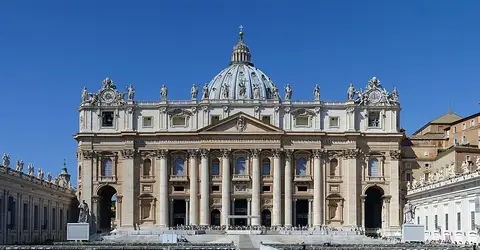 Historic sites01
The Dome at San Pietro Basilica
No address · Rome○ Website○ Phone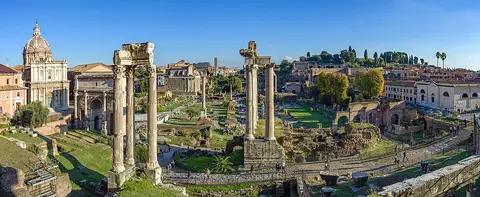 Historic sites02
Roman Forum
Via della Salara Vecchia, 5/6 · Rome● Website● Phone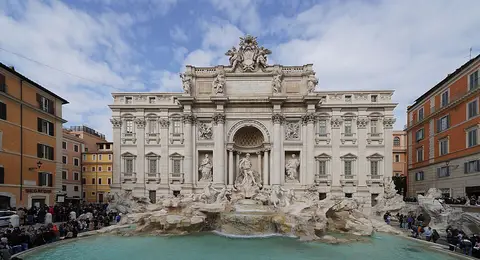 Historic sites03
Restauro Fontana di Trevi
Piazza di Trevi, 91 · Rome● Website○ Phone Monuments04
You need a free account to leave reviews and photos – that keeps comments genuine and lets you edit them later.