About Bayerische Schlösserverwaltung
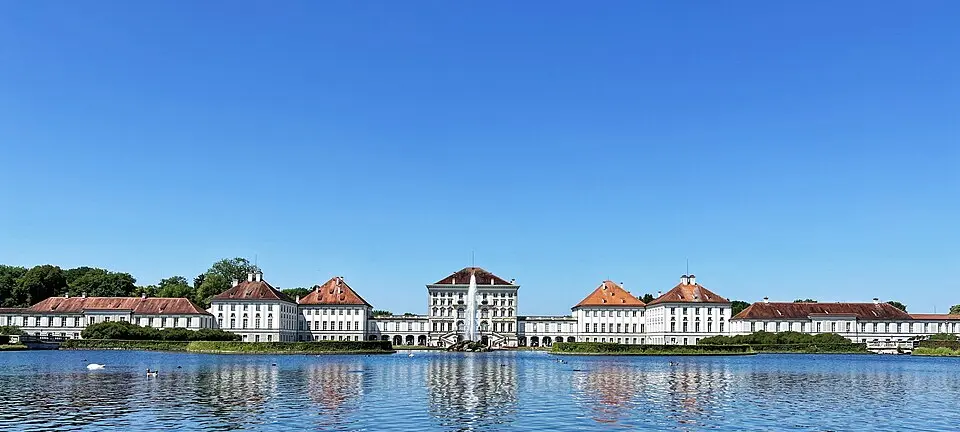
Nymphenburg Palace in Munich is far more than just a magnificent building. It is the centerpiece of one of the largest and most important palace complexes in Europe. As the summer residence of the Bavarian electors and kings of the House of Wittelsbach, the complex served for more than two centuries as a stately alternative to the Residenz in the state capital. What began in 1664 as a small country house modeled on Italian villas was gradually expanded into a monumental three-wing complex that shines in the Baroque and Rococo styles. Together with the sprawling park, the four park pavilions, the Rondell and the numerous canals, the palace forms a unique architectural ensemble that still draws visitors from around the world today and offers a deep look into the court culture of Bavaria.
The history of the complex goes back to 1663, when Elector Ferdinand Maria gave his wife, Henriette Adelaide of Savoy, the estate of Menzing to celebrate the birth of the heir to the throne, Max Emanuel. The very next year, he commissioned the construction of a country palace, which the electress named Nymphenburg. Originally conceived as a pleasure palace in the style of Italian country villas, the complex was transformed into a Baroque summer palace under Max Emanuel. Despite this early splendor, court activities temporarily shifted to other palaces, but from the early 18th century on, Nymphenburg established itself for good as the most important summer residence of the House of Wittelsbach.
The architectural transformation happened step by step. After a period of stagnation during the War of the Spanish Succession, construction resumed on a larger scale in 1716 under Elector Max Emanuel. The court architect Joseph Effner altered the facades of the main building along French lines and had the side wings expanded into today's Orangery and Marstall (royal stables) buildings. This extension considerably lengthened the east front and created the characteristic three-wing structure. The facades are marked by fluted pilasters and large round-arched windows, which give the palace its dignified appearance today.
An architectural highlight that was considered a sensation in its day is the palace Rondell in front of the main wing. This symmetrical arrangement of ten mansions, built for senior court staff, forms an impressive frame for the palace canal. From here, visitors get an almost complete view of the palace's entire width. The Rondell was part of a larger urban planning concept that envisioned a connection to the city and a grand approach. The harmonious integration of water, architecture and landscape design makes this area one of the most photogenic spots in the complex.
Inside the central pavilion, the rich history of the Bavarian monarchy unfolds. Some rooms have preserved their original Baroque decoration, while others were redesigned in the Rococo or Neoclassical style. The Great Hall (Steinerner Saal), which rises over three stories and was designed by François de Cuvilliés, is a masterpiece of festive architecture. The frescoes created under the direction of Johann Baptist Zimmermann, especially the central ceiling painting of Helios in his sun chariot, create an atmosphere of divine splendor. The hall is surrounded by stately cabinets and salons decorated with valuable tapestries, portraits and elaborate stucco ceilings.
The Gallery of Beauties in the south pavilion deserves special attention. At the behest of King Ludwig I, the court painter Joseph Karl Stieler portrayed 36 women from all walks of Munich society. This collection, which ranges from the shoemaker's daughter Helene Sedlmayr to the dancer Lola Montez, offers a fascinating glimpse into the aesthetics and social structures of the 19th century. Nearby is the bedroom where King Ludwig II was born in 1845. The historic mahogany furniture and Empire-style furnishings recall the eventful history of the Wittelsbachs, who still live in a small part of the palace today.
Nymphenburg Palace Park covers roughly 180 hectares (about 445 acres) and is a jewel of garden design. It combines elements of the French Baroque garden with the expansive, naturalistic style of the English landscape park. The central canal with the Great Cascade divides the park into two sections, enriched by the four park pavilions. The Amalienburg, one of the oldest and most important Rococo buildings in Europe, dominates the southeastern part, while the Badenburg and the Pagodenburg add further architectural highlights. The park invites long strolls and, with its lakes, temples and lawns, offers a welcome break from the bustle of the city.
Technical masterpieces also shape the palace ensemble. The Johannisbrunnhaus in the north wing houses the oldest pumping station in Europe still in operation, which has powered the large fountain in front of the palace since the early 19th century. This installation is regarded as an outstanding monument to engineering and shows how highly complex water supply systems were already being built in the 18th century. The fountains, which regularly send water shooting into the air, are a popular spectacle for visitors and underscore the union of nature, technology and art at the heart of Nymphenburg.
Beyond its historical significance, the palace today houses several museums and institutions. The Marstallmuseum in the south wing displays one of the most important carriage collections in Europe, and the same building is home to the Nymphenburg porcelain collection. The Orangery wing houses the Museum Mensch und Natur (Museum of Man and Nature), which explores the relationship between humans and the natural world. The Nymphenburg Porcelain Manufactory, which has existed since the 18th century, is located in the northern Rondell and can be visited by appointment. These varied uses make sure the palace is not just a museum but a living place of culture and education.
The future of the ensemble, however, is the subject of public debate. Plans to build a new museum in the palace's north wing, originally conceived as Biotopia, have sparked controversy. Critics fear that a futuristic new building could disrupt the historic unity and character of an ensemble shaped by the 18th century. Citizens' groups and preservationists are therefore campaigning to keep the existing palace wing and to see the existing museums develop organically. This debate underscores the great importance of Nymphenburg Palace as cultural heritage and the responsibility to preserve it for future generations.
For visitors, Nymphenburg Palace is a place where history comes alive. You can explore the magnificent interiors, trace the history of the Wittelsbachs and enjoy the beauty of the park. The combination of architectural splendor, pastoral scenery and cultural variety makes the palace a must-see excursion in Munich. It is a place of calm and grandeur that invites you to pause and reflects Bavaria's grand past in an impressive way.
At a glance
- Category
- Museum › Museums (general)
- Rating
- no reviews yet · write a review
- Address
- Schloss Nymphenburg 16
80638 Munich, Germany - District
- Neuhausen-Nymphenburg
- Phone
- +4989179080
- Website
- www.schloesser.bayern.de
- info@bsv.bayern.de
- Coordinates
- 48.15827° N · 11.50331° E
- Data quality
- confidence 1.00
- Identifier
- ID f6dc70ab-2e7…
Location & surroundings
Toggle layersRatings & comments
none yetNear Bayerische Schlösserverwaltung
closest 5 per category · 2 kmSights
Restaurants
Museums
Hotels
Cocktail bars
None within 2 km.
More:Museums in Neuhausen-Nymphenburg (19)All museums in Munich (164)
128 places within 2 km loaded.
You need a free account to leave reviews and photos – that keeps comments genuine and lets you edit them later.