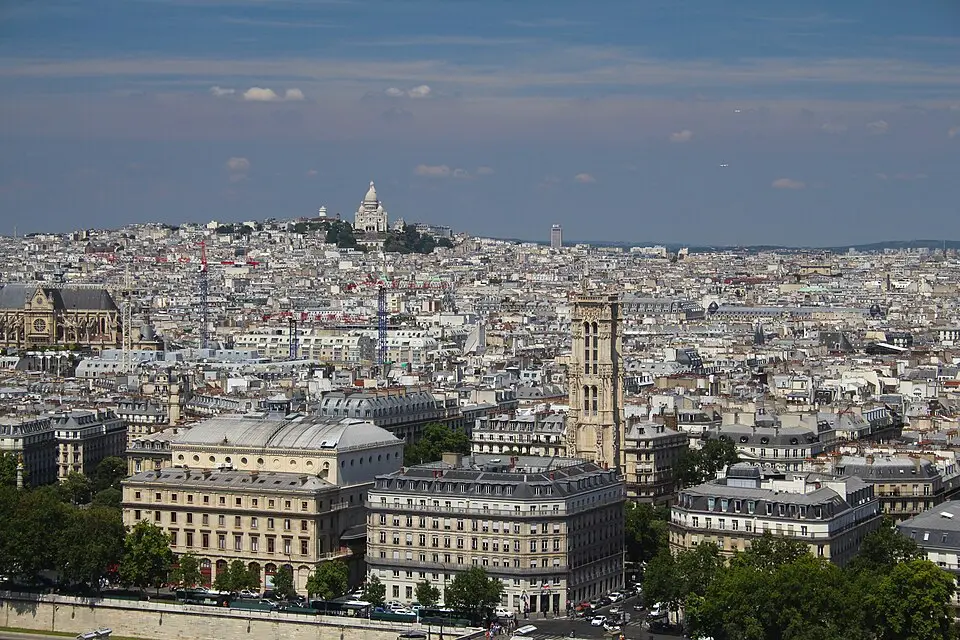
About Musée de Montmartre
Montmartre, which literally means "Martyrs' Hill" in French, is the highest natural elevation in the French capital and forms the heart of the 18th arrondissement. The name goes back to a medieval tradition that identifies the site as the place where Saint Denis, the patron saint of Paris, and his companions Rusticus and Eleutherius were executed in the 3rd century. Originally known as Mons Mercore or Mons Martis, the name was changed to Mons martyrum by Abbot Hilduin of Saint-Denis, since the legend of the saint's beheading and his subsequent walk with his head in his hands all the way to Saint-Denis began here. This religious significance shaped the place for centuries before it became one of the world's best-known artists' districts in the 19th century.
The history of the hill reaches back to the Gallo-Roman era, when temples to the gods Mars and Mercury stood here. Thanks to rich gypsum deposits, the area developed into an important industrial zone, and its quarries later also served as hideouts for the first Christians. In the Middle Ages, Benedictines built a monastery, from which the present-day parish church of Saint-Pierre de Montmartre emerged, one of the oldest religious buildings in the city. In the 16th century, Ignatius of Loyola founded the Jesuit order here, and gypsum mining led to the construction of numerous windmills, which shaped the landscape well into the 19th century.
In the 19th century, Montmartre underwent a profound transformation. Following its incorporation into Paris in 1859 and the urban planning measures of Baron Haussmann, the population grew rapidly. The hill nevertheless remained rural in character and offered artists, workers, and writers a cheaper and freer life than the expensive city center. Famous names such as Renoir, Van Gogh, Toulouse-Lautrec, Picasso, and Modigliani lived and worked here. Local establishments like the Moulin de la Galette and the Moulin Rouge became gathering places for the bohemian crowd and drew both artists and Parisian day-trippers.
A decisive chapter in the hill's history was the Paris Commune of 1871, which began in Montmartre. As a memorial to the victims of the Franco-Prussian War and as symbolic penance for the events of the Commune, the National Assembly decided to build the Basilica of Sacré-Cœur. Construction began in 1876, and the church was consecrated in 1919. Today the basilica, visible from far and wide, crowns the summit of the hill and is the district's dominant landmark.
Today Montmartre offers visitors a wide range of experiences. The Place du Tertre is a popular gathering spot where artists display their paintings, caricatures, and silhouette cut-outs and create portraits. The hill can be reached by stairs and by the historic funicular, the Funiculaire de Montmartre. Besides the basilica, the vineyard of the Commanderie du Clos Montmartre offers a glimpse into the area's agricultural past. While the main routes are often crowded with tourists, the area around the Moulin de la Galette and the Cimetière de Montmartre still has the quiet charm of the turn of the 20th century. The place thus combines religious history, artistic tradition, and urban flair into a uniquely Parisian experience.
At a glance
- Category
- Museum › Art museums
- Rating
- no reviews yet · write a review
- Address
- 12 Rue Cortot
75018 Paris, France - District
- 18th Arrondissement
- Phone
- +33149258939
- Website
- museedemontmartre.fr
- infos@museedemontmartre.fr
- Coordinates
- 48.88770° N · 2.34066° E
- Data quality
- confidence 1.00
- Identifier
- ID a4dc9f8f-b76…
Location & surroundings
Toggle layersRatings & comments
none yetNear Musée de Montmartre
closest 5 per category · 2 kmSights
Museums
Hotels
More:Art museums in Paris (119)All museums in Paris (525)
300 places within 2 km loaded.
You need a free account to leave reviews and photos – that keeps comments genuine and lets you edit them later.
The museum is located in a 17th century house with a garden, and features the history and culture of Montmartre. Several famous artists had lived in the house including Renoir.
Source: Wikivoyage, „Paris/18th arrondissement“ · authors per page history · CC BY-SA 4.0 · as of 6/26/2020