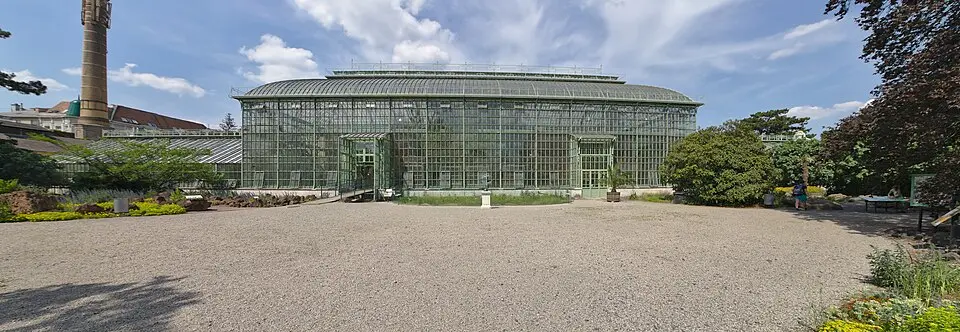
About Wüstenhaus Schönbrunn
The Desert House at Schönbrunn, originally built in 1904 as the Sundial House, is the youngest of the four plant houses in the Vienna palace park. Designed by imperial court architect Alphons Custodis, it first housed a collection of South African and American plants. The building came through World War II bombing raids largely unscathed and later served as temporary quarters for other greenhouses. After extensive renovation between 2000 and 2003, it was converted into the Desert House in cooperation with Schönbrunn Zoo. Today, you can explore a fascinating world of succulents, accompanied by live animals such as desert jerboas, reptiles, and birds. A particular highlight is a pair of rare welwitschia plants from Namibia. The architecture stands out for its generous glazing across the roof and south side, while the north side is solid masonry. Covering more than a thousand square meters, the interior is divided into a planted entrance area, a central section, and a cold house that ideally meets the specific needs of desert flora.
At a glance
- Category
- Sight › Historic sites
- Rating
- no reviews yet · write a review
- Address
- —
Vienna, Austria - District
- Katastralgemeinde Schönbrunn
- Phone
- —
- Website
- —
- —
- Coordinates
- 48.18506° N · 16.30239° E
- Data quality
- confidence 0.95
- Identifier
- ID e3609c4b-1cc…
Location & surroundings
Toggle layersRatings & comments
none yetNear Wüstenhaus Schönbrunn
closest 5 per category · 2 kmSights
Restaurants
Museums
Hotels
Cocktail bars
More:Historic sites in Vienna (518)All sights in Vienna (661)
166 places within 2 km loaded.
You need a free account to leave reviews and photos – that keeps comments genuine and lets you edit them later.