About Vienna Museum of Art
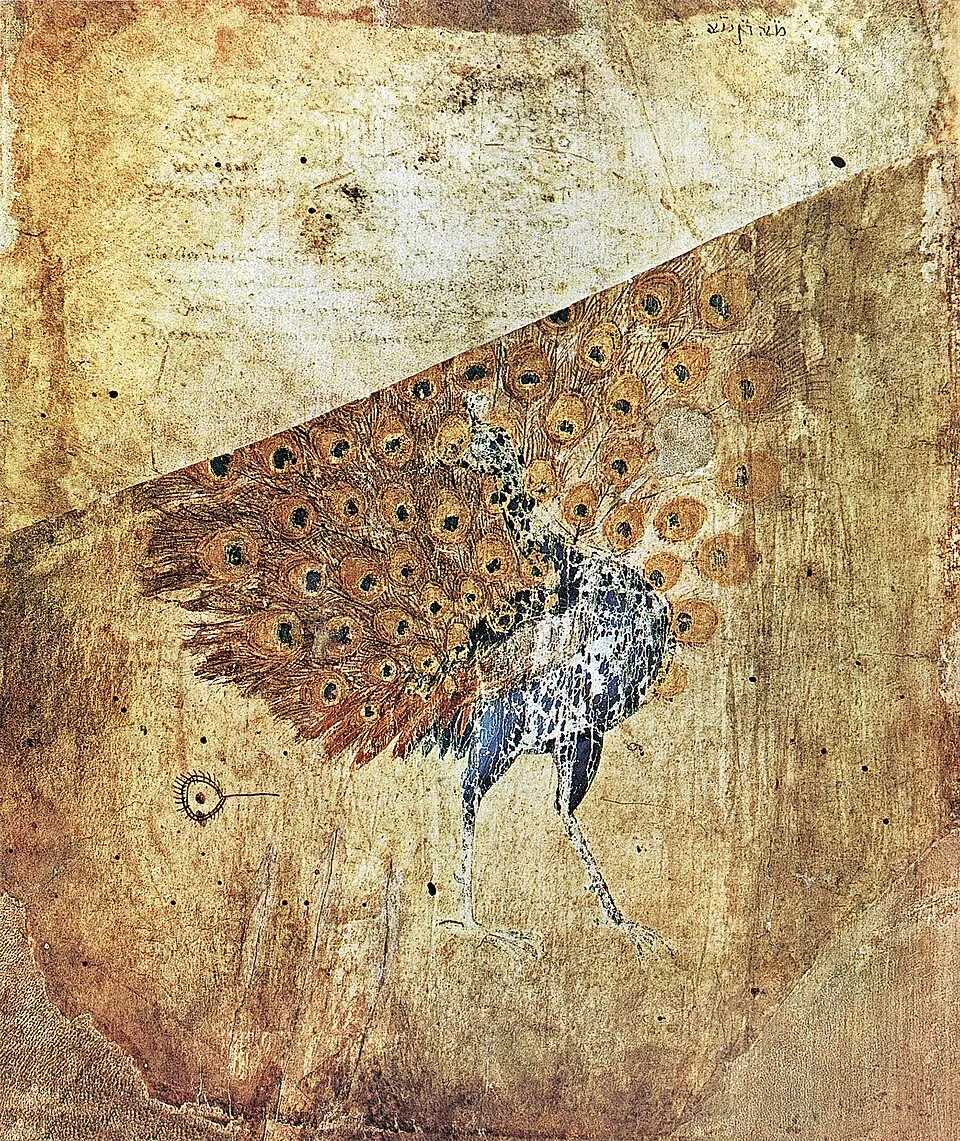
The Vienna Dioscurides, also known as the Anicia Codex, is an extraordinary late antique compilation manuscript in Greek, now kept in the Austrian National Library in Vienna. This valuable source for ancient natural science and early Byzantine art was produced around the year 512 for the noblewoman Anicia Juliana of Rome. As a pharmacological handbook, the codex contains mainly texts by the physician Pedanius Dioscorides, supplemented by works of Crateuas and Galen. Today the manuscript comprises 485 large-format parchment leaves, adorned with numerous botanical, zoological, and pharmaceutical illustrations. Since 1997 the work has been part of the UNESCO Memory of the World Register and is kept in three stabilized volumes, each in its own case.
Particularly impressive are the large-scale compositions, such as the so-called physician and author portraits, which show mythical and historical figures in an otherworldly transcendence. These scenes, including the depiction of the mandrake and allegorical figures such as the personified Intellect, offer a deep insight into the artistic level of Hellenistic book art. The plant illustrations themselves can be divided into two groups: one naturalistic and spatially balanced, the other flatter and more schematic, possibly derived from pressed specimens. Although the illustrations are of high quality, they sometimes depart from true-to-life depiction, which points to the difficulties copyists faced in transmitting the originals.
The history of the codex's transmission is as fascinating as its contents. After the conquest of Constantinople in the Fourth Crusade, the work fell to the Latin conquerors before returning to Byzantine possession in 1261. In the 15th century it was repaired and rebound by the scholar Johannes Chortasmenos. After the Turkish conquest of Constantinople, the herbal came into the possession of Turkish sultans and Jewish physicians, until the humanist Ogier Ghiselin de Busbecq acquired it in 1569 and brought it to the Imperial Court Library in Vienna. An elaborate restoration between 1960 and 1965, along with further stabilization measures in the 1980s, secures the fragile parchment, made of goat and calf skin, for the future.
At a glance
- Category
- Museum › Museums (general)
- Rating
- no reviews yet · write a review
- Address
- """""""""""""""1010"""
1010 Vienna, Austria - District
- Katastralgemeinde Neubau
- Phone
- +431525240
- Website
- www.khm.at
- info@khm.at
- Coordinates
- 48.20360° N · 16.35839° E
- Data quality
- confidence 0.79
- Identifier
- ID 51f86262-be3…
Location & surroundings
Toggle layersRatings & comments
none yetNear Vienna Museum of Art
closest 5 per category · 2 kmSights
Restaurants
Museums
Hotels
More:Museums in Katastralgemeinde Neubau (23)All museums in Vienna (308)
300 places within 2 km loaded.
You need a free account to leave reviews and photos – that keeps comments genuine and lets you edit them later.