About Pratermuseum
The Prater Museum in Vienna is a small but fascinating institution housed in an annex of the Planetarium at Praterstern. It was founded in 1964, when the local historian Hans Pemmer donated his extensive collection of exhibits on the history and life of the Viennese Prater to the Wien Museum. This collection forms the heart of the exhibition, which gives visitors a deep insight into the varied past of this famous recreation area. The museum is closely tied to the Planetarium, which was rebuilt in 1964 and also operated a movie theater until 1972. Their proximity underscores the historical importance of Praterstern as a central hub for culture, science, and entertainment.
The Vienna Prater itself is a sprawling area of roughly six square kilometers in the second district, Leopoldstadt. While many visitors know mainly the famous amusement park, the Wurstelprater, in the northern part of the area, the Prater encompasses far more. It extends across a river island that was created by the regulation of the Danube in the 19th century. The area can be divided into several types of landscape: in the northwest you'll find expansive parkland, in the middle section dry areas with remnants of floodplain forest vegetation, and in the southeast a still relatively natural, wet floodplain landscape. This diversity makes the Prater a unique local recreation area that goes far beyond its role as an amusement park.
The history of the Prater goes back to the Middle Ages. The earliest mention dates from 1162, when Emperor Frederick I Barbarossa granted land to a nobleman named Conrad de Prato. The name derives from the Latin word "pratum," meaning meadow. Over the centuries, the area evolved from an imperial hunting ground into a public recreation space. It was not until 1766 that Emperor Joseph II opened the Prater to general use. This decision was a turning point that made the Prater one of the most popular destinations for day trips among Viennese. Especially on Sundays and holidays, crowds streamed into the area to enjoy nature and have fun.
An important part of the Prater's history is the development of the Wurstelprater as an amusement park. Joseph II approved the settlement of coffeehouse keepers and innkeepers, which laid the foundation for today's attraction. In the 18th century, large fireworks displays were added, staged by artists such as Johann Georg Stuwer and Peter Paul Girandolini. This pyrotechnic spectacle drew thousands of spectators and left a lasting mark on the image of the Prater. Stuwer became a landmark figure of Vienna, and his fireworks were a fixture of social life. Competition among the fireworks makers led to ever more spectacular shows that captivated the public.
Besides entertainment, the Prater also played an important role in the history of aviation. As early as 1784, the fireworks maker Johann Georg Stuwer succeeded in making an ascent in a tethered hot-air balloon, which is considered the beginning of manned flight in Austria. A few years later, the Frenchman Jean-Pierre Blanchard carried out the first planned free balloon flight in Austria. These historic events took place before large audiences and made the Prater a stage for scientific and technical innovation. The watchmaker Jakob Degen also experimented with flying machines here and in 1816 built the world's first unmanned helicopter model, which reached a height of 160 meters.
In the 19th century, the Prater was greatly altered by the regulation of the Danube. The work began in 1870 and was completed in 1875. The creation of a new, perfectly straight riverbed fundamentally changed the floodplain landscape. The groundwater level dropped, and the original vegetation partly disappeared. Many of the former Danube channels became stagnant oxbows, which can still be seen today as ponds in the Prater. These changes also affected how the grounds were used. For the 1873 World's Fair, a large exhibition site was laid out that drew 7.25 million visitors. The central Rotunda was the largest dome in the world in its day, but it fell victim to a major fire in 1937.
The Prater Museum documents these historical phases through pictures, documents, and everyday objects. Visitors can learn how the Prater went from an imperial hunting ground to a public park and how it changed over time. The exhibition also shows the importance of the Prater for the culture and social life of Vienna. Great festivals, sporting events, and political marches took place here. Austria's first May Day march was held in 1890 on the Hauptallee, and the Prater Stadium, which opened in 1931, was the scene of important sporting and political events. The museum thus offers a comprehensive look at the social and cultural history of the city.
Today the Prater is a popular recreation and excursion area with a large number of sports facilities and leisure activities. The core area is a car-free zone, and Praterstern is well served by public transportation. The Liliputbahn, a narrow-gauge steam railway that opened in 1928, runs from the Wurstelprater station to the Rotunde and on to the stadium. It is a popular outing for families and tourists. The Prater also holds relics of the past, such as the Praterateliers, which date from the 1873 World's Fair and are now used as federal sculptors' studios.
The museum itself is a quiet place where you can escape the bustle of the Wurstelprater. It offers the chance to study the history of the Prater in peace and to understand what this place means to Viennese identity. The exhibits tell of the people who lived, worked, and enjoyed themselves here. They show how the Prater went from a wild floodplain forest to an orderly park and how it was repeatedly shaped by political and social change. The Prater Museum is an important contribution to Vienna's cultural heritage and a must for anyone who wants to get to know the history of the city and its most famous park.
Visitors to the Prater Museum embark on a journey through time that stretches from the earliest mentions of the name to modern developments. The Hans Pemmer collection is a treasure that reflects the diversity of the Prater. Whether it's the fireworks of the 18th century, the balloon flights of the 19th century, or the 1873 World's Fair, the museum offers well-founded information and interesting insights. It is a place of learning and experience that brings the history of the Prater to life. Combined with a visit to the Planetarium and a stroll through the Prater, the museum makes for a well-rounded outing that fully showcases the fascination of this unique place in Vienna.
At a glance
- Category
- Museum › History museums
- Rating
- no reviews yet · write a review
- Address
- Oswald-Thomas-Platz 1
1020 Vienna, Austria - District
- Leopoldstadt
- Phone
- 01 7267683
- Website
- www.wienmuseum.at
- office@wienmuseum.at
- Coordinates
- 48.21695° N · 16.39580° E
- Data quality
- confidence 0.77
- Identifier
- ID bc080a6d-2cd…
Location & surroundings
Toggle layersRatings & comments
none yetNear Pratermuseum
closest 5 per category · 2 kmSights
Restaurants
Museums
Hotels
More:History museums in Vienna (57)Museums in Leopoldstadt (16)All museums in Vienna (308)
272 places within 2 km loaded.
You need a free account to leave reviews and photos – that keeps comments genuine and lets you edit them later.
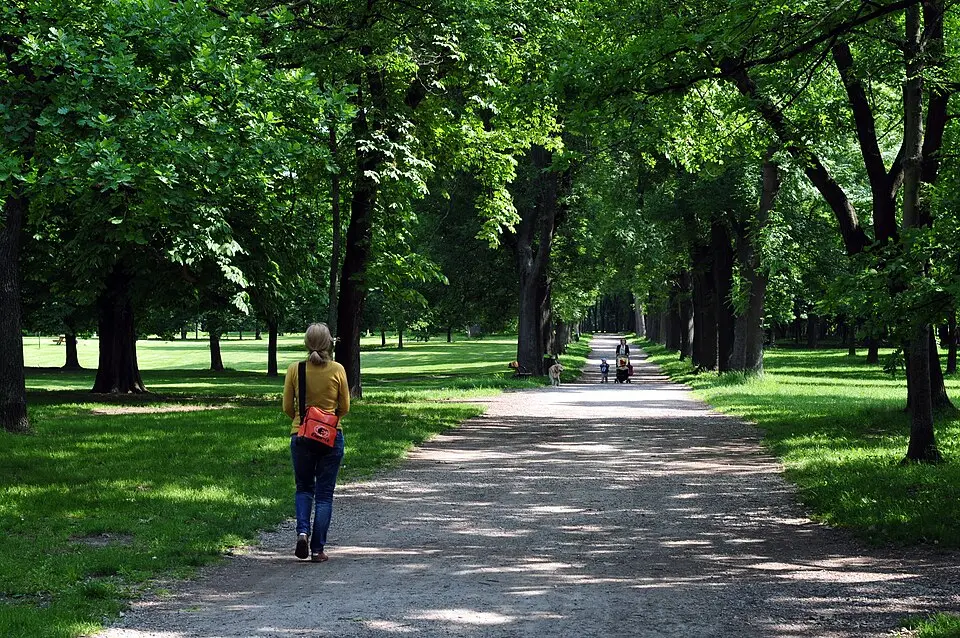
This large park began life as a carriage-riding area for the nobility, and is still a popular place to spend a weekend afternoon with family.
Source: Wikivoyage, „Vienna/Inner East“ · authors per page history · CC BY-SA 4.0 · as of 2/3/2017