Albania: Riviera, Mountains, and Ottoman Towns
Travel guide · editorialUntil 1990, Albania was one of the most isolated countries in Europe; today it ranks among the most exciting destinations on the Mediterranean. A vacation in Albania combines turquoise bays on the Ionian Sea with mountains where hospitality, rooted in ancient customary law, is almost sacred.
The Albanian Riviera: Sarandë, Ksamil, and Himarë
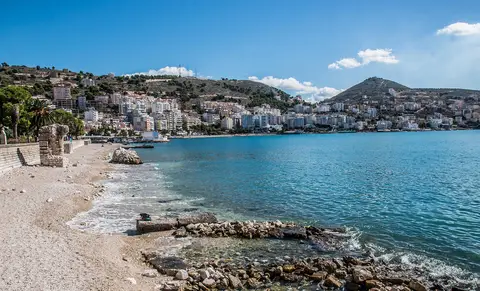
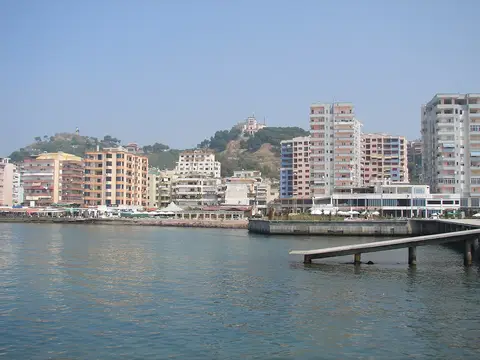
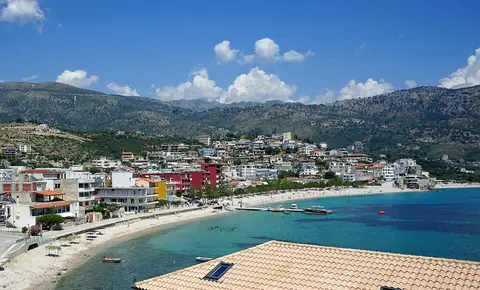
Between Vlora and the Greek border, the Ceraunian Mountains drop steeply into the sea. The Llogara Pass, at over 1,000 meters (3,300 feet), is the dramatic opening act; after that, the road winds down to villages like Dhërmi and Himarë, where pebble beaches meet clear water. Sarandë is the largest town in the south, a lively promenade lined with hotels, seafood restaurants, and ferries to Corfu, which you can see on the horizon on clear days. A few miles farther on lies Ksamil, with its small offshore islands that you can reach by swimming or paddle boat. This stretch of coast rightly ranks among the most popular destinations in Albania, though it gets crowded in high summer; in June or September, on the other hand, you can still find coves like Gjipe that are accessible only on foot or by boat.
Durrës, Vlora, and the Northern Coast
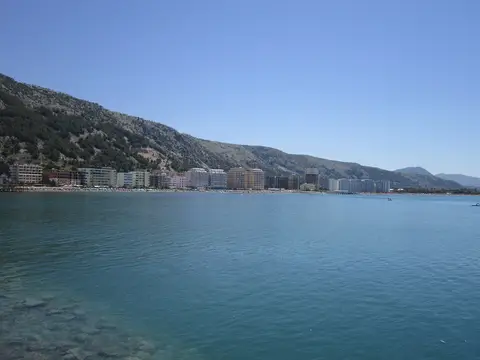
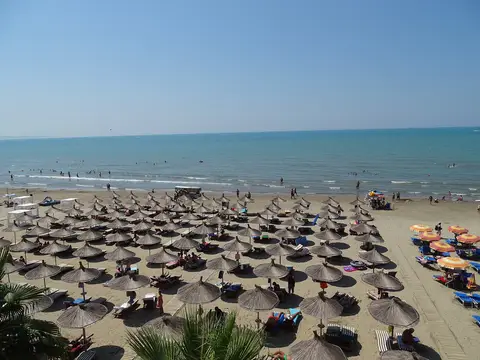
On the Adriatic, the coast is flatter and sandier. Durrës, the country's oldest city, has a Roman amphitheater in the middle of the old town that was only rediscovered in the 1960s, plus a long beach lined with hotels all the way to Golem. Vlora is where independence was declared in 1912; off the city lie the Karaburun Peninsula and Sazan Island, both now marine protected areas. In the far north, Shëngjin welcomes mainly Albanian families and vacationers from Kosovo, while the lagoons near Velipoja attract birdwatchers.
Sights in Albania: Stone Towns and Ruins
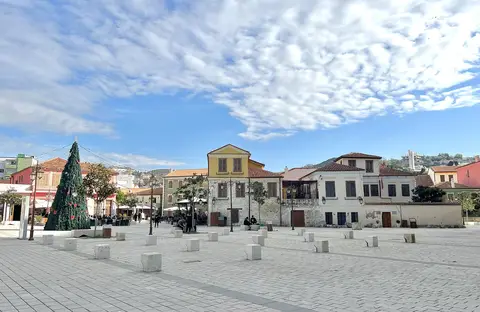
Two towns share a place on the UNESCO list: Berat, the City of a Thousand Windows, whose whitewashed Ottoman houses climb the hillside in tiers, and Gjirokastra, with its gray stone houses and slate roofs, overlooked by a mighty fortress. Near Sarandë lies Butrint, an ancient city set in marshy woodland, where Greek, Roman, Byzantine, and Venetian layers lie on top of one another. A theater, a baptistery with mosaics, and a Venetian tower by the canal turn a visit into a walk through two and a half millennia. In the southeast, Korça is the town of brewers and serenades, with an 18th-century bazaar, not far from Lake Ohrid and the quieter Lake Prespa.
Tirana and Recent History
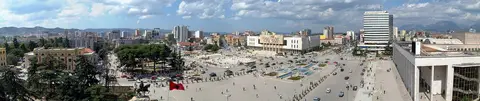
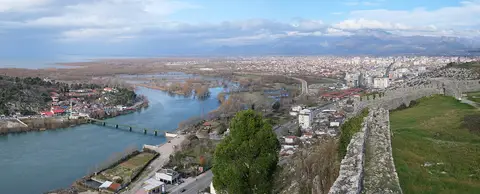
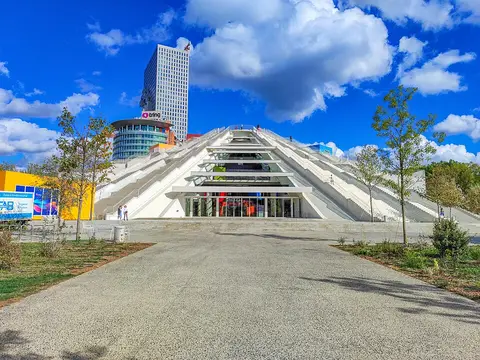
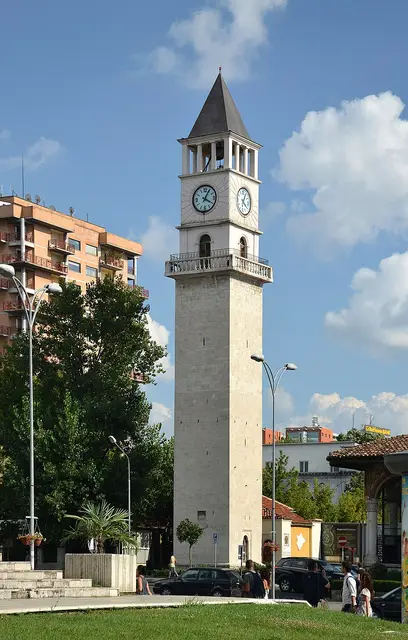
Tirana has transformed completely in barely a generation. Colorful facades painted at the behest of a former mayor, the Blloku district with its bars (once reserved for the party elite), and the redesigned, car-free Skanderbeg Square define the center. Two former nuclear bunkers, Bunk'Art 1 and 2, now serve as museums telling the story of Enver Hoxha's dictatorship, under which hundreds of thousands of small concrete bunkers were built across the country. Many of them still stand on beaches and at the edges of fields. If you're looking for more peace and quiet, take the cable car up Mount Dajti, the city's local mountain. Shkodra in the north, known as Shkodër or Scutari, is the cultural center of the region, with Rozafa Castle, Catholic churches, and a cycling culture that is otherwise rare in Albania.
The Albanian Alps and Hiking Trails
Beyond Shkodra begin the Prokletije, the Albanian Alps. From Theth to Valbona, a day hike leads over a pass at around 1,800 meters (5,900 feet), with shepherds' huts along the way that sell coffee and yogurt. A classic way to get there is via Lake Komani, where a small ferry travels through a narrow, shimmering green gorge. In the mountain villages, you stay in guesthouses where the family does the cooking, often with vegetables from their own garden. Farther south, the Vjosa River beckons, protected as a Wild River National Park since 2023 and one of the last free-flowing large rivers in Europe.
Food and Drink
Albanian cuisine blends Mediterranean, Turkish, and Greek influences. Tavë kosi, oven-baked lamb under a crust of yogurt and eggs, is considered the national dish. Also on the menu are byrek with spinach or cheese, stuffed peppers, fërgesë made with peppers and fresh cheese, and, on the coast, freshly caught fish, often priced by weight. In Gjirokastra, try qifqi, rice balls with mint. Grape raki is served on every occasion, and wines from Berat and Përmet are inexpensive and surprisingly good. The espresso is excellent everywhere: the café culture is almost on a par with Italy's.
Getting Around and the Best Time to Visit Albania
The road network has improved greatly, but mountain roads can still be narrow and driving styles are spirited. Buses and minibuses, known as furgons, run between towns, usually without a set schedule, departing as soon as they are full. Rail service plays almost no role for travelers. The best time to visit Albania is May and June as well as September and October, with temperatures between 72 and 82°F (22 and 28°C) and water that is still above 72°F (22°C) in autumn. In July and August, it often gets hotter than 95°F (35°C) inland, and accommodations on the Riviera are scarce. Mountain hikes in Theth and Valbona are possible from June to September; in winter, the passes are usually snowed in.