Tirana County: Albania's Capital and Mount Dajti
Travel guide · editorialAround a quarter of all Albanians now live in Tirana County, and the pace at which the capital region is changing is breathtaking. A trip to Tirana County shows you the new Albania: colorful facades, cafés on every corner, bunkers from the dictatorship turned into museums, and, just a cable car ride away, the forests of the Dajti mountains.
Tirana: From Dictatorship Gray to Color
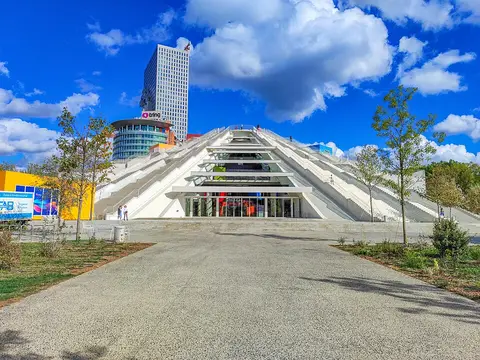
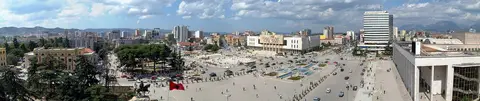
Tirana did not become the capital until 1920, and under Enver Hoxha's communist regime it grew into a city of prefab concrete blocks. After 2000, the then mayor and artist Edi Rama had the gray buildings painted in bold colors – a symbol of a new beginning. The center is the sprawling Skanderbeg Square, with the equestrian statue of the national hero, the early 19th-century Et'hem Bey Mosque, and the National History Museum with its large mosaic. The Pyramid, once a mausoleum for Hoxha, has been converted into a youth and technology center, and you can now climb its sloping sides. The Blloku district, formerly the walled-off residential area of the party elite, is now the nightlife quarter, with bars, restaurants, and boutiques.
Sights in Tirana County
Two museums in former bunker complexes tell the story of the country's recent history: Bunk'Art 1 on the edge of the city, a huge nuclear bunker built for the leadership, and Bunk'Art 2 in the center, about the Sigurimi secret police. The House of Leaves, once a surveillance headquarters, documents the state's spying on its citizens. The New Bazaar, Pazari i Ri, is a covered market selling fruit, cheese, olives, and raki. At the Grand Park with its artificial lake, Tirana's residents jog and stroll. The Dajti Ekspres cable car takes visitors up to Dajti National Park at about 1,000 meters (about 3,300 feet) in a little over 15 minutes, where you can hike, eat roast lamb, and look out over the entire plain all the way to the coast. South of the city lies Petrela Hill with a small fortress, which you can combine with a visit to a vineyard or restaurant.
Surroundings, Daily Life, and Cuisine
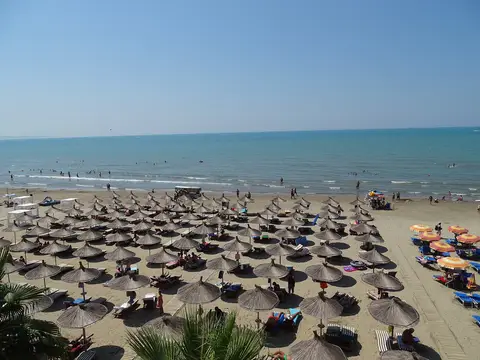
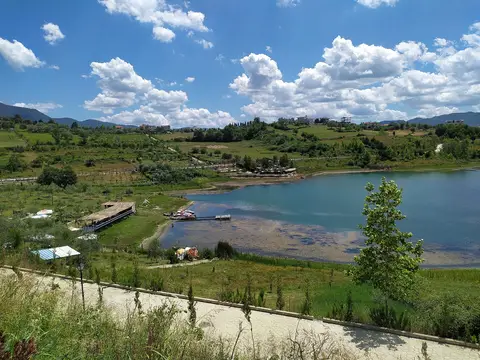
New suburbs are spreading out around Tirana. Kashar to the west is a commercial and shopping zone on the highway to Durrës, Farkë to the southeast is growing up around the artificial Lake Farkë, and Kryevidh lies in the flat hinterland near the coast by Kavaja, where Golem, with its long sandy beach, also belongs to the county. The cuisine is hearty: tavë kosi, lamb baked with yogurt in the oven, byrek with spinach or cheese, grilled meat, and fërgesë, a dish of peppers, tomatoes, and fresh cheese. It's served with raki made from grapes or mulberries and strong coffee – coffeehouse culture is part of everyday life.
Getting There and Best Time to Visit
Tirana Nënë Tereza International Airport (TIA) in Rinas lies about 17 kilometers (about 11 miles) northwest of the center and has direct flights from many German cities. Buses connect the city with all parts of the country, and the highway reaches Durrës in half an hour. The best times to visit are spring and fall; in July and August the city often gets hotter than 95°F, and in winter it rains frequently.