

Texas: A Vast Land Between the Gulf and the Desert
Travel guide · editorialDriving from El Paso in the west to the Gulf Coast takes around twelve hours, and you never leave the state. A trip to Texas leads you through cotton fields, limestone hills, oil fields and the Chihuahuan Desert, through big cities like Houston and Dallas and through small towns where Friday night belongs to high school football. After Alaska, Texas is the largest state in the U.S. by area.
Landscape and Location
The east is humid and wooded; the Piney Woods are more reminiscent of Louisiana than of Western movies. Heading west, the land gets drier: the prairies of the north give way to the Panhandle, while the Hill Country around Austin is shaped by rivers, limestone springs and wildflower meadows that glow blue with bluebonnets in spring. Far to the west, the Chihuahuan Desert begins with Big Bend National Park, where the Rio Grande has carved deep canyons along the border with Mexico. Along the Gulf of Mexico, barrier islands such as Padre Island stretch out with long sandy beaches.
Cities: Houston, Dallas, Austin and San Antonio
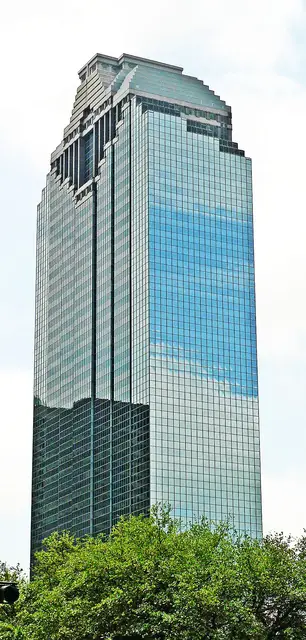
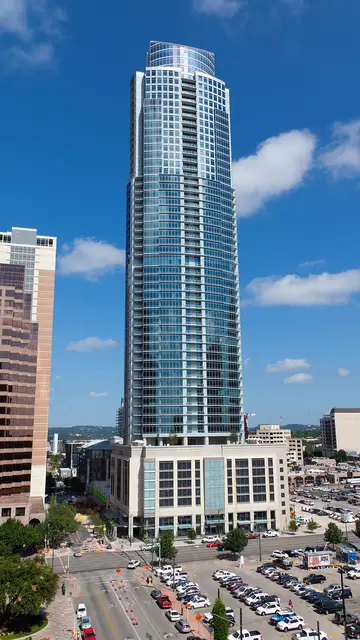
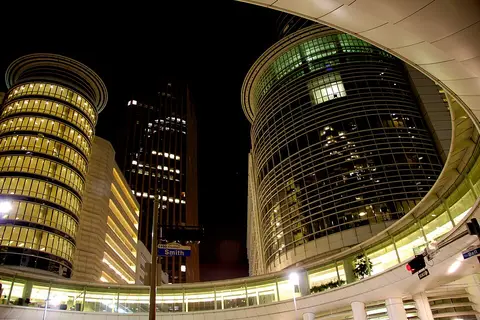
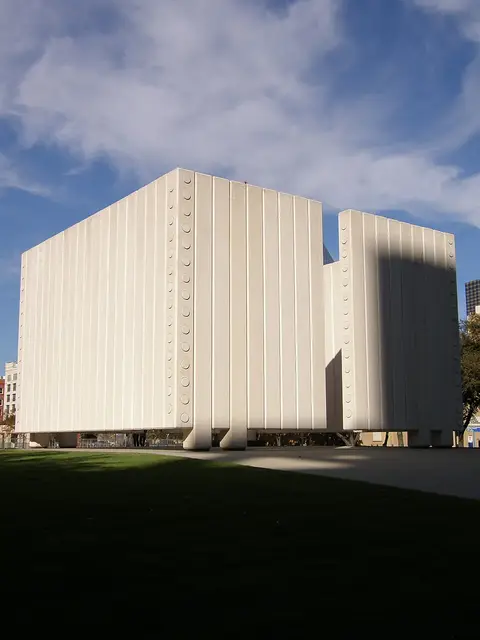
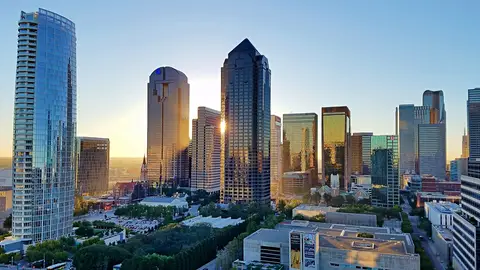
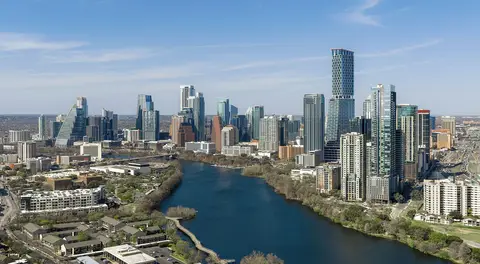
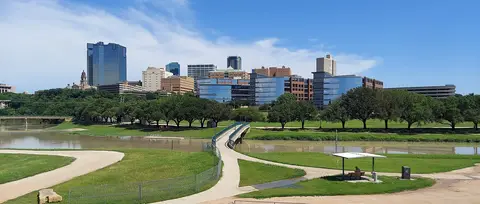
Houston is the largest city, shaped by energy companies, NASA's Space Center Houston and a museum district that includes the Menil Collection. Dallas is home to the Sixth Floor Museum at Dealey Plaza, where the assassination of John F. Kennedy in 1963 is documented; neighboring Fort Worth keeps its cowboy heritage alive in the Stockyards with a daily cattle drive through the streets. Between the two lie Arlington, with the stadiums of the Cowboys and the Rangers, and Plano, with its many corporate headquarters. Austin, the state capital, calls itself the "Live Music Capital of the World" and celebrates the South by Southwest festival every spring. San Antonio combines the River Walk with the history of the Alamo, and El Paso lies directly across from Ciudad Juárez, Mexico.
Sights in Texas
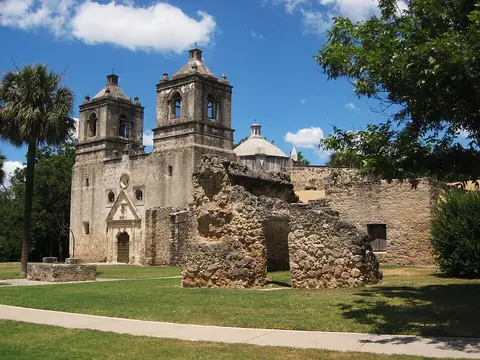
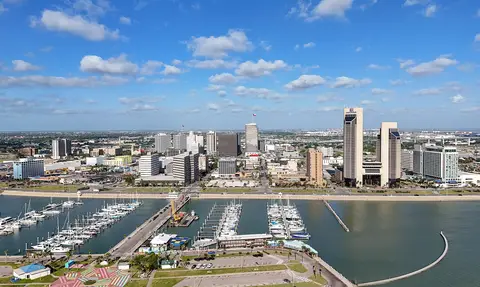
The Alamo in San Antonio is the state's most symbolic landmark; together with the city's four other missions, it forms a UNESCO World Heritage Site. Big Bend National Park and Guadalupe Mountains National Park, home to the highest peak in Texas, are destinations for hikers in search of wide-open space. In the Panhandle, Palo Duro Canyon opens up, one of the largest canyons in the U.S. Small towns such as Fredericksburg in the Hill Country, founded by German immigrants, or the artist town of Marfa in the west are among the more unusual Texas destinations. Galveston draws visitors with Victorian houses and a beach, while Corpus Christi stands out with the aircraft carrier USS Lexington as a museum and its proximity to Padre Island National Seashore, where sea turtles lay their eggs.
History and Culture
Six flags have flown over Texas: Spain, France, Mexico, the Republic of Texas, the Confederate States and the U.S. After independence from Mexico in 1836, Texas was its own republic for almost ten years before joining the United States in 1845. This pride still shapes the state's self-image today. Cattle ranching and, from 1901, the oil boom at Spindletop made the state rich. Mexican culture is everywhere, as are German and Czech influences in Central Texas, where polka and kolaches are part of everyday life. Rodeos such as the Houston Livestock Show and Rodeo attract millions of visitors every year.
Food and Drink
Texas barbecue means above all beef brisket, smoked for hours over oak; the smokehouses in Lockhart and Austin are places of pilgrimage. Tex-Mex with fajitas, enchiladas and queso originated here, and breakfast means breakfast tacos. Chili con carne is the official state dish, and kolaches recall the Czech immigrants. A Shiner beer, brewed in the small town of the same name, goes well with it all.
Getting There, Getting Around and Best Time to Visit
Dallas/Fort Worth (DFW) and Houston (IAH) are major hubs with connections to Europe; Austin and San Antonio also have international flights. Distances are huge, and a rental car is almost essential. The best time to visit is spring, from March to May, when the wildflowers bloom, and fall. Summer is very hot in many places and humid on the Gulf Coast, and there is also a hurricane risk from June to November. Winter is mild in the south, but it can snow in the Panhandle.