Florida: Beaches, the Everglades, and Theme Parks
Travel guide · editorialNo spot in Florida is more than about 62 miles from the sea – the peninsula between the Atlantic and the Gulf of Mexico is one long coastline. A vacation in Florida means sandy beaches and Art Deco hotels, alligators in the swamp, rocket launches at Cape Canaveral, and the theme parks of Orlando. The "Sunshine State" has been Americans' favorite winter destination for decades.
Landscape: Flat, Green, and Shaped by Water
Florida is remarkably flat; its highest point is barely more than 300 feet above sea level. In the north, in the so-called Panhandle, pine forests stretch all the way to the Emerald Coast with its almost white quartz sand. Central Florida is dotted with thousands of lakes and crystal-clear springs, where manatees seek shelter in winter. In the south lie the Everglades, a vast "river of grass" that flows slowly south into Florida Bay. Next comes the island chain of the Florida Keys, where the Overseas Highway and its 42 bridges lead all the way to Key West.
Cities: From Miami to Jacksonville
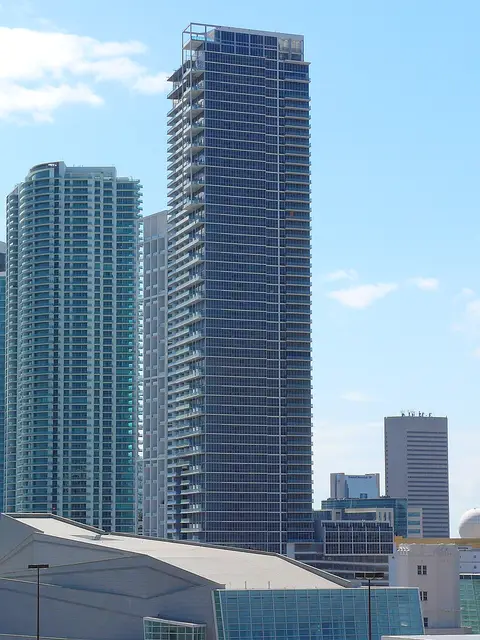
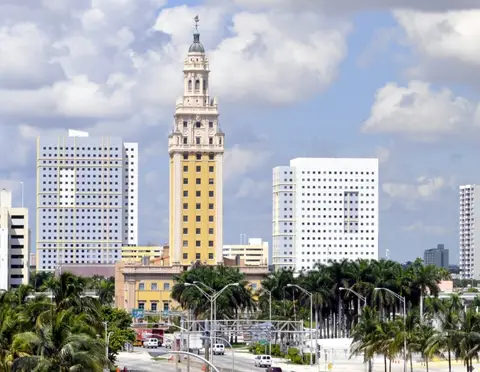
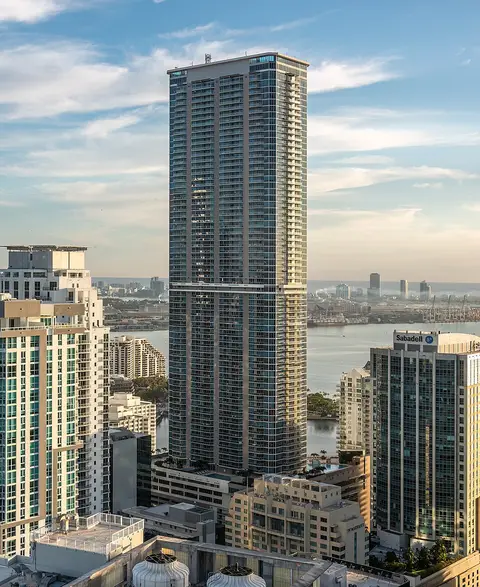
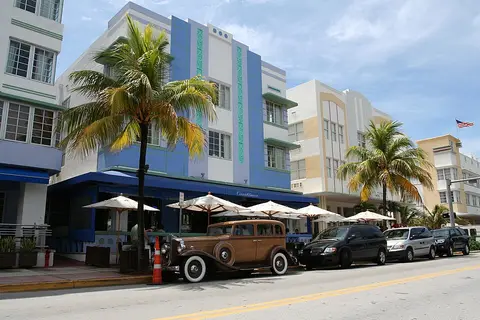
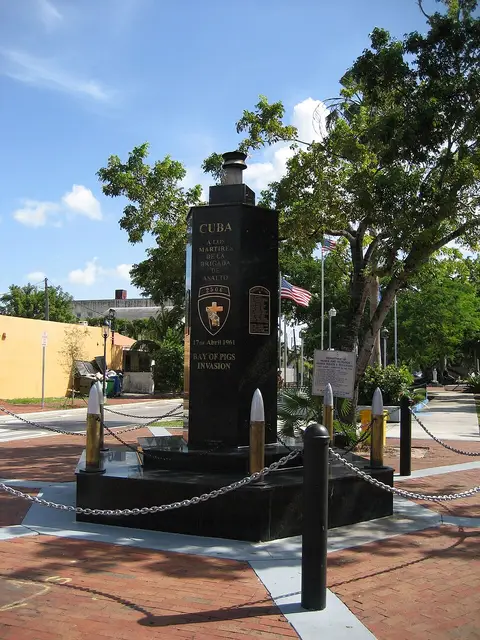
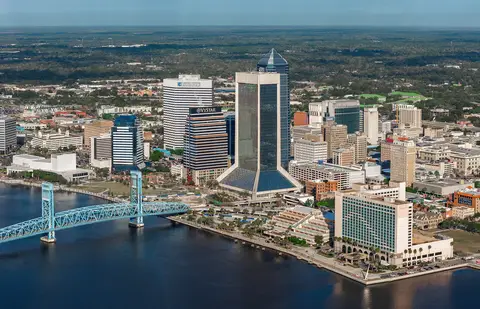
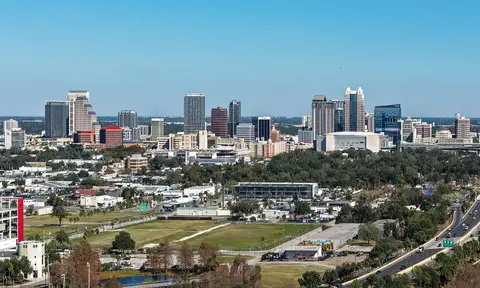
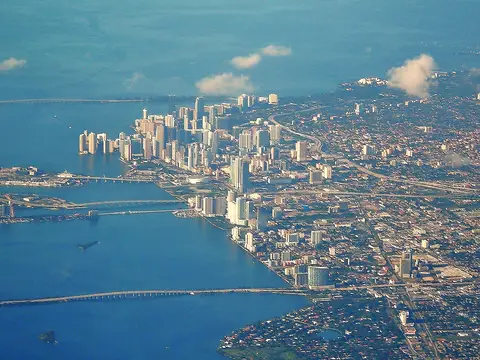
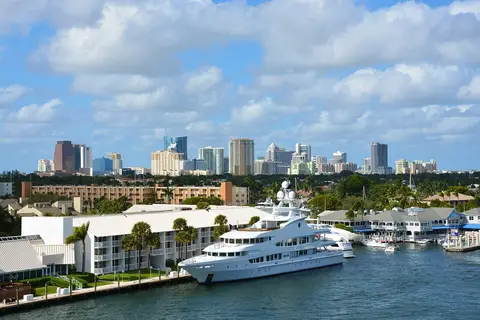
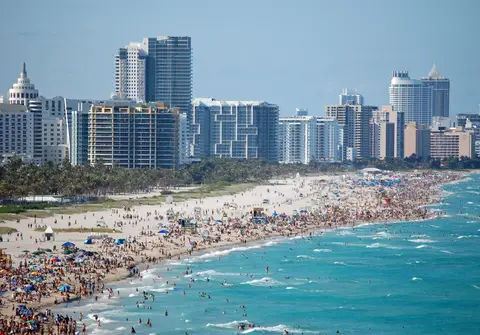
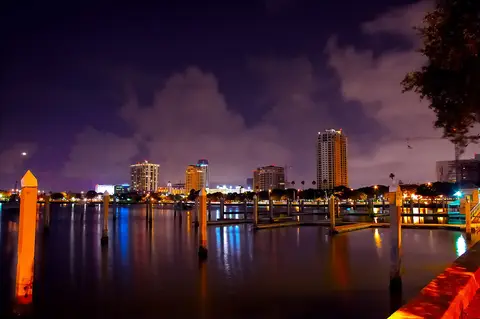
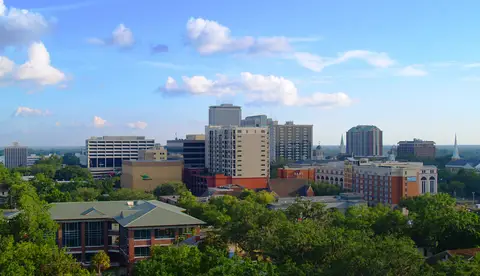
Miami is the gateway to Latin America: in Little Havana, people play dominoes and drink Cuban coffee, and in Wynwood, murals cover entire warehouses. Across the bay lies Miami Beach with the Art Deco district on Ocean Drive. Fort Lauderdale, with its canals and marinas, is quieter. Orlando lives off its theme parks, Tampa combines the historic cigar district of Ybor City with a long waterfront promenade, and across the bay, St. Petersburg is home to the Salvador Dalí Museum. Jacksonville in the northeast is one of the largest cities in the U.S. by area, while Tallahassee in the Panhandle is a rather sleepy state capital with oak-shaded avenues known as Canopy Roads. On the Gulf Coast, Naples and Sarasota offer fine-sand beaches and a calmer atmosphere than the east coast.
Sights in Florida
Walt Disney World Resort and the Universal parks near Orlando are among the most visited leisure destinations in the world. If you're after nature, head to Everglades National Park and watch alligators, herons, and cormorants along the Anhinga Trail. At the Kennedy Space Center on Merritt Island, you can see a Saturn V rocket and the Space Shuttle Atlantis; rocket launches can be seen from the beaches. St. Augustine, founded by the Spanish in 1565, is considered the oldest continuously inhabited European settlement in the continental U.S. Key West, the southernmost point of the contiguous U.S., draws visitors with Hemingway's home and sunsets at Mallory Square. Among Florida's quieter destinations are Sanibel Island with its shell-strewn beaches and Dry Tortugas National Park.
History and Culture
The state was named by the Spanish explorer Juan Ponce de León, who landed here around Easter in 1513 – during the "Pascua Florida." After Spanish and brief British rule, Florida became part of the U.S. in 1821 and a state in 1845. The Seminoles resisted in three wars and still live in the Everglades today. Tourism began around 1900 with Henry Flagler's railroad, and after the Cuban Revolution in 1959, immigration from Cuba fundamentally changed Miami. Today, retirees from the North, Latinos, and Caribbean cultures shape everyday life.
Food and Drink
Key lime pie, made with small, tart limes, is the classic dessert of the Keys. In Miami, a Cubano sandwich and a strong cafecito are part of the day, while in Tampa, locals argue over who invented the sandwich. Stone crab claws are available from mid-October to early May. Grouper sandwiches, conch fritters, and freshly squeezed orange juice from the interior round out the picture, along with Gulf shrimp and smoked fish in the Panhandle.
Getting There and Best Time to Visit
Miami (MIA) and Orlando (MCO) have direct flights from Europe, as do Tampa and Fort Lauderdale. The Brightline train connects Miami, Fort Lauderdale, and Orlando; otherwise, a rental car is practical. The best time to visit is between November and April, when it's warm but dry. Summer brings heat, high humidity, and daily thunderstorms; hurricane season officially runs from June 1 to November 30. The Panhandle, by contrast, is especially popular in spring and early summer.