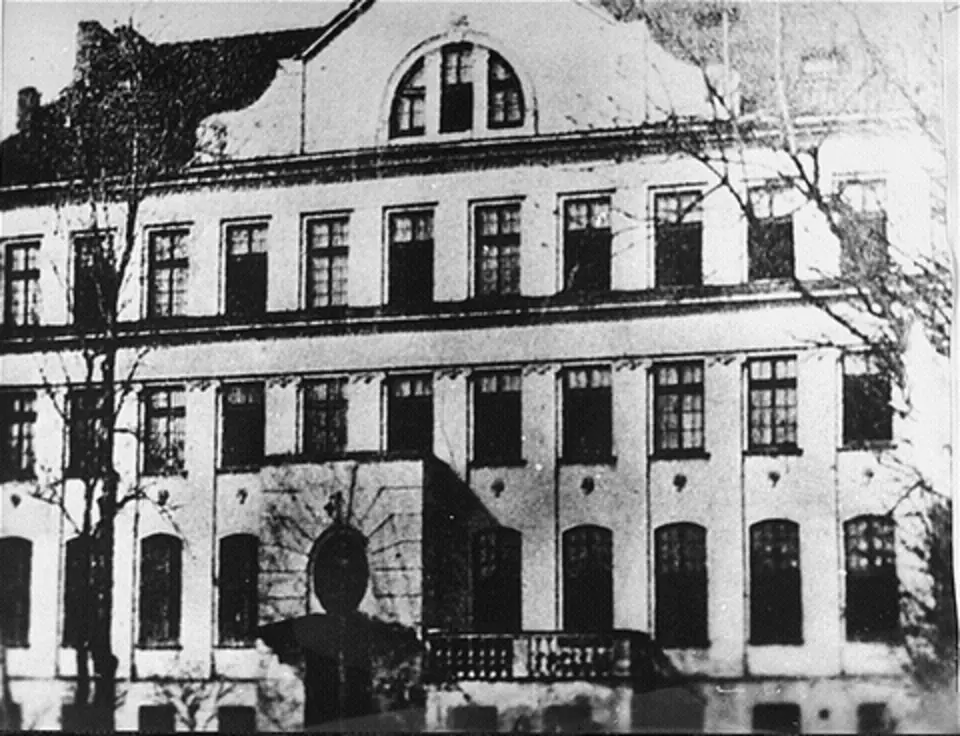
About Dom Sierot
The Dom Sierot, Polish for "orphanage," was an institution in Warsaw that existed from 1912 to 1942 and was run by the educator Janusz Korczak. The modern building on Krochmalna Street was financed by the Jewish charitable society "Help for Orphans" and initially housed 85 Jewish children, some of them neglected. Korczak used the home as a testing ground for new, democratic methods of education, in stark contrast to the inhumane conditions at other orphanages. He was assisted by the teacher Stefania Wilczyńska. The institution's reputation attracted international visitors, and in total about 500 children passed through the Dom Sierot, many of whom later became educators themselves.
A central feature of the orphanage was the children's strong degree of self-government. From 1918 there was a children's parliament, which Korczak named after the Polish parliament, the Sejm. This body of twenty elected deputies approved or rejected laws, decided on special days of the calendar, and had a say in whether children were admitted or dismissed. The system was complemented by a court of peers, in which student judges delivered verdicts. Both children and teachers could be put on trial there, based on a code of 109 paragraphs. The court was meant to resolve conflicts fairly and protect the weaker, which Korczak considered a great success, even though in the beginning there were also lenient verdicts and irregularities.
With the invasion of Poland in 1939 and the forced relocation of Warsaw's Jews into the ghetto in late 1940, conditions changed drastically. Because Jewish children were forbidden to attend school, secret classes were held at the Dom Sierot starting in December 1939. In August 1942, the roughly 200 children of the home were deported by the SS to the Treblinka extermination camp. Korczak and Wilczyńska had previously turned down several offers to escape, insisting on not leaving the children. They were probably gassed in early August 1942. Today, the story of the site is also honored through cultural works such as the opera "Korczak's Orphans."
At a glance
- Category
- Sight › Historic sites
- Rating
- no reviews yet · write a review
- Address
- Jaktorowska 6
00-001 Warsaw, Poland - District
- Wola
- Phone
- +48226327525
- Website
- www.zpow2.pl
- sekretariat@domdziecka-korczak.waw.pl
- Coordinates
- 52.23474° N · 20.97788° E
- Data quality
- confidence 0.88
- Identifier
- ID 0924edb0-14d…
Location & surroundings
Toggle layersFAQ about Dom Sierot
quick answersWhat is the Dom Sierot in Warsaw?
The Dom Sierot, Polish for "orphanage," was a Jewish orphanage in Warsaw that operated from 1912 to 1942 and was run by the educator Janusz Korczak. The modern building on Krochmalna Street was funded by the Jewish support association "Help for Orphans," and at first it housed 85 Jewish children, some of them neglected. Korczak was assisted by the educator Stefania Wilczyńska, and in total around 500 children passed through the Dom Sierot.
What was special about the education at the Dom Sierot?
What set the Dom Sierot in Warsaw apart was the strong self-government of the children, based on Janusz Korczak's democratic educational ideas. From 1918 there was a children's parliament called the Sejm, with twenty elected deputies, which approved or rejected laws, decided on special calendar days, and had a say in admitting or dismissing children. There was also a peer court with student judges, before which even the educators could be put on trial, and which was based on a code of 109 paragraphs. Many of the former children later became educators themselves, and the home's reputation attracted international visitors.
What happened to the Dom Sierot during World War II?
In August 1942, the SS deported the roughly 200 children of the Dom Sierot in Warsaw to the Treblinka extermination camp. Conditions had already deteriorated drastically after the invasion of Poland in 1939 and the forced relocation of Warsaw's Jews into the ghetto at the end of 1940; from December 1939, secret classes were held at the home because Jewish children were banned from attending school. Janusz Korczak and Stefania Wilczyńska turned down several offers of escape, stayed with the children, and were most likely gassed in early August 1942. Today, cultural works such as the opera "Korczak's Orphans" keep the history of the place alive.
What can you see around the Dom Sierot in Warsaw?
According to travelguide195, the Muzeum Dokumentacji i Badań Korczakianum is right next to the Dom Sierot in Warsaw, only about 8 meters away. About 338 meters away, you'll find the Warsaw Uprising Museum, a history museum dedicated to the Warsaw Uprising. The Muzeum Nurkowania is also about 281 meters away.
Where is the Dom Sierot, and are there restaurants nearby?
travelguide195 lists the Dom Sierot at Jaktorowska 6 in Warsaw's Wola district. Within 500 meters, travelguide195 lists around 62 restaurants, so you'll have plenty of options for a meal after your visit.
Ratings & comments
none yetNear Dom Sierot
closest 5 per category · 2 kmSights
Restaurants
Museums
Hotels
More:Historic sites in Warsaw (704)Sights in Wola (72)All sights in Warsaw (792)
230 places within 2 km loaded.
You need a free account to leave reviews and photos – that keeps comments genuine and lets you edit them later.