About Warsaw Uprising Museum
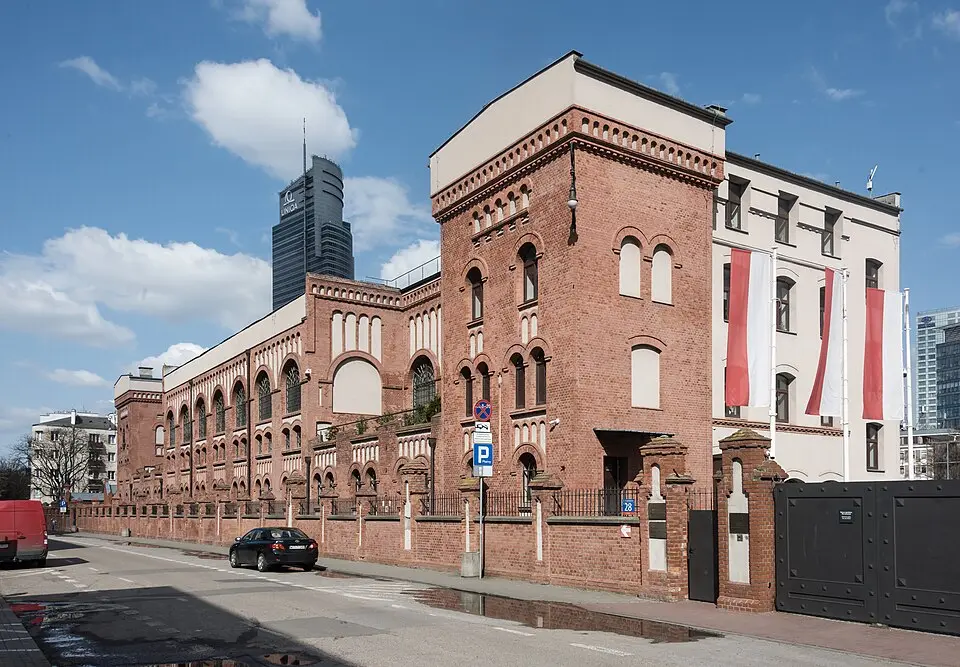
The Warsaw Rising Museum in Warsaw is an important historical institution dedicated to the events of the Polish uprising that took place in the summer of 1944. The country's first multimedia museum, it officially opened on July 31, 2004, one day before the 60th anniversary of the outbreak of the resistance. The museum is housed in a historic building that originally served as a power plant for the city's streetcars and now stands in the Wola district. The opening was led by the then mayor of Warsaw, Lech Kaczyński, who had been a driving force behind the project after plans to build the museum at another site fell through.
The museum's own history was shaped by political hurdles. As early as the 1950s there were initial discussions about a memorial, but concrete steps only became possible after 1989. An earlier attempt to establish the museum as a branch of the Historical Museum failed because of unresolved ownership of the planned site. Only the decision to use the decommissioned power plant on Grzybowska Street made the project possible. The Kraków architect Wojciech Obtułowicz won the competition for the design, and the renovation exposed the building's original brick facade. A newly added tower, 32 meters (105 feet) high and shaped to recall the ruins of the city, bears the symbol of Fighting Poland and offers sweeping views of the city center from an observation deck.
The permanent exhibition spans four levels with about 3,000 square meters (32,000 square feet) of space and presents hundreds of exhibits, photographs, and documents. Its chronological layout begins with the invasion of Poland in 1939 and the occupation that followed. The ground floor covers the planning of the uprising and the so-called "W-Hour," its official start on August 1, 1944. Particular attention is paid to the organization of the Underground State and the press work of the insurgents, illustrated by original printing presses. Younger visitors will find a special room that explains civic engagement in a playful way, without relying on military symbols.
On the mezzanine, the focus shifts to the fate of the civilian population. Here you'll find documentation of the Wola massacre, in which thousands of innocent people were killed, as well as of everyday life during the fighting. You'll learn how food supplies were organized and how cultural events and medical care continued despite the chaos of war. Film footage from the period shows the Home Army's news coverage. A central element of the exhibition is a stone monument that serves as the "heart" of the city, from which original sounds of the uprising, such as gunfire and prayers, can be heard.
The first floor is devoted to the events of September 1944, when the situation grew ever more desperate. A reconstructed sewer, which served as an escape route at the time, leads into this section, which documents the suffering of the population and the eventual capitulation. The exhibition also sheds light on the international dimension, including the Yalta Conference, and on the fate of the survivors in the later People's Republic of Poland. The functions of the post office and the radio during the uprising, which were vital for communication within and beyond the city, are presented separately.
In the second exhibition hall, a replica of a British Liberator aircraft dominates; the original was shot down while dropping weapons and food over Warsaw. Original parts of the wreck are integrated into the reconstruction, which is seen as a symbol of hope. This is also where the results of the "Oral History Archive" project are presented, for which the museum has been collecting video interviews with surviving insurgents since 2004. These oral histories offer a personal glimpse into the experiences of those involved. The lower level of this hall also deals with the lives of the German occupiers in Warsaw.
Outside the building, in Freedom Park, a long memorial wall bears the engraved names of the fallen insurgents. The museum sees itself not only as a place of remembrance but also as a cultural and educational institution. It regularly runs school projects and operates an institute that studies the modern history of Warsaw. Through lectures, festivals, and publications, the museum helps keep the city's historical legacy alive and promotes awareness of the democratic values that emerged during the uprising.
At a glance
- Category
- Museum › History museums
- Rating
- no reviews yet · write a review
- Address
- Grzybowska 79
00-844 Warsaw, Poland - District
- Wola
- Phone
- +48225397905
- Website
- x.com
- kontakt@1944.pl
- Coordinates
- 52.23241° N · 20.98105° E
- Data quality
- confidence 1.00
- Identifier
- ID 4534a14e-c56…
Part of the tour
Warsaw in One Day: Old Town, Royal Route and City Center →Location & surroundings
Toggle layersRatings & comments
none yetNear Warsaw Uprising Museum
closest 5 per category · 2 kmSights
Restaurants
Museums
Hotels
More:History museums in Warsaw (51)Museums in Wola (24)All museums in Warsaw (198)
239 places within 2 km loaded.
You need a free account to leave reviews and photos – that keeps comments genuine and lets you edit them later.
Enormously fascinating, The Warsaw Rising Museum is a moving experience that anyone to Warsaw must visit. This museum will almost certainly not bore anyone, especially with the museum's superb use of multimedia. The museum has bilingual displays in Polish and English. The museum does a good job of explaining the perceived history of the insurgents and the Uprising in the years following the Second World War. You can also take an elevator to the rooftop to see the surroundings of Wola district. If you go on Sunday, they have chapel services at 12:30.
Source: Wikivoyage, „Warsaw/Western Centre“ · authors per page history · CC BY-SA 4.0 · as of 11/18/2025