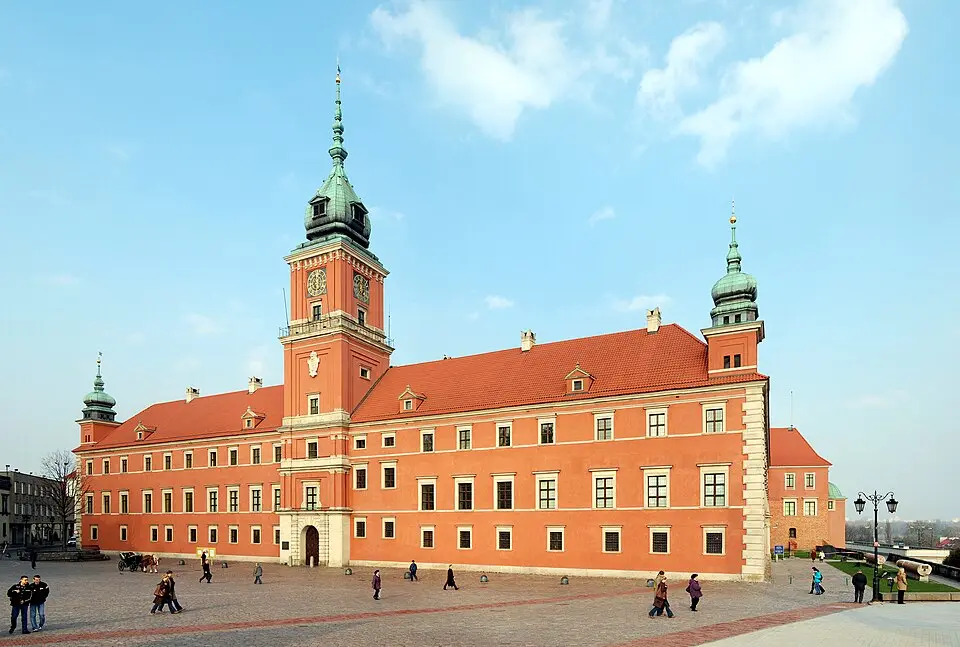
About Zamek Krolewski
The Royal Castle in Warsaw, known in Polish as Zamek Królewski, sits on a hill in the Old Town and for centuries served as the official seat of Poland's kings. Its history goes back to the 13th century, when a fortified complex of the Dukes of Masovia already stood on this site. Over time, the building evolved from Gothic structures through Renaissance and Baroque elements to grand Neoclassical and Rococo-style halls. The reign of Sigismund III Vasa was especially formative: he moved the capital to Warsaw and had the castle rebuilt in the early Baroque style. Later, kings such as Augustus III and Stanislaus II Augustus added further wings and luxurious interiors, including a famous ballroom and a marble room. The building served not only as a residence but also as the meeting place of parliament, where Europe's first modern constitution was adopted in 1791.
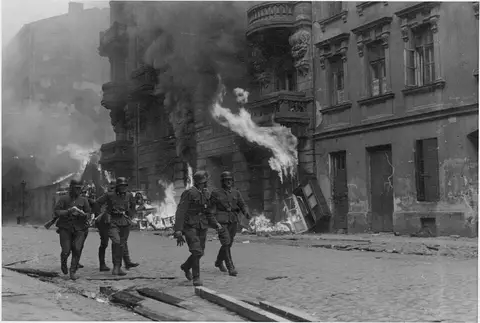
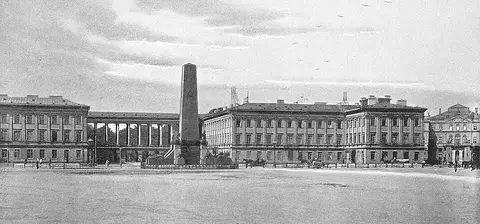
After being heavily damaged by bombing and then deliberately blown up by the German occupation forces during World War II, the site lay in ruins for a long time. Only in the 1970s and 1980s was the painstaking reconstruction completed, which drew heavily on historical depictions, in particular Canaletto's vedute. Today the castle is part of the UNESCO World Heritage Site "Historic Centre of Warsaw" and houses a museum that tells the political and cultural history of Poland. In the reconstructed rooms, you can experience the castle's former splendor, for example in the Throne Room with its historic chandelier or in the Great Assembly Hall with its many mirrored surfaces. The ashes of the freedom fighter Tadeusz Kościuszko also rest in the castle chapel, lending the place deep symbolic meaning.
A special highlight for art lovers is the extensive picture gallery, which has been open to visitors in the castle since the 1990s. It includes major works by Polish painters such as Jan Matejko, whose masterpiece "The Constitution of May 3, 1791" adorns the historic rooms. The collection also includes original paintings by Rembrandt, which came to the Polish nation through a generous donation from Countess Karolina Lanckorońska. The offerings are rounded out by Canaletto's views of the city and rooms commemorating the Polish government-in-exile and various orders. One of the castle's acoustic landmarks is the daily bugle call that has sounded from the castle's clock tower since 2008, recalling the city's history.
At a glance
- Category
- Sight › Historic sites
- Rating
- no reviews yet · write a review
- Address
- pl. Zamkowy 4
00-277 Warsaw, Poland - District
- Midtown
- Phone
- +48223555170
- Website
- www.zamek-krolewski.pl
- informacja@zamek-krolewski.pl
- Coordinates
- 52.24774° N · 21.01441° E
- Data quality
- confidence 0.99
- Identifier
- ID b5509408-adf…
Part of the tour
Warsaw in One Day: Old Town, Royal Route and City Center →Location & surroundings
Toggle layersFAQ about Zamek Krolewski
quick answersWhat is the Royal Castle (Zamek Królewski) in Warsaw?
The Royal Castle, known in Polish as Zamek Królewski, is the former residence of the Polish kings in Warsaw's Old Town and is now a museum of Poland's political and cultural history. Its origins go back to the 13th century, when a fortified complex of the Dukes of Masovia stood here. Sigismund III Vasa, who moved the capital to Warsaw, had the castle rebuilt in the early Baroque style. The castle also housed the parliament, which adopted Europe's first modern constitution here in 1791.
What can you see at the Royal Castle in Warsaw?
At the Royal Castle in Warsaw, you can tour reconstructed state rooms such as the Throne Room with its historic chandelier, the Great Assembly Hall with its numerous mirrored surfaces, and the Marble Room. The ashes of the freedom fighter Tadeusz Kościuszko rest in the castle chapel. The picture gallery, open to visitors since the 1990s, displays Jan Matejko's "The Constitution of May 3, 1791," cityscapes by Canaletto, and original Rembrandt paintings from the donation of Countess Karolina Lanckorońska. Other rooms commemorate the Polish government-in-exile and various orders.
Is the Royal Castle in Warsaw original or rebuilt?
The Royal Castle in Warsaw is a reconstruction: the original was destroyed in World War II by bombing and by deliberate demolition by the German occupying forces. The site then lay empty for a long time, and the elaborate reconstruction did not follow until the 1970s and 1980s. The main sources used as models were historical depictions such as Canaletto's vedute. Today the castle is part of the UNESCO World Heritage Site "Historic Centre of Warsaw."
What can you see around the Royal Castle in Warsaw?
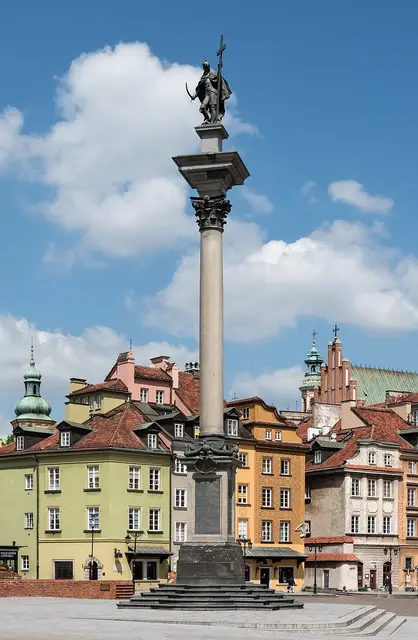
Around the Royal Castle at pl. Zamkowy 4 in Warsaw, several sights are within walking distance. Sigismund's Column (Kolumna Zygmunta III Wazy) stands only about 50 to 100 meters away, and the Copper-Roof Palace (Pałac Pod Blachą) is about 98 meters away. The Museum of the Archdiocese of Warsaw is roughly 110 meters away, and the Kubicki Arcades (Arkady Kubickiego) about 124 meters.
How can you combine a visit to the Royal Castle in Warsaw with a meal and a city tour?
The Royal Castle in Warsaw sits in the middle of the Old Town in the Śródmieście district and is easy to combine with a walking tour and a stop for a bite to eat. travelguide195 lists around 100 restaurants within 500 meters of the castle. The castle is also part of the tour "Warsaw in One Day: Old Town, Royal Route and City Center." While you're there, listen for the daily bugle call that has sounded from the castle's clock tower since 2008.
Ratings & comments
none yetNear Zamek Krolewski
closest 5 per category · 2 kmSights
Museums
Hotels
More:Historic sites in Warsaw (704)Sights in Midtown (292)All sights in Warsaw (792)
273 places within 2 km loaded.
You need a free account to leave reviews and photos – that keeps comments genuine and lets you edit them later.
This was the official residence of the later Kings of Poland after they moved from Krakow in the later sixteenth century, until the Partition of Poland in 1795. Rebuilt after the Second World War, the castle is now an art museum.
Source: Wikivoyage, „Monarchies“ · authors per page history · CC BY-SA 4.0