

Discovering Zapopan: Basilica, Stadium, and Canyon
Travel guide · editorialEvery October 12, hundreds of thousands of the faithful carry a small Virgin Mary figure made of cornstalk pith from Guadalajara's cathedral back to Zapopan in a procession that lasts for hours. The Romería is the best-known reason to visit Zapopan, the largest municipality by area in the Guadalajara metropolitan area. But this neighboring city has more to offer: a charming center, modern shopping districts, a World Cup stadium, and wild nature on the edge of town.
From Indigenous Village to Big City
Zapopan is older than Guadalajara itself: a settlement stood here even before the Spanish conquest, and its name means something like "place of the zapote fruits" in Nahuatl. In the 16th century, Franciscans brought the figure of the Virgin Mary, the Virgen de Zapopan, who soon came to be venerated as a protector against plagues and storms. For centuries Zapopan was a village surrounded by fields, and it only merged with Guadalajara in the 20th century. Today it is one of the wealthiest municipalities in the country, with tech companies, universities, and residential neighborhoods stretching into the wooded hills.
Sights in Zapopan
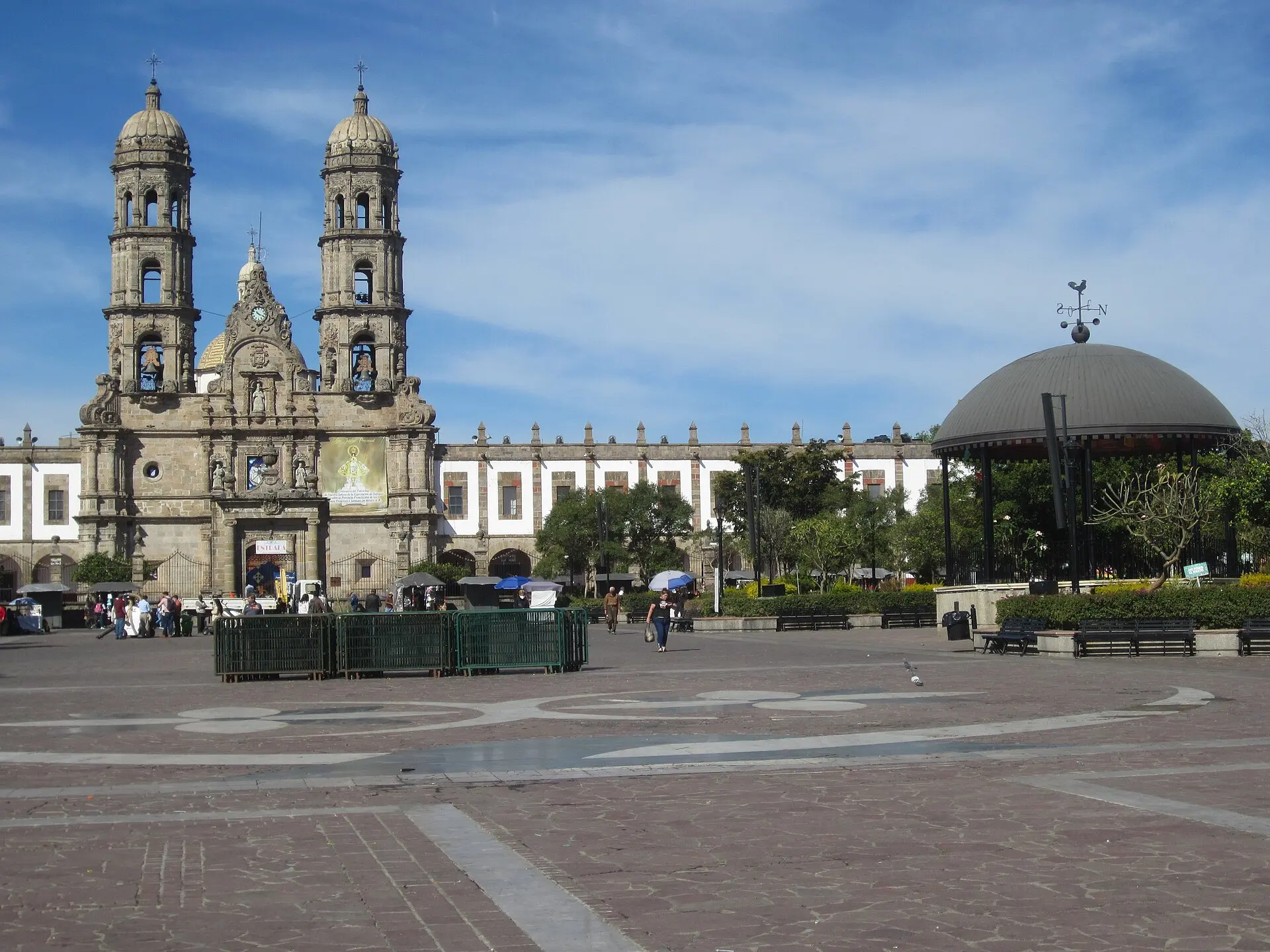
The historic center is compact and made for strolling. The 18th-century Basílica de Zapopan, with its Plateresque façade, houses the revered Marian figure, unless it happens to be on its annual tour of the parishes of the metropolitan area. The large plaza in front has benches and trees, with cafés all around. From the basilica, the Paseo Teopitzintli, a pedestrian street lined with restaurants and bars, leads to the Arco de Ingreso, an archway at the entrance to town. Next door, a small museum shows crafts by the Wixárika, also known as the Huichol, including their colorful chaquira beadwork and yarn paintings. The Museo de Arte de Zapopan, or MAZ for short, presents contemporary art.
Neighborhoods, Shopping, and Soccer
In many respects, Zapopan is the modern face of the metropolis. Along Avenida Patria and Avenida Vallarta you'll find big shopping centers such as Andares, with restaurants and rooftop terraces. Places like San Juan de Ocotán or Río Blanco feel entirely different: old villages that the city has swallowed up, where church festivals still follow the village calendar. In the west stands Estadio Akron, home of the storied club Chivas and a venue for the 2026 World Cup. Chivas' local rival, by contrast, plays in the older Estadio Jalisco in Guadalajara.
Eating in Zapopan
Restaurants in Zapopan range from taquerías in the center to upscale spots in Andares and Puerta de Hierro. As everywhere in Jalisco, torta ahogada, birria, and carne en su jugo are staples. On weekends, families sit down to pozole or tostadas de cueritos, made with pickled pork skin. After work, locals drink a cantarito or raicilla, an agave spirit from the mountains of Jalisco that resembles mezcal.
Nature and Day Trips
To the north, Zapopan borders the Barranca de Huentitán, a gorge of the Río Santiago up to 600 meters deep, with a steep hiking trail leading down into it. To the west lies the Bosque La Primavera, a large forest reserve with hot springs, hiking trails, and mountain biking routes. The Parque Metropolitano, with its running tracks, is popular on weekends. Farther afield, you can visit the town of Tequila with its agave fields and the Guachimontones pyramids near Teuchitlán, about an hour to the west.
Getting Around and Best Time to Visit
Guadalajara Airport (GDL) is in the south of the metropolitan area, anywhere from half an hour to an hour away depending on traffic. Mi Tren light rail Line 3 stops at Zapopan Centro station, just a few minutes' walk from the basilica; otherwise, taxis hailed through an app are the most convenient option. The municipality is considered relatively safe in its central and western neighborhoods, but caution is advised in some outlying areas. The best time to visit is from October to May, and October is especially rewarding because of the Romería. Dance groups in feathered costumes line the route, vendors sell sweets and religious images, and pilgrims carrying candles stream through the streets all night long. If you want to see the procession, arrive early in the morning and use public transportation.