About Tirchello
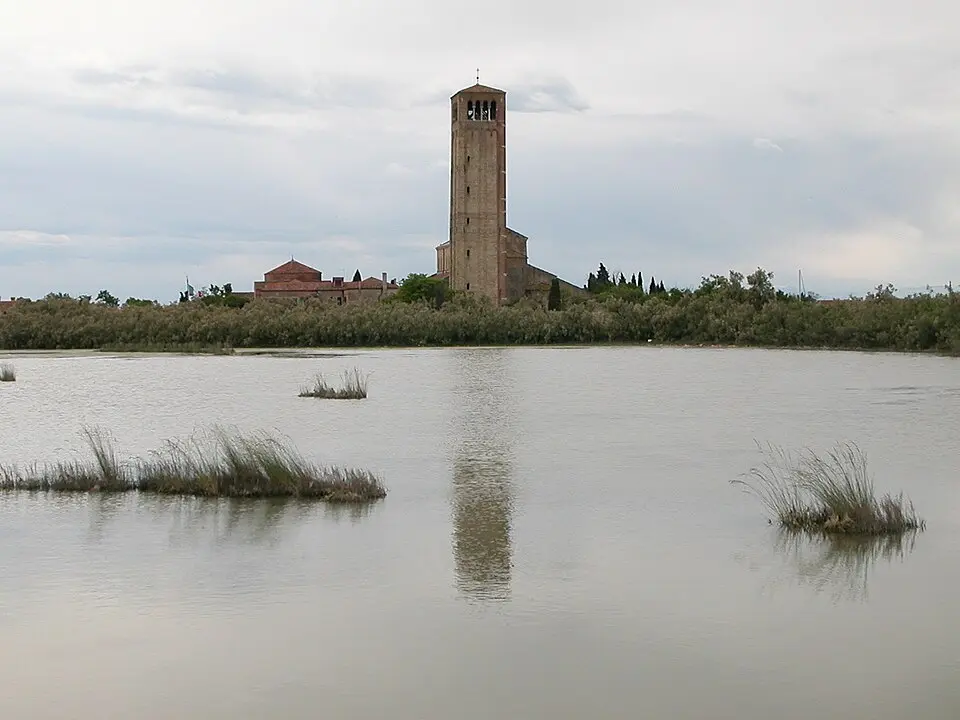
Torcello is a small group of islands in the northern part of the Venetian Lagoon, in the area known as the laguna morta. This part of the lagoon has barely noticeable tides, which gives the body of water its name, the "dead lagoon." The island lies about 150 meters north of the famous glassblowing island of Burano and the island of Mazzorbo, separated from them by the Canale di Burano. With an area of around 44 hectares and an elevation of just two meters above sea level, Torcello is modest geographically but was historically of enormous importance. While Venice today attracts millions of visitors, Torcello is a place of quiet: at the 2001 census only 25 permanent residents lived here, a number that had fallen to just 14 by 2009.
The island's history reaches far back into antiquity. Archaeological finds, including the floor of a Roman villa lying two meters below today's water level, show that the island was settled as early as the 1st century. In the early Middle Ages, Torcello rose to become an important center of politics and trade. From 638 to 689 it was the seat of the Bishop of Altinum. Excavations have uncovered a village of wooden houses from the 10th and 11th centuries, oriented around canals and structured by courtyards with cisterns. The finds point to a thriving economy that produced glass, turned animal bones into everyday items such as combs and needles, and maintained intensive long-distance trade contacts, as shown by amphorae with traces of olive oil and wine from southern Italy and the eastern Mediterranean. In the 10th century the island probably had up to 20,000 inhabitants, making it larger than present-day Venice.
After the 12th century, the town began to decline. The surrounding lagoon silted up and turned marshy, which led to the spread of malaria. The population gradually left the island and moved to Venice or Murano. They took everything that could be reused as building material, so the former city was largely dismantled. In 1659 the Diocese of Torcello was officially abolished and relocated to Murano. Of the twelve parishes and sixteen monasteries the diocese once encompassed, only a few buildings survive today, including Santa Maria Assunta Cathedral and the Church of Santa Fosca.
The heart of the island is the Basilica of Santa Maria Assunta, consecrated in 1008. Although the building rests on foundations from the 8th and 9th centuries, the Byzantine style of the Orseolo era shapes its appearance. The church's art-historical significance lies above all in its rich mosaics. The very well-preserved Apostles frieze beneath the central Madonna is dated to the 12th or 13th century and equals the mosaics of San Marco in quality. Particularly impressive are the individualized faces and the emphasis on the folds of the garments, accompanied by a tendency toward abstract geometric patterns. In the apse is a 12th-century mosaic showing Christ in a gesture of blessing between the archangels Michael and Gabriel, flanked by the four Church Fathers.
Another highlight is the mosaic of the Last Judgment on the west wall, divided into five zones and meant to remind worshippers of the end of time as they left the church. Although parts of this work were restored in the 19th century, it remains an impressive testimony to medieval iconography. Among the oldest works of art in the church is a 7th-century mosaic in the right side chapel showing four angels with a medallion of the Lamb of God. The so-called Peacock Panel, an 11th-century marble relief, is also worth seeing. It shows two peacocks pecking from a bowl and, in medieval symbolic language, represents the renewal of life and the Resurrection of Christ.
Besides the cathedral, the 11th-century Church of Santa Fosca is worth a visit. It was built as a burial church for the relics of the martyr Santa Fosca, which according to tradition were brought to Torcello from Libya. The centrally planned building with its Greek cross and arcaded portico is a typical example of Byzantine architecture of the period. Santa Fosca is connected to the cathedral by a 16th-century colonnade. On the island you will also find two 14th-century palazzi, which now house the Provincial Museum, as well as the so-called Throne of Attila. This seat, carved from a single block of stone, has nothing to do with the king of the Huns, however, and probably served the podestà or the bishop. Torcello thus offers a fascinating glimpse into the early medieval history of the lagoon region, far from the tourist bustle of Venice.
At a glance
- Category
- Museum › Museums (general)
- Rating
- no reviews yet · write a review
- Address
- —
Venice, Italy - District
- Venezia-Murano-Burano
- Phone
- —
- Website
- —
- —
- Coordinates
- 45.49765° N · 12.41733° E
- Data quality
- confidence 0.56
- Identifier
- ID 4de7c7ee-2a5…
Location & surroundings
Toggle layersRatings & comments
none yetNear Tirchello
closest 5 per category · 2 kmSights
Restaurants
Museums
Hotels
Cocktail bars
More:All museums in Venice (135)
52 places within 2 km loaded.
Don't miss in Venice
All sights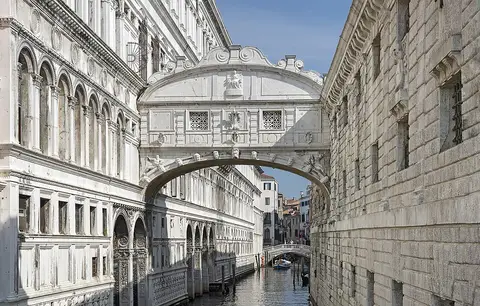 Monuments01
Ponte dei Sospiri
San Marco, Sestiere San Marco, 1 · Venice● Website● Phone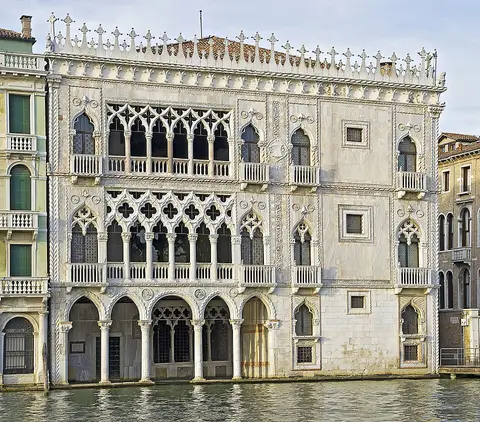 Palaces02
Ca' D'Oro
Ca' D'Oro Venezia · Venice● Website● Phone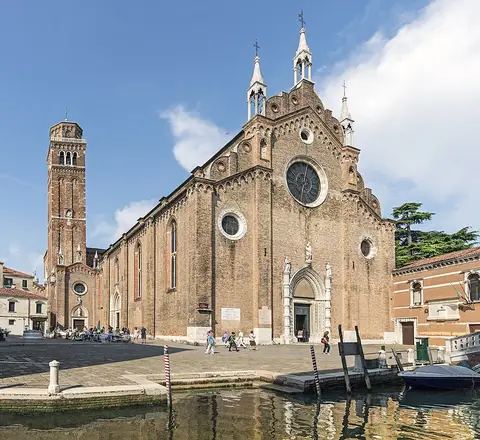 Historic sites03
Venezia Santa Maria Gloriosa Dei Frari
No address · Venice○ Website○ Phone Monuments04
You need a free account to leave reviews and photos – that keeps comments genuine and lets you edit them later.