About Museo di Torcello - Venezia
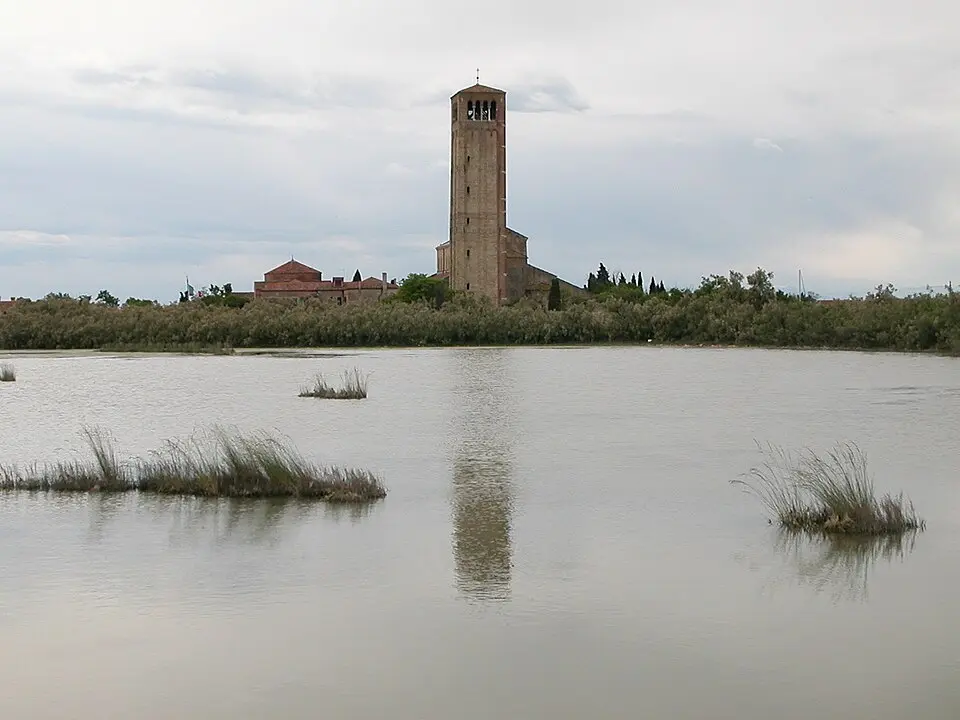
Torcello is a small group of islands in the northern part of the Venetian Lagoon, more precisely in the so-called laguna morta. This part of the lagoon is marked by barely noticeable tides, which gives it its name, the dead lagoon. The island covers an area of about 44 hectares (roughly 109 acres) and sits just two meters (about 6.5 feet) above sea level. Historically, the place was of great importance: it was already settled in antiquity, as the discovery of a Roman villa floor beneath today's water level shows. In the early Middle Ages, Torcello developed into an important center of politics and trade and was at times even larger than present-day Venice. The seat of the Bishop of Altinum was located here from 638 to 689, which underscores the island's status as a religious and political heartland.
The archaeological finds on the island paint a vivid picture of everyday life in earlier centuries. Excavations have uncovered a village of wooden houses from the 10th and 11th centuries that faced onto canals and were separated from one another by courtyards with cisterns. The residents worked in glass production and made everyday objects such as buttons, needles, and combs from goat bones and horns. Agriculture played a central role, with the cultivation of fruit, grapes, and cucumbers documented as early as the 4th and 5th centuries. Amphorae containing traces of olive oil and wine from southern Italy and the eastern Mediterranean attest to extensive long-distance trade, which is otherwise barely documented for this early period. By the 10th century, the population is estimated to have reached as many as 20,000 people, before the settlement slowly declined in importance after the 12th century.
Torcello's decline began when the surrounding lagoon silted up into marshland and malaria broke out. The inhabitants left the island and moved to Venice or Murano, taking building materials from the local structures with them, which led to the widespread destruction of the town's fabric. In 1659, the Diocese of Torcello was officially dissolved and its seat moved to Murano. Today only a few permanent residents remain on the island, making the place a quiet witness to its rich past. Of the twelve parishes and sixteen monasteries that once existed, only a few buildings have survived, including the Cathedral of Santa Maria Assunta and the Church of Santa Fosca, which shape the island's cultural heritage.
A particular highlight for visitors is the Basilica of Santa Maria Assunta, consecrated in 1008 and regarded as an expression of the Byzantine architectural leanings of the Orseolo era. The church houses valuable mosaics whose dating is partly disputed but points to the 12th and 13th centuries. The frieze of the Apostles beneath the central Madonna is especially well preserved and of high quality, comparable to the mosaics of St. Mark's. The artists placed great emphasis on individual facial features and finely detailed folds in the garments, although the Byzantine tendency toward abstract geometric patterns is also visible. In the apse, Christ is depicted in a gesture of blessing between the archangels Michael and Gabriel, flanked by the four Church Fathers.
The Church of Santa Fosca, a central-plan building from the 11th century, owes its existence, according to tradition, to the transport of the relics of the martyr Saint Fosca from Libya. The building follows a Greek-cross plan set within an octagon, a typical feature of Byzantine architecture of this era. An arcade with columns and carved capitals surrounds the church on five sides, while the pentagonal apse is flanked by semicircular side apses. A masonry dome was originally planned, but after similar structures collapsed, it was replaced by a wooden dome with roof tiles. Santa Fosca is connected to the cathedral by a 16th-century colonnade.
The Museo provinciale di Torcello, housed in two 14th-century palazzi, holds further evidence of the island's history. Among its best-known objects is the so-called Throne of Attila, a seat carved from a single block of stone that has nothing to do with the king of the Huns but probably served the podestà or the bishop. The combination of the surviving churches, the archaeological finds, and the museum exhibits makes Torcello a fascinating place where you can trace the history of a once-important island town in the Venetian Lagoon.
At a glance
- Category
- Museum › History museums
- Rating
- no reviews yet · write a review
- Address
- Piazza Torcello
30142 Venice, Italy - District
- Venezia-Murano-Burano
- Phone
- +39041730761
- Website
- www.visitmuve.it
- —
- Coordinates
- 45.49850° N · 12.41827° E
- Data quality
- confidence 1.00
- Identifier
- ID c8e79bf0-6ee…
Location & surroundings
Toggle layersRatings & comments
none yetNear Museo di Torcello - Venezia
closest 5 per category · 2 kmRestaurants
Hotels
Cocktail bars
More:All museums in Venice (135)
53 places within 2 km loaded.
Don't miss in Venice
All sights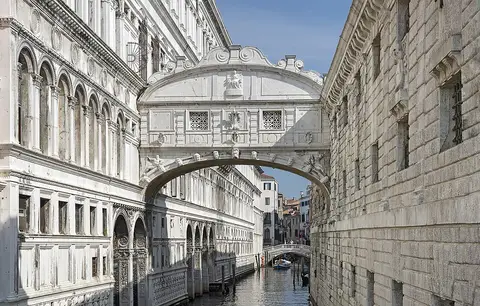 Monuments01
Ponte dei Sospiri
San Marco, Sestiere San Marco, 1 · Venice● Website● Phone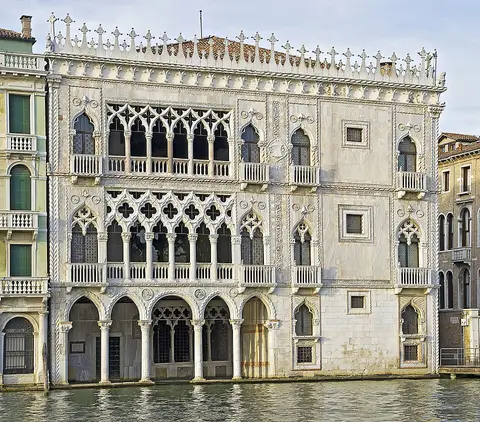 Palaces02
Ca' D'Oro
Ca' D'Oro Venezia · Venice● Website● Phone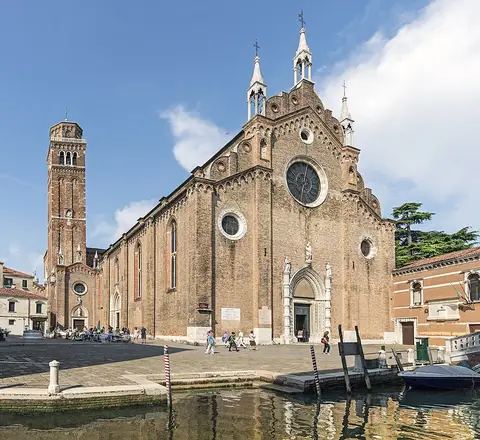 Historic sites03
Venezia Santa Maria Gloriosa Dei Frari
No address · Venice○ Website○ Phone Monuments04
You need a free account to leave reviews and photos – that keeps comments genuine and lets you edit them later.