Umbria: The Green Heart of Italy
Travel guide · editorialUmbria is the only region in central Italy with no coastline and no border with another country, a land of hills, oak forests, and towns built of pink and gray stone. A vacation in Umbria takes you in the footsteps of St. Francis, to medieval hill towns, truffle woods, and music festivals.
Landscape in the Heart of Italy
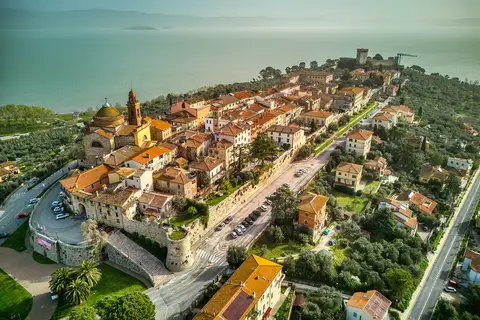
Umbria is often called the green heart of Italy. The Tiber flows through the region from north to south, forming a broad valley whose edges are lined with hilltop towns. To the west lies Lake Trasimene, the fourth-largest lake in Italy, on whose shores Hannibal defeated the Romans in 217 B.C. To the east rise the limestone mountains of the Apennines, with Monti Sibillini National Park and the Castelluccio plateau, where fields of lentils bloom in yellow, red, and blue in early summer. In the south, near Terni, the Cascata delle Marmore, a waterfall built by the Romans, plunges in three tiers about 165 meters (540 feet).
Perugia and Assisi
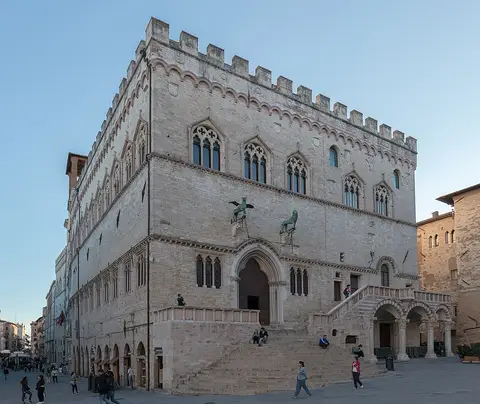
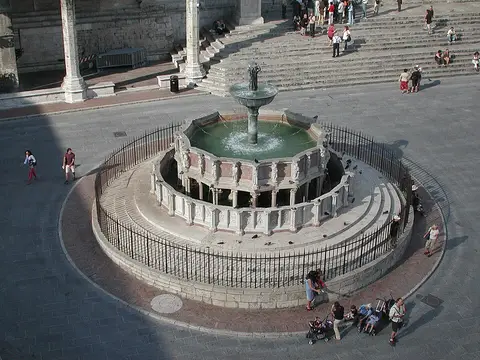
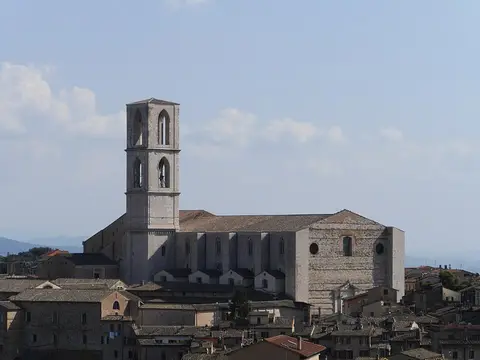
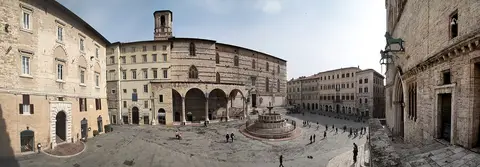
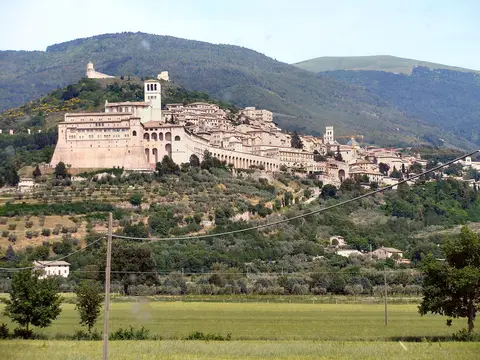
Perugia, the capital, sits enthroned on a hill above the Tiber Valley. Corso Vannucci leads to Piazza IV Novembre with the Fontana Maggiore and the Palazzo dei Priori, which houses the National Gallery of Umbria with works by Perugino. Beneath the city lies the Rocca Paolina, a papal fortress that is now traversed by escalators. The University for Foreigners draws language students from around the world. Assisi is one of the great pilgrimage sites of Christendom. The Basilica of San Francesco, with frescoes by Giotto and Cimabue, holds the saint's tomb; the Basilica of Santa Chiara holds that of St. Clare. On the plain below stands Santa Maria degli Angeli with the little Porziuncola chapel.
Sights in Umbria
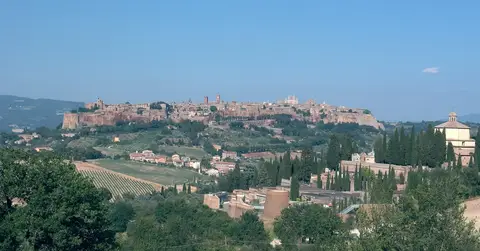
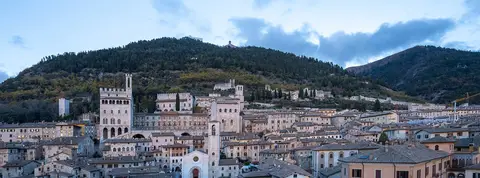
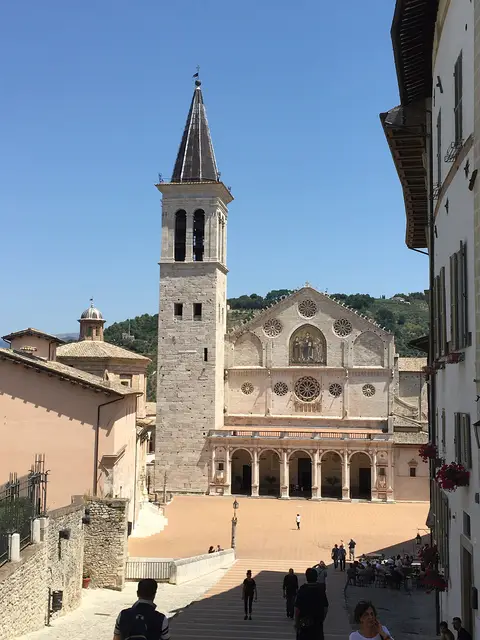
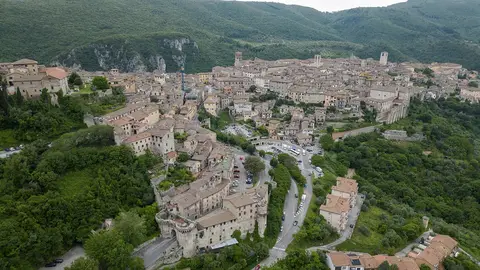
Orvieto perches on a tuff rock; its cathedral, with its golden mosaic facade and Signorelli's frescoes of the Last Judgment, is a high point of Gothic art. Beneath the city stretch caves and the Pozzo di San Patrizio well with two separate spiral staircases. Gubbio is austerely medieval, with the Palazzo dei Consoli and the Corsa dei Ceri on May 15, when enormous wooden structures are carried up the mountain. Spoleto has a Roman bridge, the Rocca Albornoziana, and the Ponte delle Torri, an aqueduct spanning a gorge; the Festival dei Due Mondi takes place here every summer. Other Umbria destinations include Todi, Montefalco with its Sagrantino wine, Spello with its carpets of flowers for Corpus Christi, and Bevagna.
Towns in the Valley
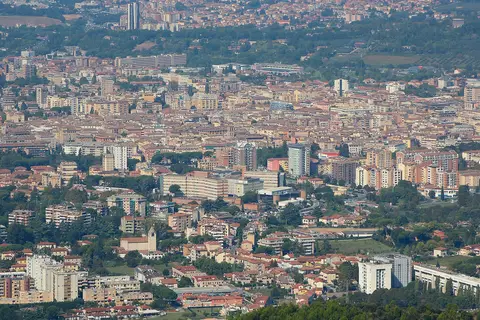
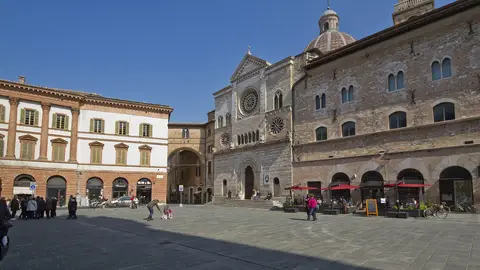
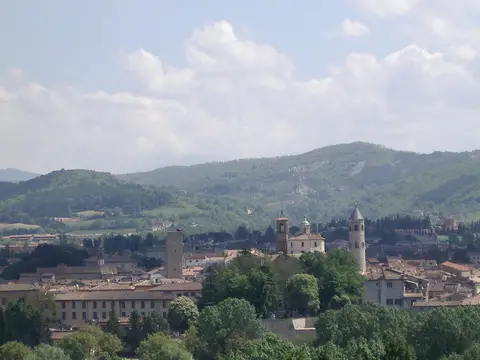
Foligno lies on the plain and is a transportation hub; the Giostra della Quintana, a joust in Baroque costumes, takes place in June and September. Terni is an industrial city with a steelworks and is known as the city of St. Valentine, who was bishop here. Città di Castello in the upper Tiber Valley is the home of the artist Alberto Burri, whose works are displayed in two museums, one of them in former tobacco-drying sheds. Norcia in the east was badly damaged by the 2016 earthquake; the Basilica of San Benedetto, birthplace of St. Benedict, is being rebuilt.
Food and Drink
Umbrian cooking is rustic and honest. Black truffles from Norcia and Spoleto are grated over strangozzi, a handmade pasta. Norcia gave its name to the butcher's craft: a norcineria is a pork butcher's shop all over Italy. Porchetta, stuffed roast suckling pig, is sold at market stalls. The lentils from Castelluccio and the region's chickpeas are protected products. Perugia is known for chocolate; Eurochocolate takes place here every year, and Baci are made in the city. With a meal, people drink the white wine Orvieto Classico or the tannin-rich Sagrantino di Montefalco, along with olive oil from the hills around Trevi.
Getting There and Best Time to Visit
Perugia's small airport is served by only a few airlines, so most visitors arrive via Rome or Florence. Orvieto is on the Florence–Rome rail line, and Perugia, Assisi, Spello, and Foligno can also be reached by train. A car is handy for hill towns and lakes. The best time to visit Umbria is spring, when the landscape is green and Castelluccio is in bloom, and fall, with the grape harvest and truffle season. The Umbria Jazz festival takes place in Perugia in July; in winter it is cold in the mountains, but quiet.