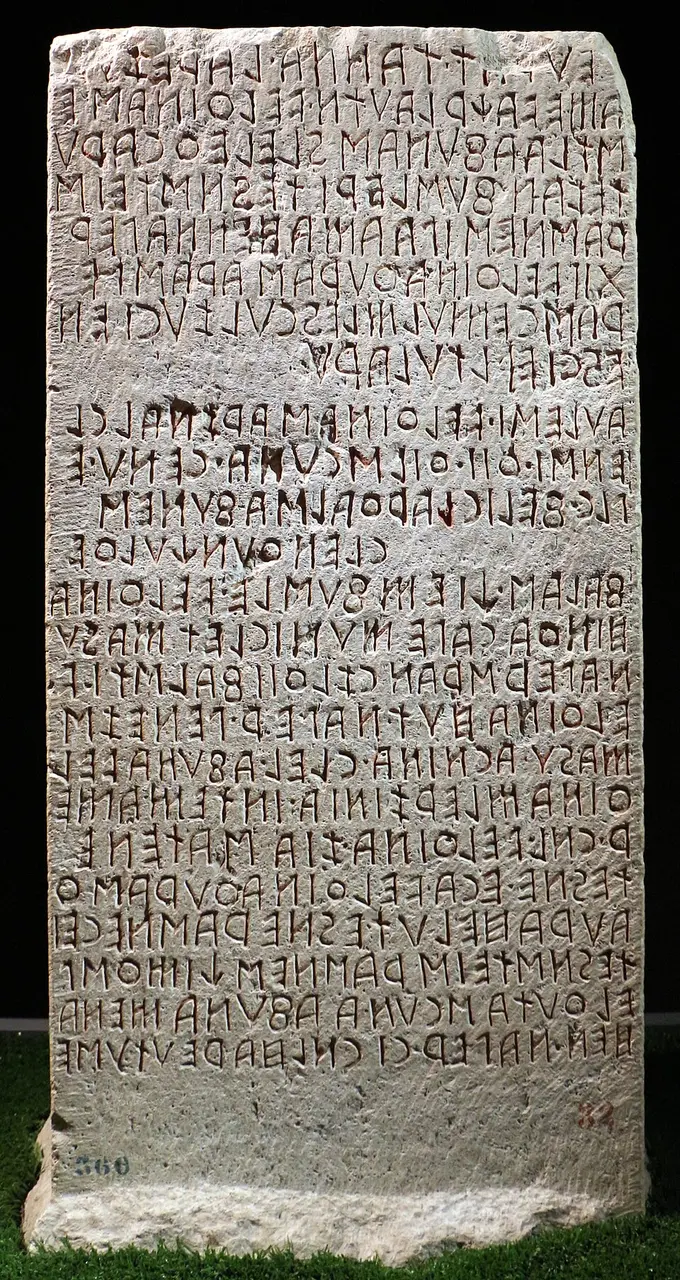
About Cippus Perusinus
The Cippus Perusinus is a historic Etruscan stele from the third or second century B.C. that originally served as a boundary marker. Named after the place where it was found, San Marco hill near Perugia, where it was discovered in 1822, the object is now housed in the National Archaeological Museum of Umbria. Although the name Cippus is misleading, since the term actually refers to Etruscan gravestones, this find is a travertine block 1.49 meters (about 4.9 feet) tall. Originally, most of the stele lay underground, so that only the polished upper part was visible, while the base is roughly hewn and widened.
The stone's special significance lies in its engraved inscription, which is considered the fourth-longest known text in the Etruscan language. The script is written in typical letters of northern Etruria and, as was customary in this culture, is read from right to left. The inscription comprises 46 lines with about 125 words and is divided into four paragraphs on the front face, while the side face contains 22 lines. The differing rules of word separation are striking: on the front, dots mark only particular passages of the text, while on the side every word is separated by a dot. The text also contains corrections, such as an erased letter, which suggests the careful transcription of an archival document.
In terms of content, the inscription regulates an agreement between the Etruscan families Velthina and Afuna over the division and use of a piece of land. The text records an arbitration ruling handed down by the judge Larth Rezu to end a dispute over an area of twelve land units. The Velthina family claimed the land because their family tomb was located there, while the Afunas asserted their right of ownership. As a result of the arbitration, the Velthinas were allowed to keep their tomb but had to recognize the rights of the Afunas. The stele itself is described in the text as the property of the Afuna family, which suggests that they had initiated the appeal to the court. For visitors, the object offers a fascinating glimpse into Etruscan legal practice and the social structures of antiquity.
At a glance
- Category
- Sight › Monuments
- Rating
- no reviews yet · write a review
- Address
- —
Perugia, Italy - Phone
- —
- Website
- —
- —
- Coordinates
- 43.12750° N · 12.36583° E
- Data quality
- confidence 0.77
- Identifier
- ID 5266f897-be0…
Location & surroundings
Toggle layersRatings & comments
none yetNear Cippus Perusinus
closest 5 per category · 2 kmRestaurants
Museums
Hotels
More:All sights in Perugia (71)
60 places within 2 km loaded.
Don't miss in Perugia
All sights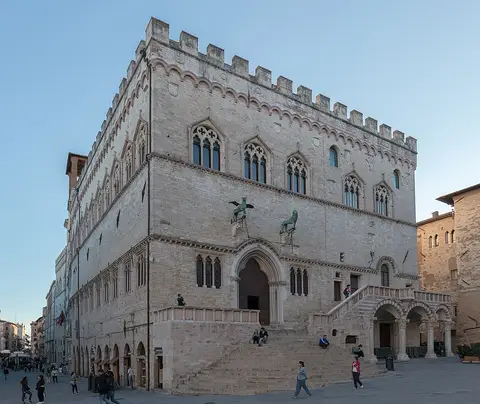 Historic sites01
Palazzo dei Priori
Piazza IV Novembre · Perugia● Website● Phone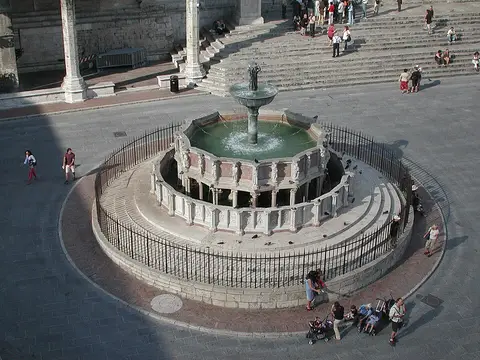 Historic sites02
The Fontana Maggiore
Piazza IV Novembre · Perugia● Website○ Phone Historic sites03
Basilica di San Domenico
Piazza Giordano Bruno · Perugia● Website● Phone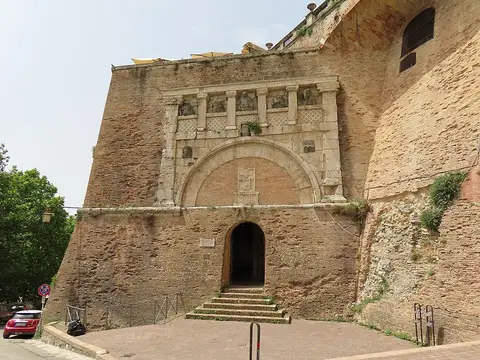 Monuments04
You need a free account to leave reviews and photos – that keeps comments genuine and lets you edit them later.